


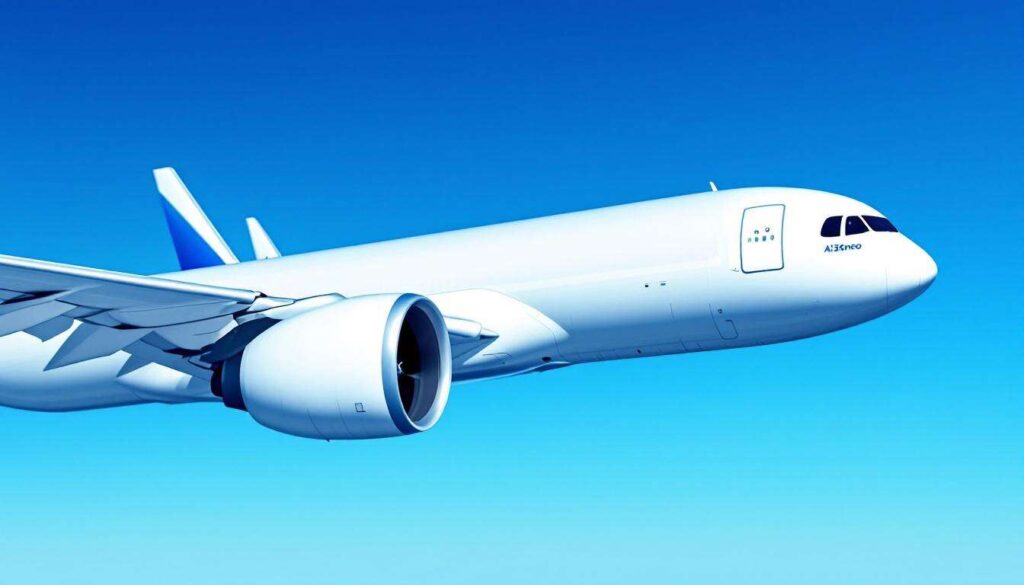
The Airbus A330neo stands as a significant evolution of one of the most successful wide-body aircraft in aviation history. Yet, its launch was marked by a strategic decision that diverged sharply from its predecessor: the adoption of a single engine option, the Rolls-Royce Trent 7000. While the original A330 offered airlines a choice between three different engine manufacturers, this new generation aircraft is exclusively tied to one. This deliberate choice was not an oversight but a calculated move rooted in a complex interplay of technical, economic, and strategic factors that have reshaped the development and marketing of modern airliners. Understanding this decision requires a deep dive into the engineering philosophy, financial realities, and competitive pressures that defined the A330neo program from its inception.
Technical context of the Airbus A330neo
Evolution from the A330ceo
The Airbus A330neo, which stands for “New Engine Option”, is fundamentally a modernization program for the highly successful A330ceo, or “Current Engine Option”. The original A330 family was a product of its time, offering airlines significant flexibility. Operators could choose from three different powerplants: the General Electric CF6, the Pratt & Whitney PW4000, and the Rolls-Royce Trent 700. This multi-supplier model was standard practice for wide-body jets, fostering competition among engine makers and giving customers leverage. However, the A330neo program was conceived with a different goal: to deliver a significant efficiency improvement with minimal development cost and time, and this required a more streamlined approach.
The Rolls-Royce Trent 7000
The exclusive engine for the A330neo is the Rolls-Royce Trent 7000. This is not merely an off-the-shelf product; it is a highly specialized powerplant that blends proven architecture with cutting-edge technology. It combines the experienced core of the Trent 700 from the A330ceo with advanced features drawn from two other successful programs: the Trent 1000 TEN (developed for the Boeing 787) and the Trent XWB (powering the Airbus A350). Key characteristics of the Trent 7000 include:
- A significantly higher bypass ratio of 10:1, doubling that of its predecessor, for greater fuel efficiency.
- A larger 112-inch fan, which contributes to both increased thrust and a reduced noise footprint.
- Advanced materials and internal aerodynamics that lower emissions and maintenance requirements.
This engine was designed specifically for the A330neo, allowing for a level of integration and performance optimization that would be difficult to achieve in a multi-option scenario.
Aerodynamic improvements
The A330neo is more than just a re-engined jet. Airbus introduced several aerodynamic enhancements that are tightly coupled with the performance characteristics of the Trent 7000. The most visible of these are the new A350-inspired Sharklets, which are composite wingtip devices that extend the wingspan and reduce induced drag. The wings themselves underwent subtle reprofiling to optimize airflow. These changes were engineered around the specific weight, thrust profile, and physical dimensions of the Trent 7000 and its pylon. Introducing a different engine would necessitate a costly and complex re-engineering of these aerodynamic surfaces to maintain optimal performance, effectively creating a different aircraft variant.
These deep technical integrations between the engine and airframe underscore the strategic logic of a sole-source supplier, a decision driven by the desire for a simplified and highly optimized development path.
The importance of choosing a single engine
Streamlining the development process
Opting for a single engine supplier from the outset dramatically simplified the entire A330neo program. Developing an aircraft to accommodate multiple engine types is an immense undertaking. It requires separate engineering teams to design different pylons, integrate unique engine systems, and manage distinct nacelle aerodynamics. Furthermore, the flight-test and certification campaigns must be conducted for each airframe-engine combination. By selecting only the Trent 7000, Airbus was able to focus all its resources on a single integration path. This condensed the development timeline significantly, allowing the A330neo to be brought to market faster as a competitive response to the Boeing 787.
Reducing complexity and costs
The reduction in complexity extends far beyond the initial design phase. A single engine type simplifies the entire manufacturing and supply chain process. Airbus did not need to manage parallel inventories for different engine-related components or establish multiple assembly procedures on the final assembly line. This simplification translates directly into lower production costs. For maintenance and support, having one standard configuration means that training for technicians is standardized, and the required spare parts pool is smaller. This operational simplicity is a key selling point for the aircraft, even if it comes at the cost of choice.
Optimizing performance
Perhaps the most compelling technical reason for a single-engine choice is the ability to achieve a higher level of performance optimization. When engineers have to design a wing and pylon to accommodate engines with different weights, thrust characteristics, and dimensions, they must inevitably make compromises. The structure must be robust enough for the heaviest option, and the aerodynamics must work adequately with all of them. By designing the A330neo airframe exclusively around the Trent 7000, Airbus could fine-tune every element for maximum efficiency. The pylon is aerodynamically tailored to the Trent 7000 nacelle, the wing’s structural loads are calculated for that specific engine weight, and the flight control software is programmed for its precise thrust response. This creates a synergistic system where the airframe and powerplant work together seamlessly, extracting more performance than a more compromised, multi-engine design could.
This focus on simplification and optimization was not just a technical preference but a cornerstone of the program’s financial viability, directly influencing the economic calculus for Airbus.
Economic implications for Airbus
Lowering program investment
The A330neo was envisioned as a cost-effective answer to the market’s demand for more efficient wide-body aircraft, without the massive investment required for a clean-sheet design like the A350 or Boeing 787. A sole-source engine contract was central to this strategy. It allowed Airbus to keep research and development (R&D) expenditure to a minimum. Certifying just one engine-airframe combination saved billions of dollars compared to a multi-option program. This lean investment model made the entire A330neo business case far more attractive and less risky for the manufacturer.
| Aircraft Program | Design Philosophy | Estimated Development Cost | Engine Strategy |
|---|---|---|---|
| Airbus A350 | Clean-sheet design | Over $15 billion | Single source (Rolls-Royce) |
| Boeing 787 | Clean-sheet design | Over $30 billion | Dual source (GE, Rolls-Royce) |
| Airbus A330neo | Derivative/Upgrade | Approximately $2 billion | Single source (Rolls-Royce) |
Strengthening supplier partnerships
By awarding an exclusive contract to Rolls-Royce, Airbus forged a deep, strategic partnership. These exclusive deals often involve risk-sharing agreements. Under such terms, the engine manufacturer shoulders a significant portion of its own development costs and may even contribute to the airframer’s R&D. In return for this upfront investment and risk, Rolls-Royce secured a long-term, guaranteed revenue stream. This income is generated not just from the initial sale of the engines but, more critically, from the highly profitable, decades-long aftermarket services, including maintenance, repair, and overhaul (MRO) contracts. This symbiotic relationship aligns the financial interests of both companies for the entire lifespan of the aircraft program.
Market positioning and pricing
The lower development cost directly translates into a competitive market price for the A330neo. Airbus was able to position the aircraft as a capable and efficient wide-body jet with a significantly lower acquisition cost than its primary competitor, the Boeing 787. This value proposition appeals to a specific segment of the airline market: carriers looking for a reliable, proven platform with updated economics, particularly existing A330 operators seeking a seamless fleet rollover. The aggressive pricing strategy, made possible by the disciplined, low-cost development approach, was crucial for securing early orders and establishing a foothold in the competitive mid-size wide-body market.
While these economic benefits are clear for Airbus, the single-source decision presents a different set of calculations and consequences for the airlines that purchase and operate the aircraft.
The impact on airlines
Pros: Lower acquisition cost and operational simplicity
For airlines, the most immediate benefit of Airbus’s strategy is the A330neo’s competitive purchase price. The savings Airbus achieved in development are passed on, making the aircraft an attractive capital investment. Beyond the initial cost, operational simplicity is a major advantage. Airlines with a single configuration across their A330neo fleet benefit from streamlined maintenance schedules, reduced spare parts inventory, and simplified pilot and technician training. For carriers that already operate other Rolls-Royce Trent engines, such as on the A350 or A380, there are further synergies in maintenance expertise and potentially in purchasing power for spare parts and services.
Cons: Lack of competition and leverage
The most significant drawback for airlines is the complete absence of negotiating leverage. In a dual-source scenario, airlines can—and do—pit engine manufacturers against each other to secure more favorable pricing, better performance guarantees, and more attractive long-term service agreements. With the A330neo, there is no alternative. Airlines are locked into a relationship with Rolls-Royce for the engine and its long-term support. This lack of competition can lead to higher costs over the aircraft’s life, particularly for MRO services, which are a major operational expense.
The risk of engine issues
Concentrating the entire fleet on a single engine type introduces a systemic risk. If that one engine model experiences unforeseen technical issues, production delays, or in-service reliability problems, the entire global A330neo fleet is affected. There is no fallback option. Operators are entirely dependent on the manufacturer’s ability to resolve the problem swiftly. Past experiences with other engine programs, including some in the Trent family, have shown that teething issues with new technologies can lead to widespread groundings and operational disruptions. This single point of failure is a strategic risk that airlines must accept when purchasing the A330neo.
This sole-source approach on a re-engined wide-body is a reflection of a broader industry trend, but it stands in contrast to how Airbus has handled other major aircraft families.
Comparison with other Airbus models
The A320neo family: A contrasting approach
The strategy for the A330neo’s narrow-body counterpart, the A320neo family, is completely different. Airbus offers customers a choice between two highly advanced engines: the Pratt & Whitney PW1100G Geared Turbofan and the CFM International LEAP-1A. This dual-source approach is sustained by the sheer volume of the single-aisle market. With thousands of aircraft ordered, the market is large enough to support the development and production lines of two competing engine suppliers. This fosters intense competition, which benefits airlines and has driven rapid innovation in engine technology. The lower level of airframe-engine integration on a narrow-body also makes a dual-source offering less complex than on a wide-body.
The A350 XWB: A similar strategy
In contrast, the A350 XWB program provides a precedent for the A330neo’s strategy. From its inception as a clean-sheet design, the A350 was developed exclusively with the Rolls-Royce Trent XWB engine. This decision was made to achieve the highest possible level of system integration and efficiency. The engine and airframe were co-designed from the ground up to function as a single, optimized unit. The success of the A350 demonstrated that the market would accept a sole-source wide-body aircraft if the performance benefits were compelling enough. The A330neo, while a derivative, follows this same philosophy of deep integration for optimal performance.
Platform strategy overview
The differing approaches highlight Airbus’s flexible and market-specific strategies.
| Aircraft | Market Segment | Engine Options | Rationale for Engine Strategy |
|---|---|---|---|
| A320neo Family | High-Volume Narrow-body | 2 (Pratt & Whitney, CFM) | Large market size supports robust competition and airline choice. |
| A330neo Family | Mid-Size Wide-body (Upgrade) | 1 (Rolls-Royce) | Minimizes development cost and time for a derivative program; maximizes performance optimization. |
| A350 XWB | Large Wide-body (New) | 1 (Rolls-Royce) | Enables deep, clean-sheet integration of engine and airframe for maximum efficiency. |
This strategic context helps frame the discussion about the aircraft’s market position and its prospects moving forward.
Future prospects for the A330neo
Market acceptance and sales
The A330neo has successfully carved out a niche in the competitive wide-body market. While its sales figures do not match the blockbuster numbers of the Boeing 787, it has secured hundreds of firm orders. Its primary appeal is to existing A330ceo operators, who value the crew commonality and the seamless transition to a more efficient aircraft. Airlines like Delta Air Lines, TAP Air Portugal, and Lion Air have become major operators. The aircraft’s success demonstrates that there is a solid market for a cost-effective, modernized wide-body that offers good-enough performance at a lower acquisition price, even with the constraint of a single engine supplier.
The role of the Trent 7000’s reliability
The long-term reputation and success of the A330neo program are now inextricably tied to the performance of the Trent 7000. Rolls-Royce’s ability to maintain high levels of dispatch reliability, meet fuel burn targets, and provide responsive global support is paramount. Any significant, long-term technical issues with the engine would directly impact the entire fleet’s viability and could severely damage the A330neo’s brand and resale value. So far, the engine has performed reliably in service, a critical factor for maintaining airline confidence in this sole-source platform.
Will Airbus ever offer another option ?
It is extremely unlikely that Airbus will ever introduce a second engine option for the A330neo. The entire business case for the program was built on the cost savings of a single-supplier model. To certify a new engine from General Electric or Pratt & Whitney at this stage would require a massive new investment in engineering, testing, and certification—likely costing billions of dollars. This would effectively negate the program’s core financial and strategic advantages. The airframe is so heavily optimized for the Trent 7000 that adapting it for a different powerplant would be a complex and expensive undertaking with no clear return on investment.
The decision to limit the Airbus A330neo to a single engine was a calculated trade-off. It sacrificed airline choice and supplier competition in favor of a faster, less expensive development program and a highly optimized airframe-engine combination. This strategy enabled Airbus to launch a competitive product quickly, positioning the A330neo as a value-driven alternative in the modern wide-body market. The aircraft’s future now rests on the continued performance of its sole powerplant and the enduring appeal of its unique balance between proven design and new-generation efficiency.