


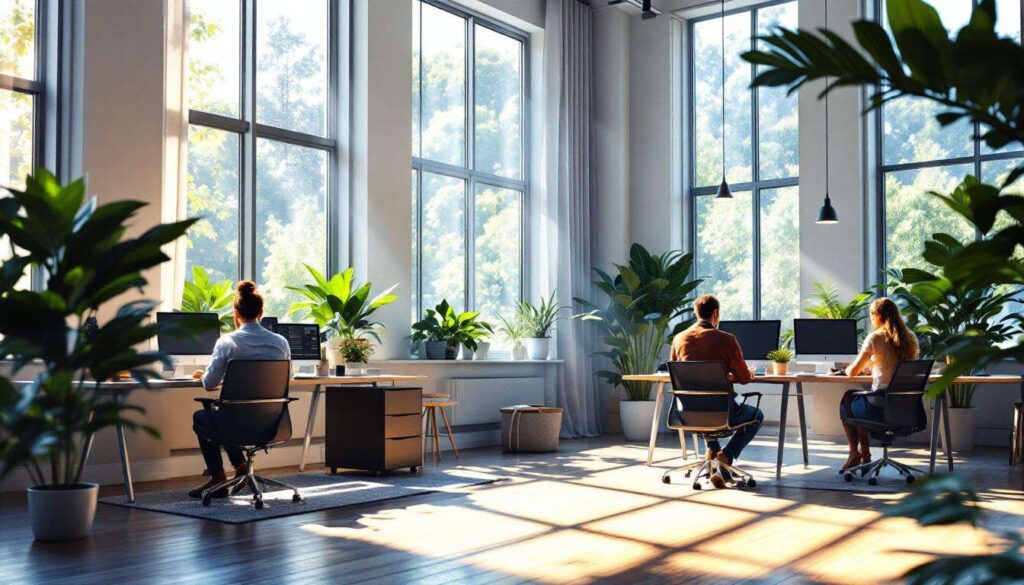
Analyze the modern office environment and a striking correlation emerges: an employee’s desk location can directly predict their annual sick leave. The data is clear and compelling, revealing that individuals with consistent exposure to natural light through a nearby window take, on average, six fewer sick days per year. This is not a matter of coincidence but a direct consequence of the profound physiological and psychological effects of daylight on human health and well-being. Understanding this connection is no longer a peripheral concern for architects and designers but a central issue for any organization focused on optimizing employee health, reducing absenteeism, and fostering a productive workplace.
The health benefits of natural light
The connection between daylight and human health is deeply rooted in our biology. Exposure to natural light is not merely a preference but a fundamental need, triggering critical processes that maintain physical and mental equilibrium. Denying this exposure, as is common in windowless or poorly lit office spaces, can have measurable negative health consequences that contribute directly to absenteeism.
Vitamin D synthesis and immune function
Sunlight is the primary source for the production of vitamin D in the body, a crucial hormone for a robust immune system. When skin is exposed to ultraviolet B (UVB) rays, it synthesizes vitamin D, which helps regulate immune responses and fight off infections. An employee sitting in a dark corner of an office is far less likely to get even incidental sun exposure during the day. This deficiency can lead to a weakened immune defense, making them more susceptible to common illnesses like the flu and colds. A stronger immune system, fueled by adequate vitamin D, means fewer infections and fewer sick days.
Circadian rhythm regulation
Natural light is the most powerful external cue for regulating our circadian rhythms, the body’s 24-hour internal clock that governs sleep-wake cycles. Exposure to bright, natural light during the day, particularly in the morning, signals to the brain that it is time to be alert and awake. Conversely, the absence of this light can disrupt the cycle, leading to poor sleep quality at night. The consequences of disrupted sleep are significant and include:
- Impaired immune function
- Increased stress levels
- Reduced cognitive performance
- Higher risk of burnout
An employee who sleeps well is fundamentally a healthier employee, better equipped to handle stress and resist illness.
Mental health and mood improvement
The impact of natural light extends beyond physical health to mental well-being. Sunlight exposure is known to boost the brain’s production of serotonin, a neurotransmitter that acts as a natural mood stabilizer. Higher serotonin levels are associated with feelings of calmness and focus. In contrast, low levels are linked to depression and seasonal affective disorder (SAD). A bright, daylit workspace can therefore act as a passive, preventative measure against stress and low mood, creating a more positive and resilient workforce.
These combined health advantages create a compelling argument that an employee’s physical and mental resilience is significantly bolstered by simple proximity to a window. This enhanced state of health naturally translates into improved performance and presence at work, directly affecting productivity metrics.
The impact of daylight on productivity
While the health benefits of natural light are a primary driver in reducing sick days, the direct impact on an employee’s daily performance is equally significant. A well-lit environment is a catalyst for higher productivity, greater focus, and improved cognitive function. This creates a positive feedback loop: healthier employees are more productive, and a productive environment contributes to job satisfaction and overall well-being.
Enhanced focus and reduced eye strain
Artificial lighting, especially the harsh, flickering fluorescent lights common in many offices, is a major source of physical discomfort. It can lead to computer vision syndrome, characterized by eye strain, dryness, and headaches. Natural light, with its full spectrum and dynamic qualities, is far easier on the eyes. Employees working in daylight report fewer instances of headaches and eye fatigue, allowing them to maintain concentration for longer periods without physical discomfort becoming a distraction.
Cognitive performance boost
Research consistently demonstrates a link between daylight exposure and enhanced cognitive abilities. Employees in daylit offices perform better on tasks requiring memory, logic, and creative thinking. The alertness promoted by natural light helps to combat the mid-afternoon slump that plagues many office workers. The difference in performance can be stark, as illustrated by a comparison of key metrics.
| Performance metric | Employees with window access | Employees in windowless spaces |
|---|---|---|
| Task completion speed | Up to 15% faster | Baseline |
| Error rate | Reduced by up to 20% | Baseline |
| Reported alertness | Consistently higher | Significant dip after lunch |
Increased employee engagement
The quality of the physical workspace is a powerful, if often overlooked, factor in employee engagement and morale. An office with abundant natural light and views of the outdoors is perceived as a more pleasant and valuable place to work. This simple amenity signals that the company cares about its employees’ well-being. This perception fosters higher job satisfaction, which in turn leads to greater loyalty, motivation, and engagement with work.
When employees are healthier, more comfortable, and more engaged, their motivation to be present and perform at their best increases. This synergy of well-being and productivity provides a clear explanation for why a seat by the window is directly correlated with lower rates of absenteeism.
Why proximity to a window reduces absenteeism
The reduction in sick days for employees near windows is not the result of a single factor but the culmination of interconnected physiological and psychological benefits. It is the synthesis of better health, improved mood, and a more comfortable work environment that directly translates into better attendance records. This phenomenon can be broken down into a few key causal links.
Direct link between light, health, and attendance
The core of the argument is simple: healthier people do not need to take as many sick days. As established, natural light exposure strengthens the immune system via vitamin D, regulates sleep for better recovery, and improves mood to combat stress. Each of these benefits directly mitigates a common reason for calling in sick. An employee with a well-regulated circadian rhythm and a robust immune system is statistically less likely to contract a cold, while one with better mental health is less prone to taking days off for stress or burnout.
The psychological effect of a view
Beyond the quality of the light itself, the presence of a window provides a view, offering a crucial psychological benefit known as “micro-restoration.” Glancing outside at a natural scene, even for a few moments, can reduce mental fatigue and restore focus. This connection to the outside world helps to alleviate the feeling of being trapped indoors, which is a significant contributor to workplace stress. Key psychological benefits include:
- Stress reduction: Viewing natural elements like trees or the sky has been shown to lower cortisol levels.
- Mental fatigue recovery: A brief visual break helps reset attention and cognitive resources.
- Increased sense of well-being: Feeling connected to the cycles of the day and the weather enhances overall contentment.
Comparative absenteeism rates
The statistical evidence provides the most compelling case. When tracking attendance data, companies consistently find a clear pattern. The “six fewer sick days” figure is an average derived from multiple workplace studies that control for other factors. The disparity is not trivial; it represents a significant loss of productivity and increased costs for the company.
| Employee group | Average sick days per year | Annual productivity impact |
|---|---|---|
| Employees with window access | 8 | Baseline |
| Employees without window access | 14 | -4.8% productivity per employee |
These figures are not just abstract observations but are backed by a growing body of scientific inquiry into the measurable effects of light on the human body.
Scientific studies on exposure to natural light
The assertion that daylight impacts health and attendance is not based on anecdote but is supported by rigorous scientific research from leading institutions. Studies in the fields of architecture, neuroscience, and public health have consistently validated the profound connection between our environment and our well-being, providing a solid foundation for designing healthier workplaces.
Cornell university research findings
A landmark study from Cornell university’s department of design and environmental analysis provided concrete data on the topic. Researchers found that employees in daylit office environments reported an 84% drop in symptoms of eye strain, headaches, and blurred vision. These symptoms are major contributors to presenteeism (working while sick) and eventual absenteeism. The study highlighted that optimizing daylight in an office is not an aesthetic choice but a health intervention, directly reducing the physical discomfort that can lead to sick leave.
The role of photobiology
The field of photobiology, which studies the effects of light on living organisms, has uncovered the specific mechanisms at play. Scientists have identified specialized photoreceptors in the human eye, separate from those used for vision, called intrinsically photosensitive retinal ganglion cells (ipRGCs). These cells detect the intensity and spectrum of ambient light and send signals directly to the brain’s master clock, the suprachiasmatic nucleus. This biological pathway is the primary mechanism by which natural light synchronizes our circadian rhythms, proving that light exposure is a non-negotiable biological requirement for optimal functioning.
Data from the national institutes of health
Research funded and published by organizations like the national institutes of health (NIH) has further cemented these findings. Studies have linked poor lighting conditions in workplaces to higher levels of the stress hormone cortisol, sleep disturbances, and an increased prevalence of mood disorders. One NIH-supported report noted that office workers without windows got, on average, 46 minutes less sleep per night than their counterparts with windows. This sleep deficit has a cascading negative effect on immune function and overall health, providing a clear scientific rationale for the observed increase in sick days.
With such a robust scientific consensus, the focus logically shifts from questioning the importance of natural light to actively implementing design strategies that maximize its presence in the workplace.
Office design to maximize light exposure
Recognizing the critical role of natural light, forward-thinking companies and architects are no longer treating windows as a perk for corner offices. Instead, they are adopting design principles that ensure daylight penetrates deep into the building, benefiting the maximum number of employees. This involves a holistic approach that considers layout, materials, and the strategic placement of workstations.
Open-plan layouts and glass partitions
The traditional office model, with private, enclosed offices lining the perimeter, effectively hoards natural light for a select few while casting the central areas into shadow. The modern solution is to use open-plan layouts that remove opaque barriers. Where privacy is necessary, transparent glass partitions are used instead of solid walls. This design choice maintains a sense of separate space while allowing light to flow freely throughout the entire floor, democratizing access to daylight.
Strategic desk placement
Simply having an open plan is not enough; the arrangement of furniture is also crucial. Desks should be oriented to take full advantage of the available light without creating problems like glare on computer screens. A common best practice is to place workstations perpendicular to the windows. This orientation allows employees to easily glance outside for a mental break but prevents direct, harsh light from causing eye strain. The goal is to create a workspace where ambient, indirect natural light is the primary source of illumination for most of the day.
Light-reflective materials and colors
The final piece of the puzzle is enhancing the travel of light through interior design choices. Using materials and colors with high reflectivity can amplify the effects of natural light, bouncing it into darker corners of the office. Key strategies include:
- Paint: Using white, off-white, or other light pastel colors on walls and ceilings can reflect up to 80% of available light.
- Flooring: Light-colored wood, polished concrete, or light-toned carpets help bounce light upwards.
- Furniture: Desks and storage units with light or metallic surfaces contribute to a brighter overall environment.
These intentional design choices are not merely theoretical; they are being put into practice by some of the world’s most innovative companies, who serve as compelling case studies for the benefits of a light-centric workplace.
Case studies: companies promoting bright spaces
The theoretical benefits of daylit workspaces are being proven in real-world applications by leading global companies. These organizations have invested heavily in creating environments that prioritize employee well-being, with natural light as a cornerstone of their design philosophy. Their experiences serve as powerful testaments to the return on investment that comes from a brighter workplace.
Google’s biophilic design approach
Google is renowned for its employee-centric campuses, which are deeply influenced by the principles of biophilic design—the concept that humans have an innate need to connect with nature. This philosophy is evident in their use of vast glass walls, skylights, and central atriums that flood work areas with natural light. By integrating indoor plants and views of green spaces, Google creates a calming and stimulating environment. The company reports that these designs not only attract top talent but also foster creativity and reduce stress, contributing to a culture of innovation and well-being.
The edge in amsterdam: a smart, bright building
Often cited as the world’s greenest and smartest office building, The Edge in Amsterdam was designed around daylight. Its north-facing glass facade and large, open atrium ensure that every workspace is within a few meters of a window. The building’s systems even adjust lighting and climate based on the sun’s position. The primary occupant, Deloitte, has reported significant improvements in employee satisfaction and collaboration, along with a marked decrease in absenteeism since moving into the building.
Lessons from scandinavian architecture
In Scandinavian countries, where daylight is a precious commodity during the long winters, architecture has long prioritized the maximization of natural light. This design ethos offers valuable lessons for workplaces everywhere. A comparison highlights their focus:
| Design principle | Traditional office design | Scandinavian design |
|---|---|---|
| Window size | Standard, often small | Large, floor-to-ceiling windows |
| Interior walls | Opaque, creating dark corridors | Minimal or glass partitions |
| Color palette | Often dark or corporate gray | Predominantly white and light wood |
This approach demonstrates a deep, culturally ingrained understanding that light is essential for health and happiness, a principle that modern office design is now embracing on a global scale.
Prioritize access to natural light as a fundamental requirement of workplace design, not a luxury. Recognize its proven role in boosting the immune system, regulating sleep, and improving mental health. Implement design strategies like open layouts, glass partitions, and reflective surfaces to ensure daylight reaches every employee. Acknowledge that investing in a window seat is an investment in a healthier, more present, and more productive workforce.