



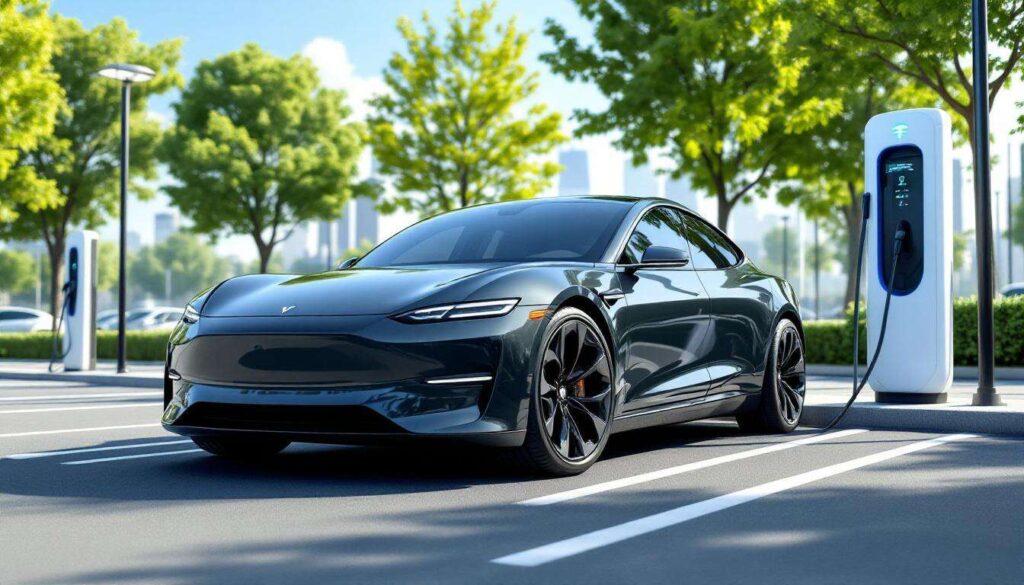
The debate surrounding electric vehicles often gets mired in complexities, with critics quick to point out the environmental costs of battery production and the source of the electricity that powers them. While these are valid points for discussion, they frequently obscure a more fundamental truth: when assessed over their entire lifecycle, electric cars represent a significantly cleaner mode of transportation than their internal combustion engine counterparts. The evidence is not a matter of opinion but of data, demonstrating a clear and growing advantage in the fight against climate change and air pollution. It is time to move beyond surface-level arguments and examine the key reasons why the electric revolution is an indispensable step toward a sustainable future.
Reduced Environmental Impact from Production
A common critique leveled against electric vehicles (EVs) is their manufacturing footprint, often referred to as the initial “carbon debt”. It is true that producing a lithium-ion battery is an energy-intensive process. However, this initial impact must be viewed within the complete context of the vehicle’s life, not as a standalone disqualifier.
The reality of manufacturing emissions
The production of an EV, particularly its battery, does generate more carbon dioxide emissions than the manufacturing of a conventional car. This is primarily due to the mining and processing of raw materials like lithium, cobalt, and nickel, as well as the energy consumed in the battery assembly process. Yet, this higher initial emission is a one-time event. Once the car is on the road, it begins to pay back this carbon debt with every mile driven without burning fossil fuels. The breakeven point, where an EV becomes cleaner than a comparable gasoline car, is reached much faster than critics suggest.
| Vehicle Type | Estimated Manufacturing CO2 Emissions (metric tons) |
|---|---|
| Internal Combustion Engine (ICE) | ~7-8 tons |
| Electric Vehicle (EV) with 60 kWh battery | ~10-12 tons |
Innovations in battery production
The automotive industry is acutely aware of the manufacturing challenges and is actively working to mitigate them. Manufacturers are making significant strides in cleaning up the supply chain and production lines. These efforts include:
- Powering gigafactories with renewable energy sources like solar and wind, drastically cutting the carbon footprint of battery assembly.
- Developing new battery chemistries that reduce or eliminate the need for controversial materials like cobalt.
- Improving manufacturing efficiency to consume less energy per battery produced.
- Implementing stricter standards for ethical and environmentally responsible sourcing of raw materials.
This focus on sustainable production means that the initial carbon debt of new EVs is continuously shrinking, further strengthening their environmental credentials from day one.
While the production phase sets the initial stage, the true environmental performance of a vehicle is determined over its years of operation, where the contrast in emissions becomes starkly apparent.
CO2 Emissions: an Undeniable Advantage
The most significant environmental benefit of electric vehicles lies in their operational emissions, or rather, their lack thereof. Unlike internal combustion engine (ICE) vehicles that continuously release greenhouse gases and pollutants, EVs have zero tailpipe emissions, leading to a profound impact on both local air quality and the global climate.
Zero tailpipe emissions
An EV driving down the street releases no carbon dioxide, nitrogen oxides (NOx), or particulate matter. This is a game-changer for urban environments, where vehicle pollution is a primary cause of respiratory illnesses and other health problems. For residents of densely populated cities, the shift to electric mobility means cleaner, healthier air. This immediate local benefit is an often-understated advantage that has a direct positive impact on public health.
Lifecycle emissions analysis
Critics often point to the “long tailpipe” argument, suggesting that EVs are only as clean as the grid that charges them. While there is truth to this, a comprehensive lifecycle analysis still shows a clear win for EVs, even in regions with a carbon-intensive electricity mix. The key is that even a coal-powered grid is more efficient at generating energy and controlling pollution than millions of individual, small, and inefficient gasoline engines. As the grid becomes greener, the advantage of EVs grows exponentially.
| Vehicle Type | Region (Illustrative Grid Mix) | Estimated Lifecycle CO2 Emissions (g/mile) |
|---|---|---|
| Gasoline Car (average) | Anywhere | ~410 g/mile |
| Electric Vehicle | U.S. Average Grid Mix | ~150 g/mile |
| Electric Vehicle | California (Renewable-heavy) | ~90 g/mile |
| Electric Vehicle | Norway (Hydro-dominant) | ~30 g/mile |
The greening grid
Perhaps the most compelling aspect of the EV emissions argument is its dynamic nature. An ICE vehicle’s efficiency and emissions are fixed the day it leaves the factory; it will never get cleaner. An EV, however, gets cleaner every year as the electricity grid incorporates more renewable energy sources. A car purchased today will have a lower carbon footprint five years from now without any modification to the vehicle itself. This built-in capacity for improvement makes EVs a future-proof investment in decarbonization.
This evolving synergy between electric vehicles and the power grid highlights the critical role that clean energy sources play in maximizing their environmental potential.
Renewable Resources: the Future of Electric Vehicles
The true potential of electric vehicles is unlocked when they are powered by renewable energy. This pairing transforms the EV from a lower-emission vehicle into a truly zero-emission transportation solution. The integration of EVs with renewables is not a distant dream but a rapidly expanding reality that is reshaping both the transportation and energy sectors.
Charging with clean energy
For a growing number of EV owners, charging their vehicle is already a carbon-free process. Homeowners with rooftop solar panels can generate their own clean electricity, effectively using sunlight to power their daily commute. Even for those without personal solar installations, many utility companies now offer programs that allow customers to source their home’s electricity from 100% renewable sources like wind and solar farms. This simple choice ensures that every mile driven is powered by a clean, sustainable resource.
Vehicle-to-grid (V2G) technology
Beyond simply consuming clean energy, EVs are poised to become a critical component of the renewable energy grid itself. Through a technology known as Vehicle-to-Grid (V2G), parked and plugged-in EVs can act as a vast, distributed energy storage network. This has several profound benefits:
- Grid stabilization: EVs can absorb excess renewable energy when production is high (e.g., midday sun) and feed it back to the grid during peak demand, reducing the need for fossil fuel “peaker” plants.
- Increased renewable capacity: By providing a reliable storage solution, V2G helps overcome the intermittency of wind and solar power, allowing for a greater percentage of renewables on the grid.
- Financial incentives: EV owners can potentially be compensated by utility companies for allowing their car batteries to be used for grid services, creating a new source of passive income.
This symbiotic relationship turns millions of cars from passive energy consumers into active participants in the green energy transition.
Of course, the long-term sustainability of this ecosystem depends heavily on the core component of the vehicle: the battery, whose lifespan and end-of-life management are crucial considerations.
Durability and Recycling of Batteries
Concerns about battery longevity and the creation of a new waste stream are frequently cited as drawbacks to EV adoption. However, these fears are largely based on outdated information and overlook the rapid advancements in battery technology, second-life applications, and the burgeoning recycling industry that are creating a sustainable, circular economy for batteries.
Modern battery longevity
The myth that EV batteries have a short lifespan and require costly replacement is one of the most persistent. In reality, modern EV batteries are engineered for extreme durability. Most manufacturers offer warranties covering 8 years or 100,000 miles, guaranteeing the battery will retain a significant portion (typically 70%) of its original capacity. Real-world data shows that most batteries far exceed these warranty periods, often lasting the entire lifespan of the vehicle itself. Battery degradation is a slow, predictable process, not a sudden failure.
The second life of EV batteries
When an EV battery no longer meets the demanding performance standards for automotive use, it is far from useless. These “retired” batteries still retain 70-80% of their original capacity, making them perfectly suited for less demanding second-life applications. They are increasingly being repurposed for:
- Residential energy storage systems, to be paired with solar panels.
- Commercial-scale energy storage to help businesses reduce peak electricity demand.
- Grid-scale storage to support renewable energy integration and provide backup power.
This practice of reuse extends the battery’s useful life by a decade or more, maximizing the value of the resources used to create it.
Advancements in recycling
Once a battery has completed its second life, it enters the final stage: recycling. A sophisticated and growing industry is dedicated to recovering the valuable materials within EV batteries. Advanced hydrometallurgical and pyrometallurgical processes can now recover upwards of 95% of critical minerals like lithium, cobalt, nickel, and manganese. These recycled materials can then be used to produce new batteries, closing the loop and creating a circular supply chain. This reduces the environmental and social impact of new mining operations and enhances resource security.
The technological and logistical solutions for batteries are well-established, but their effectiveness relies on the widespread availability of places for drivers to plug in.
Expanding Charging Infrastructure
The fear of being stranded with a dead battery, commonly known as “range anxiety,” remains a significant barrier to EV adoption for many potential buyers. However, the reality on the ground is changing rapidly as a robust and multi-layered charging infrastructure expands across the country, making EV ownership more practical and convenient than ever before.
The growth of public charging networks
Public charging stations are no longer a rarity. They are being deployed at an exponential rate in locations where people work, shop, and travel. This network includes both Level 2 chargers, ideal for topping up over a few hours, and DC fast chargers, which can add hundreds of miles of range in under 30 minutes. This buildout is making long-distance travel in an EV not just possible, but increasingly seamless.
| Year | Total Public Ports (Level 2 & DC Fast) |
|---|---|
| 2018 | ~60,000 |
| 2020 | ~95,000 |
| 2022 | ~140,000 |
| 2024 (projected) | ~180,000+ |
Home charging as a primary solution
While public charging is crucial for travel and for those without dedicated parking, the cornerstone of the EV experience is home charging. For the majority of EV owners, the daily routine involves plugging in overnight, just like a smartphone. They wake up every morning with a “full tank” of range, eliminating the need for weekly trips to a gas station. This level of convenience is a fundamental advantage of EV ownership. It is also the most cost-effective way to charge, as residential electricity rates are significantly lower than the price of gasoline.
Overcoming infrastructure challenges
Significant challenges do remain. Expanding access to reliable charging for residents of apartment buildings and ensuring comprehensive coverage in rural areas are top priorities. However, these issues are being actively addressed through a combination of private investment and public policy. Government funding is specifically targeted at building out charging corridors along highways and ensuring equitable access in underserved communities. The momentum is firmly behind a fully electrified transportation network.
This rapid infrastructure development is not happening by chance; it is a direct result of a concerted push from policymakers who recognize electrification as a key pillar of our future energy strategy.
Energy Transition and Government Policies
The shift from internal combustion engines to electric vehicles is not merely a consumer trend; it is a central component of a global energy transition driven by deliberate government policy. Recognizing the urgent need to address climate change and reduce dependence on fossil fuels, nations around the world are implementing policies designed to accelerate the adoption of electric mobility.
Government incentives and regulations
Governments are using a combination of “carrots” and “sticks” to steer the automotive market toward electrification. These policy tools are proving highly effective in influencing both consumer behavior and corporate strategy. Key measures include:
- Consumer incentives: Tax credits, rebates, and sales tax exemptions directly reduce the purchase price of new EVs, making them more financially accessible to a broader audience.
- Infrastructure investment: Public funds are being allocated to build out national charging networks, removing one of the primary barriers to adoption.
- Stricter emissions standards: Regulations that mandate a steady decrease in the average emissions of a manufacturer’s fleet effectively compel automakers to produce and sell more zero-emission vehicles.
- Phase-out targets: An increasing number of states and countries have announced future dates by which the sale of new internal combustion engine vehicles will be banned, sending a clear signal to the industry about the direction of future investment.
The global commitment to decarbonization
The push for EVs is inextricably linked to international climate agreements and national decarbonization goals. Transportation is one of the largest sources of greenhouse gas emissions globally, and electrifying road transport is widely seen as one of the most impactful strategies for achieving significant carbon reductions. This is not just about selling cars; it is about fundamentally re-engineering our transportation systems to be sustainable and aligned with a livable future. The political will to see this transition through is strong, as it aligns with broader objectives related to energy independence, public health, and technological innovation.
Assessing the full picture, from the factory floor to the end of the vehicle’s life, reveals a clear and compelling case. The lifecycle emissions of electric vehicles are undeniably lower, and this advantage grows with each passing year as our electricity grids become cleaner and battery technology improves. The arguments of critics, while often rooted in valid initial concerns, fail to account for the rapid pace of innovation and the systemic nature of this transition. The path forward involves acknowledging the challenges in manufacturing and infrastructure while recognizing that the solutions are already being implemented. The electric vehicle is not a perfect solution, but it is a vastly superior one, and it represents a critical and unavoidable step in building a cleaner transportation future.