



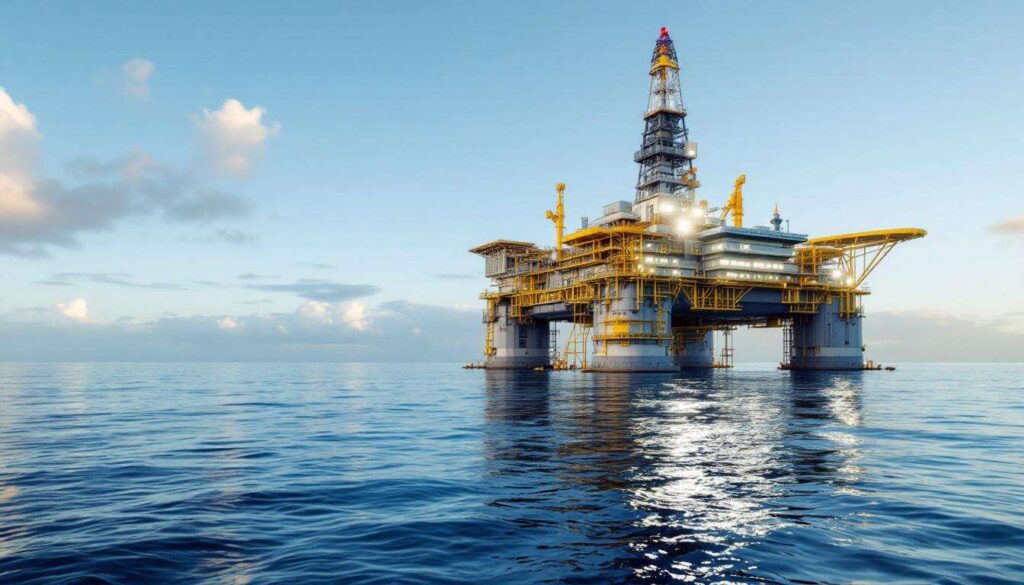
Beneath the turbulent waves of the North Sea, a region long synonymous with oil and gas extraction, a profound transformation is underway. The same geological formations that once fueled Europe’s industrial age are now being repurposed for a critical mission in the climate era: to become a final resting place for carbon dioxide. This ambitious endeavor marks a pivotal shift, turning a historical source of emissions into a potential solution, as the first large-scale, cross-border offshore carbon storage sites in the European Union take shape. The project is not just a technological feat but a complex interplay of environmental science, international policy, and economic strategy that could redefine the future of heavy industry in a decarbonizing world.
Understanding the North Sea CO2 Storage Project
A new purpose for old reservoirs
The core concept of the North Sea project is to utilize depleted oil and gas reservoirs, located thousands of meters below the seabed, as secure containers for captured CO2. These sandstone formations, which have trapped hydrocarbons for millions of years, possess the ideal geological properties for permanent storage. Their porosity allows them to absorb the CO2, while an impermeable caprock layer above prevents it from escaping back into the atmosphere. The initiative leverages decades of geological data and existing infrastructure from the fossil fuel industry, creating a pragmatic pathway to carbon sequestration. The primary goal is to provide a disposal service for industries with unavoidable emissions, such as cement production and waste-to-energy plants, helping them meet stringent climate targets.
Pioneering initiatives: greensand and northern lights
Two major projects are leading the charge in this new frontier. Project Greensand, led by Denmark, has already successfully injected CO2 into a sandstone reservoir in the Danish North Sea. This project is notable for being the world’s first to store CO2 transported across national borders. Simultaneously, the Northern Lights project in Norway, a joint venture between Equinor, Shell, and TotalEnergies, is developing a comprehensive value chain, including specialized ships to transport liquefied CO2 from industrial sites across Europe to an offshore storage terminal. These projects serve as crucial proofs-of-concept, demonstrating the technical and logistical feasibility of offshore carbon storage on a commercial scale.
| Feature | Project Greensand (Denmark) | Northern Lights (Norway) |
|---|---|---|
| Lead Nation | Denmark | Norway |
| Storage Location | Nini West field (depleted oil field) | Johansen formation (saline aquifer) |
| Initial Storage Capacity | Up to 1.5 million tons of CO2 per year | 1.5 million tons of CO2 per year (Phase 1) |
| Projected Full Capacity | Up to 8 million tons of CO2 per year by 2030 | Over 5 million tons of CO2 per year (Phase 2) |
| Status | Operational, first injection completed | Under construction, operational soon |
While these initial projects are significant, their success hinges on a careful evaluation of the environmental implications, both positive and negative.
The Environmental Stakes of CO2 Storage
The climate mitigation argument
Proponents of Carbon Capture and Storage (CCS) argue it is an indispensable tool in the fight against climate change. The Intergovernmental Panel on Climate Change (IPCC) has included CCS in most scenarios that limit global warming to 1.5°C. For heavy industries where emissions are inherent to the chemical process itself, not just energy use, CCS represents one of the only viable paths to decarbonization. By capturing CO2 at the source and permanently storing it, the technology prevents vast quantities of greenhouse gases from entering the atmosphere. The North Sea’s immense storage potential, estimated in the tens of gigatons, could theoretically accommodate decades of emissions from Europe’s industrial heartlands, buying crucial time for the transition to a fully renewable economy.
Potential risks and public perception
Despite its promise, offshore CO2 storage is not without environmental risks that demand rigorous scrutiny. The primary concern is the potential for leakage from the storage reservoir, which could release CO2 into the marine environment and, eventually, the atmosphere, negating the climate benefits. Other potential issues include:
- Seismic activity: The injection of CO2 at high pressure could potentially induce minor seismic events, although the risk of significant tremors is considered extremely low in the stable geology of the North Sea.
- Marine ecosystem impact: A localized leak could increase the acidity of the surrounding seawater, potentially harming marine organisms in the immediate vicinity of the seabed.
- Pipeline and transport integrity: The infrastructure used to transport CO2, whether by ship or pipeline, must be robustly designed and maintained to prevent accidental releases.
To address these concerns, projects are subject to strict monitoring protocols, using seismic sensors and chemical detectors to ensure the CO2 remains securely trapped. Gaining public trust is paramount, and transparent communication about these risks and mitigation strategies is essential for the technology’s widespread acceptance. The responsibility for ensuring this rigorous oversight often falls to supranational bodies that can standardize regulations across borders.
The Role of the European Union in the Project
Strategic importance within the european green deal
The European Union views Carbon Capture, Utilization, and Storage (CCUS) as a critical component of its ambitious European Green Deal and its goal of achieving climate neutrality by 2050. The North Sea projects are not isolated experiments but integral parts of a continental strategy. The EU provides significant political and financial support to accelerate their development. This support is formalized through instruments like the EU Innovation Fund, which allocates billions of euros from the emissions trading system to innovative low-carbon technologies. By designating CCS projects as Projects of Common Interest (PCIs), the EU streamlines permitting processes and facilitates access to financing, signaling their strategic importance for Europe’s energy security and industrial competitiveness.
Developing a cross-border regulatory framework
One of the EU’s most vital roles is establishing a coherent legal and regulatory framework for a technology that inherently crosses borders. CO2 captured in Germany or Belgium may be shipped for storage in Danish or Norwegian waters. This requires harmonized rules governing the transport, injection, and long-term monitoring of CO2. The EU’s CCS Directive provides the foundational legal text, setting out criteria for site selection, risk assessment, and financial liability. Furthermore, the EU facilitates bilateral agreements between member states, creating a single market for CO2 transport and storage. This collaborative approach is essential to unlocking the full potential of the North Sea basin and ensuring that all industrial regions, including landlocked ones, have access to permanent storage solutions. This complex regulatory and political architecture is built upon a foundation of sophisticated engineering.
The Technologies Used for CO2 Storage
From capture to liquefaction
The CCS chain begins long before the CO2 reaches the North Sea. The first step, capture, involves separating CO2 from other gases produced by industrial processes. There are several primary methods, but post-combustion capture using amine solvents is currently the most mature technology for existing facilities. Once captured, the CO2 gas, which is over 99% pure, is compressed and cooled until it becomes a liquid. This liquefaction process dramatically reduces its volume, making it economically and logistically feasible to transport. The energy required for capture and liquefaction remains a significant challenge, creating a “parasitic load” on the industrial plant that developers are continuously working to reduce through more efficient processes.
Offshore transport and permanent injection
Once liquefied, the CO2 is transported to the offshore storage site. For the North Sea projects, this is primarily done using custom-built ships, which offer flexibility to service multiple industrial clusters across Europe. Upon arrival at the offshore platform, the liquid CO2 is transferred to an injection well. This well, similar in design to those used for oil and gas extraction, extends thousands of meters below the seabed into the target geological formation. The CO2 is then injected under high pressure, where it permeates the porous rock and becomes permanently trapped beneath the solid caprock layer. A suite of advanced monitoring technologies, including 4D seismic imaging and downhole pressure gauges, is used to track the CO2 plume in real-time and ensure the integrity of the storage site for centuries to come. The implementation of this technology is already beginning to reshape the economic landscape of the surrounding nations.
The Economic and Social Impact for Neighboring Countries
A new industrial ecosystem
The development of a large-scale CO2 storage industry in the North Sea is poised to create a new economic ecosystem for coastal nations like Denmark, Norway, the Netherlands, and the United Kingdom. It promises to generate thousands of high-skilled jobs in fields ranging from geology and reservoir engineering to maritime logistics and digital monitoring. Crucially, it offers a “just transition” pathway for workers and companies in the declining offshore oil and gas sector. The skills and expertise honed over decades of fossil fuel extraction are directly transferable to the CCS industry, from drilling injection wells to managing offshore platforms. This repurposing of industrial capacity can help preserve coastal communities that have historically depended on offshore activities.
Investment, infrastructure, and competitiveness
The construction of CO2 transport and storage infrastructure requires massive upfront investment, stimulating economic activity in ports, shipyards, and manufacturing sectors. Countries that establish themselves as leaders in this field can attract international investment and offer a unique service to industries across the continent. By providing a viable and local decarbonization solution, these nations help maintain the competitiveness of their own heavy industries, preventing them from relocating to regions with less stringent climate policies. However, the high cost of CCS remains a barrier, and continued public support and a robust carbon price are essential to make the business case viable for both the storage providers and the industrial emitters.
| Economic Area | Short-Term Impact (Construction Phase) | Long-Term Impact (Operational Phase) |
|---|---|---|
| Employment | High demand for construction, manufacturing, and engineering jobs. | Stable, long-term jobs in operations, monitoring, and maintenance. |
| Infrastructure | Investment in new port facilities, pipelines, and specialized ships. | Creation of a permanent CO2 transport and storage network. |
| Industrial Competitiveness | Stimulus for local supply chains and service companies. | Enables decarbonization of key industries, securing their future. |
The successful establishment of this new economic pillar will pave the way for an even more ambitious vision for the role of carbon storage at sea.
Future Prospects for CO2 Storage at Sea
Scaling up to meet climate goals
The current North Sea projects, while groundbreaking, represent only the first step. The total storage capacity of the basin is enormous, and realizing its full potential will require a significant scaling up of operations. Future phases will likely involve a network of interconnected storage sites and a vast pipeline infrastructure crisscrossing the seabed, creating a “CO2 backbone” for Europe. The ultimate goal is to create a commercial, competitive market for CO2 storage, where multiple providers offer services to emitters across the continent. Achieving the necessary scale to make a meaningful impact on Europe’s total emissions will require dozens of projects of a similar or larger size to be developed over the next two decades, a challenge that demands sustained political will and technological innovation.
A blueprint for the world
The pioneering work being done in the North Sea serves as a critical blueprint for other regions around the world. The lessons learned in regulation, cross-border cooperation, technological deployment, and public engagement will be invaluable for countries looking to develop their own offshore storage resources. Geological basins with similar characteristics exist off the coasts of North America, Australia, and Southeast Asia. By demonstrating that offshore CO2 storage can be done safely and effectively, the North Sea initiative is helping to de-risk the technology globally and accelerate its adoption as a key climate solution. The long-term vision is a global network of carbon storage hubs that can help hard-to-abate industries everywhere transition to a net-zero future.
The North Sea is being transformed from a symbol of the fossil fuel past into a critical asset for a sustainable future. By leveraging its unique geology and industrial heritage, the region’s offshore CO2 storage projects represent a pragmatic and powerful tool in the climate fight. This endeavor stands as a complex but essential undertaking, balancing technological innovation, environmental responsibility, and economic opportunity. Its success will depend on continued international cooperation and public support, but its potential to help decarbonize heavy industry makes it a vital component of the global energy transition.