
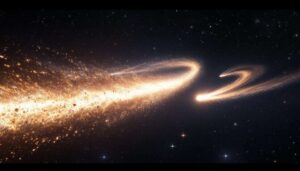

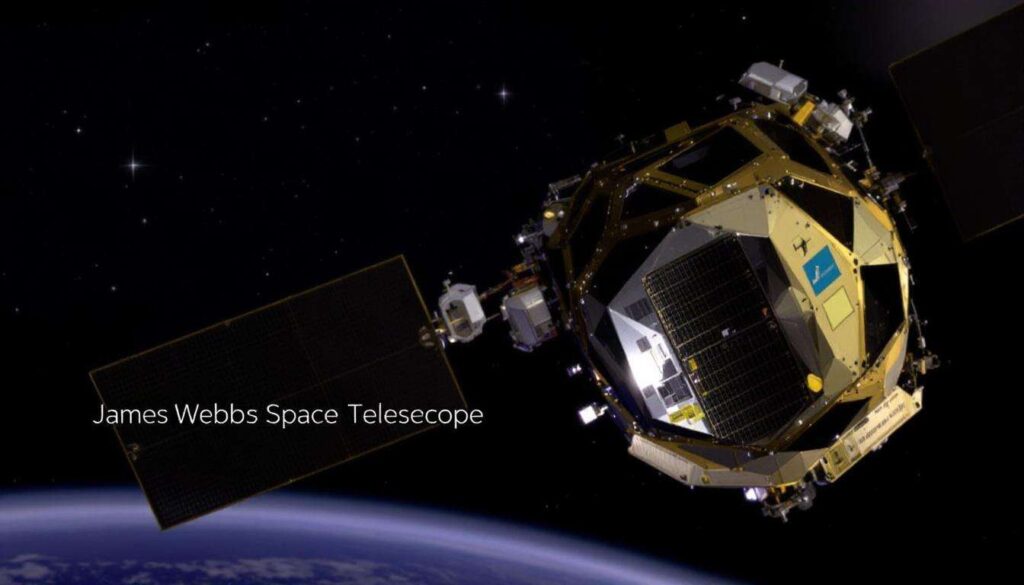
In a potential breakthrough that could rewrite the first chapter of cosmic history, astronomers analyzing data from the James Webb Space Telescope believe they may have captured the light from the universe’s very first stars. These are not just old stars; they are members of a long-theorized but never-before-seen stellar generation known as Population III stars. Forged from the primordial soup of hydrogen and helium that filled the cosmos after the Big Bang, their discovery would mark a pivotal moment in our quest to understand where everything, including ourselves, came from. The initial observations are tantalizing, pointing to objects whose chemical makeup and extreme distance align with theoretical predictions for these stellar pioneers. While confirmation is still pending rigorous scientific review, the preliminary evidence has sent waves of excitement through the astronomical community, heralding a new era of discovery.
Discovery of the first stars: a major breakthrough
Defining the ‘first stars’
The first stars, theoretically known as Population III stars, represent a truly unique and transformative phase in the universe’s evolution. Born in the “Cosmic Dark Ages,” a period roughly 100 to 200 million years after the Big Bang, these stars were fundamentally different from any that exist today. They formed from clouds of pristine gas composed almost exclusively of hydrogen and helium, the only elements created in significant quantities by the Big Bang itself. Lacking the heavier elements, or “metals” as astronomers call them, that help cool modern star-forming clouds, the gas clouds of the early universe could only collapse under gravity at much higher temperatures. This resulted in the formation of stars that were extraordinarily massive, potentially hundreds of times the mass of our sun. Consequently, they were also incredibly bright, hot, and lived very short, violent lives, burning through their fuel in just a few million years before exploding as spectacular supernovae.
The compelling evidence from Webb
The evidence for these ancient stars comes not from a direct, crisp image but from an intricate analysis of light that has traveled for over 13.5 billion years to reach the James Webb Space Telescope. Astronomers focused on distant galaxies, such as the candidate GLASS-z13, whose light is stretched to longer, redder wavelengths by the expansion of the universe, a phenomenon known as cosmological redshift. Using instruments like the Near-Infrared Spectrograph (NIRSpec), scientists can break this faint light down into its constituent colors, creating a spectrum. The spectrum of a candidate object appeared to be devoid of the chemical signatures of elements like oxygen, carbon, and nitrogen. This lack of heavy elements is the key calling card of a Population III star or a galaxy dominated by them, as these elements were only created later, forged in the nuclear furnaces of these very first stars and scattered into space by their explosive deaths.
A monumental moment for cosmology
Confirming the existence of Population III stars would be more than just an observational triumph; it would be like finding the Rosetta Stone for the early universe. Their discovery would provide the first direct observational proof of long-held cosmological models that describe the transition from a simple, dark, and uniform cosmos to the complex, structured, and light-filled universe we see today. This period, known as the Cosmic Dawn, marks the moment the first sources of light ignited, beginning the process of reionizing the neutral hydrogen gas that pervaded space. Finding these stars is not just about checking a box on a theoretical list; it is about witnessing the very beginning of cosmic structure and the origin of chemical complexity in the universe.
The ability to even glimpse these primordial objects is a testament to the revolutionary capabilities of the observatory that captured their faint, ancient light.
The key role of the James Webb Telescope in space exploration
A powerful successor to Hubble
While the Hubble Space Telescope revolutionized astronomy for over three decades, the James Webb Space Telescope (JWST) was specifically designed to see a part of the universe that Hubble could not. Its primary advantage lies in its focus on infrared light. The immense distance to the first stars means their ultraviolet and visible light has been stretched by the expansion of the universe into the infrared part of the spectrum. JWST’s massive, gold-coated mirror and advanced infrared detectors make it uniquely suited to capture this faint, redshifted glow. The following table highlights some of the key differences between these two groundbreaking observatories.
| Feature | Hubble Space Telescope | James Webb Space Telescope |
|---|---|---|
| Primary Mirror Diameter | 2.4 meters (7.9 ft) | 6.5 meters (21.3 ft) |
| Wavelength Observation | Ultraviolet, Visible, Near-Infrared | Near-Infrared, Mid-Infrared |
| Orbit Location | Low Earth Orbit (~540 km) | Second Lagrange Point (L2) (~1.5 million km from Earth) |
| Operating Temperature | ~20°C (68°F) | Below -223°C (-370°F) |
A machine for looking back in time
Because light travels at a finite speed, looking at distant objects is equivalent to looking back in time. The light from the sun takes about eight minutes to reach us, so we see the sun as it was eight minutes ago. The light from the Andromeda Galaxy, our nearest major galactic neighbor, takes 2.5 million years. JWST is designed to see objects whose light has been traveling for over 13.5 billion years, allowing us to see a snapshot of the universe when it was less than 300 million years old, a mere two percent of its current age. This capability is not just an incremental improvement; it is a quantum leap that opens a previously invisible cosmic epoch to direct scientific investigation.
A versatile scientific instrument
While peering into the Cosmic Dawn is one of its primary missions, JWST is a multi-purpose observatory with a broad scientific agenda. Its powerful instruments are transforming nearly every field of astronomy. Its capabilities include:
- Studying the atmospheres of exoplanets orbiting other stars, searching for biosignatures or clues about their habitability.
- Observing the birth of new stars and planetary systems within dusty nebulae in our own Milky Way.
- Investigating the formation and evolution of galaxies over cosmic time.
- Examining planets, moons, and other objects within our own solar system with unprecedented detail.
However, achieving these ambitious goals, especially the detection of the first stars, requires overcoming immense scientific hurdles.
The scientific challenges of observing the first stars
The extreme faintness of the signal
The primary challenge in detecting Population III stars is their incredible distance. Although they were individually very luminous, their light has spread out over a vast cosmic distance, making their apparent brightness from Earth infinitesimally small. The signal is so faint that it pushes the limits of even JWST’s sensitivity. Detecting it is akin to trying to spot a single candle flame on the surface of the moon. This requires long exposure times, where the telescope stares at a single patch of sky for many hours or even days, slowly collecting every precious photon that has completed its 13.5-billion-year journey.
Distinguishing signal from cosmic noise
Compounding the problem of faintness is the issue of contamination. The light from a potential first-star galaxy is easily lost in the glare of countless foreground galaxies that lie between it and the telescope. Scientists must meticulously identify and subtract the light from these intervening objects to isolate the signal from their target. Furthermore, they must differentiate the unique spectral signature of a Population III star from other astronomical phenomena that might mimic it, such as quasars or other types of young, active galaxies. This requires sophisticated data processing and a deep understanding of all potential sources of cosmic interference.
The rigorous confirmation process
An initial detection is only the beginning of a long and painstaking confirmation process. A claim as extraordinary as discovering the first stars requires extraordinary evidence. The scientific method demands a high burden of proof, which involves several critical steps. First, the initial spectroscopic data must be analyzed by multiple independent teams to rule out instrumental errors or misinterpretations. Second, follow-up observations, often with even longer exposure times, are needed to improve the signal-to-noise ratio and confirm the key spectral features, particularly the absence of heavy elements. Finally, the findings must be submitted to a peer-reviewed scientific journal, where experts in the field will rigorously scrutinize the methodology, data, and conclusions before the discovery is officially accepted by the scientific community.
Overcoming these challenges is only possible because of the revolutionary technology built into the telescope itself.
State-of-the-art technology: the unprecedented imaging capacity of the James Webb
The magnificent primary mirror
At the heart of the James Webb Space Telescope is its groundbreaking primary mirror. Spanning 6.5 meters in diameter, it has over six times the light-collecting area of the Hubble mirror, enabling it to gather significantly more light from faint, distant objects. The mirror is not a single piece of glass but an array of 18 hexagonal segments made of beryllium, a metal that is both incredibly lightweight and strong, and holds its shape at cryogenic temperatures. Each segment is coated with a microscopically thin layer of pure gold, chosen specifically because it is exceptionally reflective of infrared light, the exact wavelength needed to see the early universe.
A suite of advanced scientific instruments
The light collected by the mirror is directed into a suite of four state-of-the-art scientific instruments, each designed for a specific purpose. For the search for the first stars, two are particularly critical:
- NIRCam (Near-Infrared Camera): This is JWST’s primary imager, responsible for detecting the faint light from the earliest stars and galaxies. Its wide field of view allows it to survey large patches of the sky to identify potential candidates.
- NIRSpec (Near-Infrared Spectrograph): This instrument is the key to confirming a discovery. It acts like a cosmic prism, splitting the faint light from a single object into a spectrum of thousands of different infrared colors. By analyzing this spectrum, astronomers can determine an object’s chemical composition, temperature, and distance with remarkable precision.
The essential need to stay cool
To detect the faint infrared heat signals from the edge of the observable universe, the telescope itself must be incredibly cold. Any heat from its own mirrors or detectors would create a blinding glare, overwhelming the ancient photons it is trying to capture. To achieve this, JWST is equipped with a massive, five-layer sunshield the size of a tennis court. This shield blocks heat and light from the sun, Earth, and moon, allowing the telescope to passively cool to below -223°C (-370°F). One instrument, MIRI (the Mid-Infrared Instrument), requires even colder temperatures and uses an advanced “cryocooler” to reach a frigid -266°C (-447°F), just a few degrees above absolute zero.
The successful operation of this complex technology is poised to have profound consequences for our fundamental understanding of the cosmos.
Implications of this discovery for our understanding of the universe
Validating and refining cosmological models
The standard model of cosmology provides a powerful framework for understanding the universe’s history, but many details about the early epochs remain purely theoretical. The direct observation of Population III stars would provide the first concrete data points from this era. It would allow scientists to test and refine their models about how quickly the first structures formed after the Big Bang. The number, mass, and distribution of these stars would provide crucial constraints on theories of cosmic inflation, dark matter, and the initial conditions of the universe itself.
Uncovering the origin of heavy elements
Every atom of oxygen you breathe, the carbon in your cells, and the iron in your blood was forged inside a star. But this process had to start somewhere. The Big Bang created only hydrogen, helium, and trace amounts of lithium. The very first heavy elements were synthesized in the cores of Population III stars and then violently ejected into space when they exploded as supernovae. This enriched material was then incorporated into the next generation of stars (Population II) and, eventually, into stars like our sun (Population I) and the planets around them. Finding the first stars is, therefore, a direct glimpse into the origin of the chemical building blocks of life and everything we see around us today.
Finding the seeds of modern galaxies
It is believed that the immense gravity of the first massive stars and the dark matter halos they formed within acted as the gravitational seeds for larger structures. Gas was drawn toward these regions of higher density, leading to the formation of the first protogalaxies. Over billions of years, these small, primordial galaxies merged and grew into the majestic spiral and elliptical galaxies, including our own Milky Way, that populate the modern universe. By studying the environment of the first stars, JWST can provide the first observational evidence of this bottom-up process of galaxy formation, showing us how the universe’s grandest structures began.
With such profound implications on the line, the scientific community is already planning the next steps in this exciting investigation.
The next steps in space research with the James Webb
Confirming and characterizing the candidates
The immediate priority for astronomers is to conduct follow-up observations of the most promising first-star candidates. This will involve dedicating more of Webb’s valuable observation time to stare at these objects, gathering more light to obtain higher-quality spectra. A clearer spectrum will allow for a more definitive measurement of the object’s chemical composition, confirming the absence of heavy elements. It will also help to precisely pin down its redshift, confirming its immense distance and age. This meticulous work is essential to move the findings from “compelling evidence” to “confirmed discovery.”
Expanding the search for more examples
A single example, while revolutionary, is still just one data point. To build a complete picture of the Cosmic Dawn, scientists need to find a population of these objects. Using the lessons learned from the initial discoveries, astronomers will use JWST to survey other regions of the sky in deep-field campaigns. The goal is to build a larger sample size of first-generation stars and galaxies. This will help determine if the first candidates are typical or unusual, and it will allow for statistical studies on how these objects were distributed throughout the early universe.
Answering the next generation of questions
A confirmed discovery of Population III stars would not be an end point, but the beginning of a whole new field of study. It would immediately open up a new set of questions that JWST and future observatories could begin to tackle. These new frontiers of research include:
- How massive were the first stars typically ? Were they all giants, or was there a range of masses ?
- Did they form in isolation or exclusively in clusters ?
- How exactly did their radiation interact with the surrounding gas to trigger the Epoch of Reionization ?
- What did the very first supernovae look like, and how efficiently did they distribute heavy elements into space ?
The data captured by the James Webb Space Telescope represents a potential turning point in our cosmic narrative. Finding the light from the very first stars would move their existence from the realm of theory to the page of observational fact, validating decades of cosmological modeling. It would provide a direct link to the origin of the chemical elements that form our world and ourselves, and reveal the initial seeds from which all subsequent cosmic structures, including our own galaxy, grew. The era of Webb has only just begun, but it is already delivering on its promise to open a new window onto the universe, allowing us to witness the moment when the cosmos first lit up.