



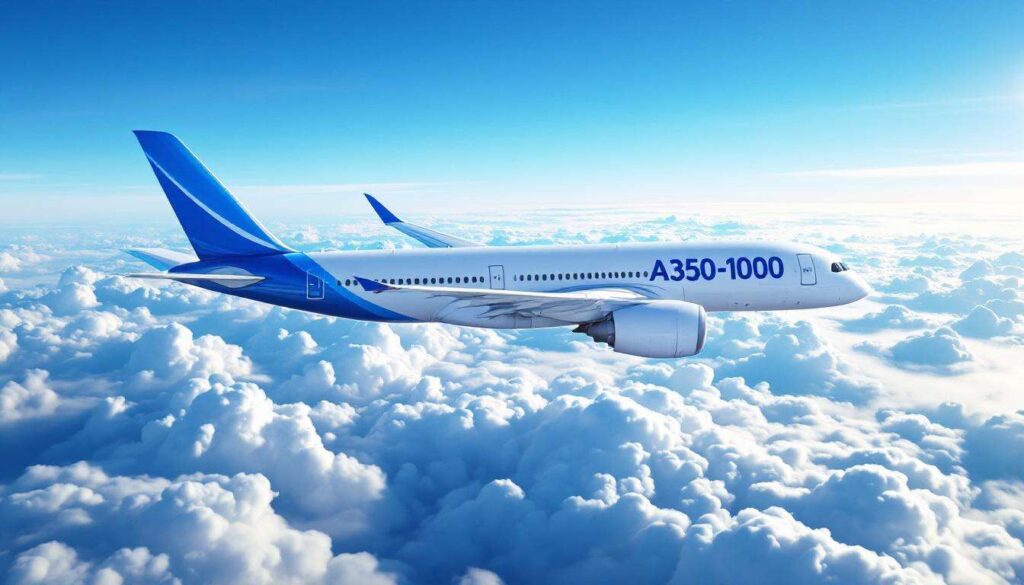
In the highly competitive arena of long-haul commercial aviation, two aircraft stand out as technological marvels: the Airbus A350-1000 and the Boeing 787-9. While both are celebrated for their efficiency and passenger comfort, a critical differentiator for airlines is range, the maximum distance an aircraft can fly. This single metric dictates network strategies, opens new markets, and ultimately shapes global connectivity. Examining the capabilities of these two widebody jets reveals not just a difference in numbers, but a fundamental divergence in operational philosophy and market positioning.
Range comparison: airbus A350-1000 vs Boeing 787-9
Direct range figures
The most straightforward comparison begins with the manufacturers’ published specifications. The Airbus A350-1000 boasts a formidable maximum range of approximately 8,700 nautical miles (16,100 kilometers). In contrast, the Boeing 787-9 Dreamliner, itself a very capable long-haul aircraft, has a stated range of around 7,565 nautical miles (14,010 kilometers). This gives the Airbus a distinct advantage of over 1,100 nautical miles on paper.
What the numbers mean in practice
This numerical difference translates into significant operational advantages. A surplus of over 1,100 nautical miles allows airlines to connect city pairs that were previously impossible to serve non-stop. This is the realm of ultra-long-haul travel, encompassing flights that exceed 16 hours. For instance, the A350-1000 is the aircraft of choice for Qantas’ ambitious “Project Sunrise,” which aims to connect Sydney and Melbourne directly with cities like London and New York. The 787-9, while unable to perform such missions with a full payload, excels at connecting major hubs and opening up new, thinner long-haul routes that do not require the A350’s extreme endurance.
Head-to-head comparison table
To visualize the key differences that contribute to their range performance, a side-by-side comparison is useful. The larger size and fuel capacity of the A350-1000 are primary contributors to its superior range, though this comes with a higher maximum takeoff weight.
| Specification | Airbus A350-1000 | Boeing 787-9 |
|---|---|---|
| Maximum Range | ~8,700 nm (16,100 km) | ~7,565 nm (14,010 km) |
| Typical Seating | 350-410 passengers | 296 passengers |
| Max Takeoff Weight (MTOW) | 319 tonnes | 254 tonnes |
| Fuel Capacity | 165,000 liters | 126,372 liters |
Understanding these top-level figures requires a deeper dive into the specific design and engineering choices that define each aircraft. The A350-1000’s capabilities are a direct result of its advanced technical composition.
Technical specifications of the Airbus A350-1000
Engine and aerodynamics
At the heart of the A350-1000’s performance are its two exclusive Rolls-Royce Trent XWB-97 engines. These are some of the most efficient large turbofan engines ever produced, specifically designed to power this aircraft variant. Their high bypass ratio and advanced materials contribute to lower fuel burn. This is complemented by a state-of-the-art aerodynamic design, featuring a highly optimized wing that morphs during flight to maintain maximum efficiency across different phases of flight, from takeoff to cruise.
Capacity and structural design
The A350-1000’s airframe is constructed with over 50% composite materials, primarily carbon fiber reinforced polymer (CFRP). This extensive use of lightweight yet strong materials reduces the aircraft’s overall weight, which is a critical factor in achieving its impressive range. Despite its lighter structure, it is designed to carry a substantial payload, with a typical three-class configuration seating between 350 and 410 passengers. This combination of low structural weight and high capacity is a key enabler of its long-haul economic performance.
Key features contributing to range
Several core technological advancements work in concert to give the A350-1000 its market-leading range. These innovations are central to its design philosophy.
- Advanced materials: Extensive use of composites, titanium, and modern aluminum alloys minimizes structural weight.
- Optimized propulsion: The bespoke Trent XWB-97 engines are tailored for maximum fuel efficiency on long-duration flights.
- Superior aerodynamics: The adaptive wing design and clean airframe reduce drag significantly, allowing the aircraft to fly further on the same amount of fuel.
While Airbus pursued a path of bespoke engine design and a clean-sheet approach, Boeing’s 787-9 Dreamliner emerged from a different but equally innovative engineering philosophy.
Technical specifications of the Boeing 787-9
Engine options and design philosophy
Unlike the A350-1000, the Boeing 787-9 offers airlines a choice of two highly advanced engines: the General Electric GEnx-1B or the Rolls-Royce Trent 1000. This flexibility allows carriers to align their fleet with existing engine maintenance relationships. The Dreamliner series also pioneered a “more-electric” architecture, replacing traditional bleed air systems with electric compressors, which improves overall engine efficiency. This, combined with its raked wingtips and smooth composite fuselage, contributes to its excellent fuel economy.
Capacity and weight considerations
The 787-9 is a smaller aircraft than the A350-1000, typically seating around 296 passengers in a two-class configuration. Its lower maximum takeoff weight of 254 tonnes reflects this smaller scale. Like the A350, its fuselage is made primarily of composite materials, a revolutionary step that Boeing introduced to the market. This lightweight design is the cornerstone of the Dreamliner’s efficiency, allowing it to serve long-haul routes with lower trip costs than previous-generation aircraft of a similar size.
Core technologies for efficiency
The 787-9’s impressive range is not accidental but the result of a deliberate focus on several key technological areas.
- Composite airframe: A one-piece barrel fuselage design reduces weight and eliminates thousands of fasteners, decreasing drag and maintenance needs.
- Efficient systems: The more-electric architecture reduces the load on the engines, saving fuel.
- Aerodynamic enhancements: Chevrons on the engine nacelles reduce noise, while the highly efficient wing design maximizes lift and minimizes drag.
The technical specifications of both aircraft provide a solid foundation for their range capabilities, but real-world performance is influenced by a host of variable factors.
Factors influencing aircraft range
Payload and passenger configuration
The advertised maximum range is calculated under ideal conditions with a standard passenger load. In reality, an airline’s choice of cabin configuration heavily influences an aircraft’s weight. A dense, all-economy layout is lighter than a premium-heavy configuration with lie-flat beds and suites. Furthermore, the amount of cargo in the hold is a major variable. Every extra ton of payload requires more fuel to carry, directly reducing the maximum distance the aircraft can travel.
Weather and atmospheric conditions
No flight operates in a vacuum. Atmospheric conditions play a crucial role. A strong headwind can reduce an aircraft’s ground speed, forcing it to burn more fuel to cover the same distance and thus decreasing its effective range. Conversely, a powerful tailwind, like the jet stream, can significantly extend its reach. Factors such as air temperature and density also affect engine and aerodynamic performance, with flights in colder, denser air generally being more efficient.
Flight path and operational factors
The planned flight path is rarely a perfectly straight line. Aircraft must follow established airways, avoid restricted airspace, and navigate around adverse weather systems, all of which adds to the total distance flown. Additionally, airlines make operational choices, such as selecting a specific cruising speed and altitude, which represent a trade-off between speed and fuel efficiency. These decisions, made for every single flight, can alter the achievable range on any given day.
These variables explain why the same aircraft model can have different effective ranges depending on the route and the airline operating it, leading to distinct use cases for both the A350-1000 and the 787-9.
Use cases and performance of both aircraft
The A350-1000: the ultra-long-haul champion
With its superior range and higher capacity, the A350-1000 is purpose-built for the most demanding routes on the planet. It has become the flagship aircraft for airlines operating prestigious, non-stop flights between global financial centers, such as Qatar Airways’ Doha to Los Angeles route or Cathay Pacific’s Hong Kong to New York service. Its ability to carry a full load of passengers and a meaningful amount of cargo over more than 8,000 nautical miles makes it economically viable for these niche but highly profitable markets.
The 787-9: the versatile route opener
The Boeing 787-9’s strength lies in its remarkable versatility. Its combination of good range and moderate capacity makes it the ideal tool for “long, thin” routes: city pairs that have enough demand for a non-stop service but not enough to fill a larger aircraft like the A350-1000 or Boeing 777. Airlines like United and American have used the 787-9 to launch dozens of new international point-to-point routes, bypassing congested hubs and offering passengers more direct travel options.
Airline fleet strategies
The choice between these two aircraft often comes down to an airline’s network strategy. A carrier like Qantas operates both: the A350-1000 is designated for the unique challenge of Project Sunrise, while the 787-9 serves as a flexible workhorse across its broader international network. Other airlines may choose one over the other to maintain fleet commonality. For example, an airline with a large existing A320/A330 family fleet might lean towards the A350 for pilot training and maintenance synergies.
The existence of two such capable aircraft, each with a distinct range profile, has a profound effect on the competitive landscape of the global aviation market.
Impact of range differences on the aviation market
Enabling new non-stop routes
The A350-1000’s range advantage is not just an incremental improvement; it is a paradigm shift. It unlocks the final frontier of commercial aviation, making non-stop flights of 18-20 hours a reality. This capability directly challenges the hub-and-spoke model, where passengers connect through a major airport. By offering direct connections, airlines can command a premium price and attract travelers who value time and convenience, fundamentally altering global travel patterns.
Competitive dynamics between Airbus and Boeing
In the lucrative widebody market, the A350-1000’s range gives Airbus a significant competitive edge in the ultra-long-haul segment. Boeing’s direct competitor, the 777X, has faced delays, leaving the 787-9 to compete in a slightly different category. This dynamic forces airlines to choose Airbus for their most ambitious routes, solidifying the A350’s position as the premier ultra-long-range aircraft. This, in turn, pressures Boeing to accelerate its own development programs to close the gap.
Passenger experience and airline economics
For passengers, the impact is clear: less travel time and more convenience. For airlines, the calculation is more complex. The A350-1000 carries a higher purchase price and operating cost per hour than the 787-9. However, the ability to operate a unique non-stop route can generate substantial revenue that offsets these costs. Airlines must carefully balance the prestige and profit potential of ultra-long-haul flying against the higher capital investment required, a decision that shapes the future of international air travel.
Ultimately, the Airbus A350-1000 possesses a clear and operationally significant range advantage of over 1,100 nautical miles compared to the Boeing 787-9. This allows it to serve the world’s most extreme ultra-long-haul routes, a market it currently dominates. The 787-9, while not capable of these same missions, remains a supremely versatile and efficient aircraft, excelling as a route-opener and a flexible workhorse for a vast array of long-haul flights. The choice between them is not about which is better, but which is the right tool for an airline’s specific strategic goals in a constantly evolving global network.