

Consider the profound possibility that the very blueprint of life on this planet is not entirely of this world. For decades, a compelling scientific hypothesis has been gaining traction, suggesting that we might all be the descendants of extraterrestrial microbes. This theory posits that the first spark of life did not ignite in Earth’s primordial oceans but rather on our celestial neighbor, the red planet. The idea that life on Earth was seeded from Mars, a concept known as panspermia, moves the discussion of our origins from the realm of biology to that of astrogeology, challenging our most fundamental understanding of who we are and where we come from.
The extraterrestrial origin of life on Earth
The theory of panspermia
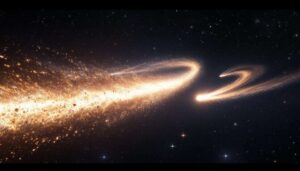
The concept that life can travel between planets, known as panspermia, is not a new one. However, the specific version of this theory gaining the most scientific scrutiny is lithopanspermia. This hypothesis proposes that microorganisms, encased within rocks blasted from a planet’s surface by an asteroid or comet impact, can survive the harsh journey through space and seed life on another world. These microbes would be shielded from the vacuum of space and deadly cosmic radiation by the very rock that carries them. For this to occur, a series of critical events must align perfectly: a powerful impact, the ejection of rock into a stable solar orbit, a long journey lasting potentially millions of years, and finally, a successful atmospheric entry and landing on a recipient planet with conditions suitable for life to take hold.
Why Mars is a prime candidate
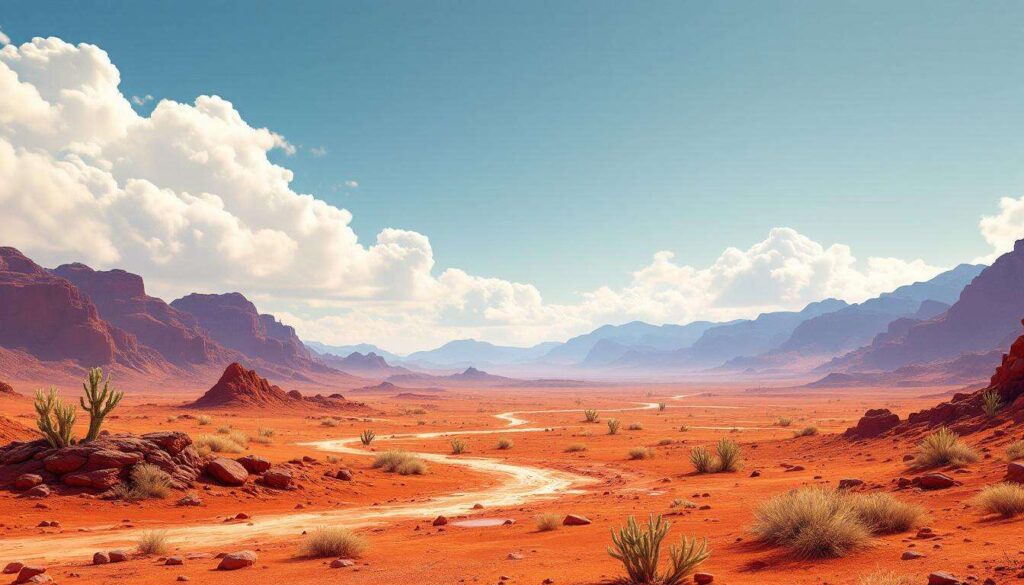
Scientists consider Mars a more likely cradle for life than early Earth for several compelling reasons. Roughly four billion years ago, when life is thought to have first emerged, Mars was a far more hospitable place than our own turbulent planet. It possessed a thicker atmosphere, liquid water on its surface, and a protective magnetic field. In contrast, early Earth was a chaotic and violent world, still reeling from the colossal impact that formed the Moon. This event would have likely sterilized the entire planet, boiling its oceans and melting its crust. Mars, being smaller and having cooled more quickly, may have presented a more stable and tranquil environment for the complex chemical reactions needed for life to begin. Furthermore, Mars’s lower gravity makes it significantly easier for impact events to eject rocks into space, increasing the probability of sending biological material on an interplanetary journey.
The favorable conditions on early Mars compared to early Earth make it a prime suspect for the origin of life in our solar system. This theoretical framework, however, requires more than just favorable conditions; it demands physical evidence that material can, and has, traveled from Mars to Earth.
Martian meteorites: tangible evidence
The journey from Mars to Earth
The theoretical exchange of material between planets is supported by concrete proof: we have rocks from Mars right here on Earth. To date, scientists have identified over 200 meteorites of Martian origin. The process begins with a significant asteroid impact on Mars, powerful enough to launch surface rocks into space with escape velocity. These fragments then drift through the solar system, their trajectory governed by the gravitational pull of the sun and other planets. Over vast timescales, some of these rocks are eventually captured by Earth’s gravity, blazing through our atmosphere to land on the surface as meteorites. By analyzing the trapped gases within these rocks, scientists can match their composition to the known atmosphere of Mars, confirming their origin with a high degree of certainty. This confirmed interplanetary transfer of rock provides a plausible delivery mechanism for any potential Martian microbes.
The famous ALH 84001
Among all Martian meteorites, none has sparked more debate than Allan Hills 84001, discovered in Antarctica in 1984. In 1996, a team of NASA scientists announced they had found compelling evidence of ancient microbial life within this 4.1-billion-year-old rock. Their claims were based on several lines of evidence, including the presence of organic molecules and tiny mineral structures that resembled fossilized bacteria. The announcement caused a global sensation but also intense scientific skepticism. Subsequent research has shown that non-biological, or abiotic, processes could potentially explain each of the findings. The debate over ALH 84001 remains unresolved, but it successfully demonstrated that the search for extraterrestrial life in Martian rocks was a serious scientific endeavor.
| Finding | Interpretation Supporting Life | Alternative Abiotic Explanation |
|---|---|---|
| Carbonate globules | Potentially formed by the metabolic activity of microorganisms. | Can be formed through high-temperature geological processes. |
| Nanofossil-like structures | Their segmented, worm-like shapes resemble fossilized bacteria. | Could be unusual mineral formations or artifacts of the imaging process. |
| Magnetite crystals | Identical in shape and composition to those produced by certain Earth bacteria. | Can form inorganically during shock events, like the impact that sent the rock to Earth. |
| Polycyclic Aromatic Hydrocarbons (PAHs) | Often the decay products of living organisms. | Can be created by non-biological processes or result from terrestrial contamination after landing. |
While the evidence from meteorites is tantalizing, it remains inconclusive. To build a stronger case for the Martian origin of life, we must look more closely at the red planet itself and ascertain whether it truly possessed the necessary conditions for life to arise.
Conditions conducive to life on Mars
A watery past
The single most important ingredient for life as we know it is liquid water, and the evidence for its past abundance on Mars is now overwhelming. Data from orbiters and rovers like Curiosity and Perseverance have painted a clear picture of an ancient Mars that was a water world. We see clear geological evidence of:
- Vast ocean basins in the northern hemisphere.
- Winding river valleys that stretch for hundreds of kilometers.
- Deltas where rivers once flowed into large lakes, such as in Jezero Crater.
- Minerals like clays and sulfates that can only form in the presence of liquid water.
This evidence confirms that for a significant period in its early history, Mars had stable bodies of liquid water on its surface, creating the perfect solvent for the chemical reactions that could lead to life.
The necessary chemical ingredients
Life requires more than just water; it is built from a specific set of chemical elements. The primary building blocks of life on Earth are often remembered by the acronym CHNOPS. Rovers on Mars have confirmed that the Martian soil and rocks contain all of these essential elements:
- Carbon (C): The backbone of all organic molecules.
- Hydrogen (H): A key component of water and organic compounds.
- Nitrogen (N): Essential for amino acids and DNA.
- Oxygen (O): Crucial for respiration and a component of water.
- Phosphorus (P): A vital part of DNA and cellular energy transfer molecules.
- Sulfur (S): Found in certain amino acids and important for metabolic functions.
The confirmation that Mars possessed not only the water but also the raw chemical materials necessary for life significantly strengthens the hypothesis that it could have been the first world in our solar system to see life emerge.
With a stable environment, abundant water, and all the right chemical building blocks, early Mars appears to have been an ideal incubator for life. The next critical question is whether these ingredients ever combined to form the complex organic molecules that are the precursors to biology.
Martian organic molecules
Discoveries by the Curiosity rover
A pivotal moment in the search for life on Mars came with the findings of NASA’s Curiosity rover in Gale Crater. Using its Sample Analysis at Mars (SAM) instrument, the rover drilled into ancient mudstone, dating back over three billion years, and found definitive evidence of complex organic molecules. These are molecules containing carbon and hydrogen, and they are the fundamental building blocks of life. The molecules detected included thiophenes, benzene, and other carbon-based compounds. While not proof of life itself, finding these preserved molecules in an ancient lakebed is a significant discovery, as it shows that the basic chemistry for life was present on Mars and that these biosignatures can be preserved for billions of years.
Methane on Mars: a lingering mystery
Another tantalizing clue is the detection of methane in the Martian atmosphere. On Earth, the vast majority of atmospheric methane is produced by living organisms, from microbes to cows. Methane on Mars is perplexing because it should be quickly destroyed by solar radiation, meaning that any methane we detect must have been released recently. Furthermore, rovers have detected seasonal spikes in methane concentration, which suggests an active, ongoing source. This source could be biological, perhaps from microbes living deep underground, or it could be the result of geological processes. The mystery of Martian methane remains one of the most compelling reasons to continue the search for life.
| Source Type | Biological Explanation | Geological (Abiotic) Explanation |
|---|---|---|
| Mechanism | Subsurface microbes known as methanogens release methane as a waste product. | A chemical reaction called serpentinization, where water interacts with certain types of rock. |
| Release Pattern | Seasonal changes in temperature or liquid water availability could affect microbial activity. | Gas trapped in ice crystals (clathrates) could be released as temperatures rise in the summer. |
| Implication | Suggests the possibility of extant, or currently living, life on Mars. | Indicates that Mars is still a geologically active planet. |
The confirmed presence of organic molecules and the mysterious behavior of methane transform the question of life on Mars from a theoretical exercise into a tangible scientific investigation. These discoveries carry profound implications for how we view our own species and our place in the universe.
Implications for humanity
Redefining our origins
If life on Earth truly began on Mars, the consequences for our self-perception would be immense. It would mean that every living thing on our planet, from the smallest bacterium to the largest whale, is an alien. Humanity itself would be Martian in origin. This would fundamentally alter our connection to our home planet and force a reevaluation of what it means to be an “Earthling.” The search for life on Mars would no longer be about finding aliens; it would be about finding our most ancient ancestors and tracing our own family tree back to another world. Our entire scientific and cultural understanding of our origins would be rewritten.
Guiding future exploration
The hypothesis of a Martian origin for life provides a clear and compelling direction for future space exploration. It prioritizes missions designed to search for biosignatures, the chemical or physical traces of past or present life. This is why NASA’s Perseverance rover landed in Jezero Crater, the site of an ancient lake and river delta, which is a prime location to find preserved signs of life. The ultimate goal of current missions is the Mars Sample Return campaign, a multi-stage effort to collect Martian rock and soil samples and bring them back to Earth. In advanced laboratories here, scientists could analyze them with a level of detail impossible for a robotic rover, potentially providing a definitive answer to the question of whether life ever existed on Mars and, by extension, whether we are its descendants.
The theory that life began on Mars and traveled to Earth is a powerful and scientifically plausible narrative. It is supported by the existence of a viable transport mechanism via meteorites, the evidence that early Mars was more hospitable for life than early Earth, and the discovery of the necessary chemical ingredients and organic molecules on the red planet. Whether we are terrestrial natives or the descendants of Martian microbes remains one of the most profound and unanswered questions of our time, driving us to continue our exploration of the worlds beyond our own.