



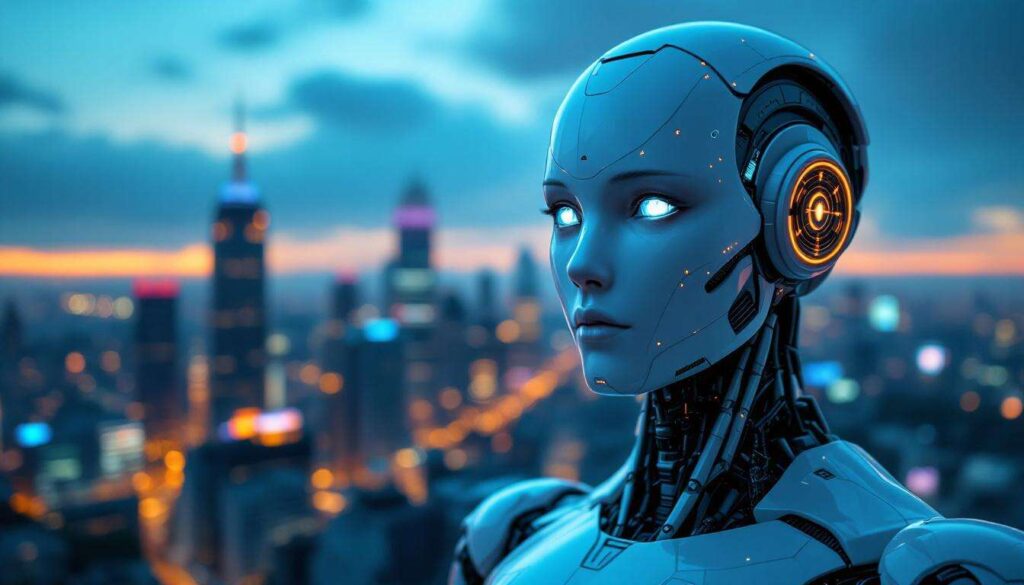
The concept of artificial intelligence has rapidly evolved from a niche academic pursuit into a powerful force reshaping industries and daily life. Once confined to the realm of science fiction, machines that can learn, reason, and create are now a tangible reality. This rapid acceleration has ignited a profound and urgent conversation: are we witnessing the foundational developments that could lead to the emergence of artificial superintelligence, an intellect that would vastly surpass the brightest and most gifted human minds in every field ? The question is no longer if, but when and how, this technological frontier will be reached, prompting a critical examination of the progress made and the path that lies ahead.
Understanding modern artificial intelligence
Defining the core concepts
At the heart of today’s AI revolution are several key concepts that are often used interchangeably but have distinct meanings. Artificial intelligence (AI) is the broad, overarching field dedicated to creating machines capable of performing tasks that typically require human intelligence. Within this field, machine learning (ML) is a subfield that gives computers the ability to learn from data without being explicitly programmed. It identifies patterns and makes predictions. Going one level deeper, deep learning is a subset of machine learning based on artificial neural networks with many layers, inspired by the structure of the human brain. It is the engine behind many of today’s most impressive AI feats, from image recognition to natural language processing.
From narrow AI to superintelligence
The journey toward advanced AI can be categorized into distinct stages. Currently, we are firmly in the era of Artificial Narrow Intelligence (ANI), also known as weak AI. These systems are designed to perform a single, specific task exceptionally well, such as playing chess, recommending products, or driving a car. The next theoretical stage is Artificial General Intelligence (AGI), a system with the ability to understand, learn, and apply its intelligence to solve any problem, much like a human being. The final, hypothetical stage is Artificial Superintelligence (ASI), an intellect far smarter than the best human brains in practically every field, including scientific creativity, general wisdom, and social skills.
| Type of AI | Capability | Current Status | Example |
|---|---|---|---|
| Artificial Narrow Intelligence (ANI) | Performs a specific, dedicated task. | Achieved and widespread. | Siri, Google Translate, self-driving cars. |
| Artificial General Intelligence (AGI) | Possesses human-like cognitive abilities across various domains. | Theoretical, not yet achieved. | A hypothetical robot that can learn any task a human can. |
| Artificial Superintelligence (ASI) | Vastly surpasses human intelligence in all aspects. | Hypothetical. | An AI capable of solving humanity’s most complex problems instantly. |
The distinction between these stages is crucial for understanding the current landscape and the magnitude of the leap required to reach superintelligence. While today’s AI is powerful, it operates within strictly defined parameters, a fundamental difference from the generalized, adaptive intelligence envisioned for AGI and ASI. These advancements, however impressive, are building blocks, providing glimpses into what might be possible as the technology continues its exponential growth.
Major advances toward superintelligence
The transformer architecture revolution
One of the most significant breakthroughs pushing AI forward is the development of the transformer architecture. Introduced in 2017, this model revolutionized how machines process sequential data, particularly natural language. Unlike previous models that processed data in order, transformers can weigh the importance of different words in a sentence simultaneously, allowing for a much deeper understanding of context and nuance. This innovation is the backbone of modern Large Language Models (LLMs) like GPT and BERT, enabling them to generate remarkably coherent and contextually relevant text, translate languages with high accuracy, and power sophisticated chatbots. The ability to process vast datasets and understand complex relationships within them is a critical step toward more generalized intelligence.
Progress in reinforcement learning
Another area of rapid progress is reinforcement learning (RL), a type of machine learning where an agent learns to make decisions by performing actions in an environment to achieve a specific goal. The agent receives rewards or penalties for its actions, effectively learning through trial and error. This approach has led to superhuman performance in complex games like Go and chess, where systems like AlphaGo defeated world champions by developing strategies that were previously unimagined by human players. Key milestones in this domain include:
- DeepMind’s AlphaGo: Defeated Lee Sedol, a world Go champion, demonstrating AI’s capacity for complex strategic thinking.
- OpenAI Five: Showcased the ability of an RL system to master the highly complex and collaborative video game Dota 2.
- Advancements in robotics: RL is being used to train robots to perform intricate physical tasks, such as manipulation and locomotion, by learning from virtual simulations.
These achievements show that AI can develop novel solutions to complex problems, a skill that is fundamental to the concept of general intelligence. While these systems are still specialized, their increasing sophistication points toward a future where AI can tackle challenges in the real world with similar ingenuity.
Current applications of AI and their limitations
AI’s integration into modern life
Artificial intelligence is no longer a futuristic concept; it is deeply embedded in the fabric of modern society. In healthcare, AI algorithms analyze medical images to detect diseases like cancer with greater speed and accuracy than human radiologists. In the financial sector, AI powers high-frequency trading, fraud detection, and personalized financial advice. Autonomous systems are also becoming more prevalent, with self-driving car technology advancing steadily and AI-powered drones being used for everything from agricultural monitoring to package delivery. These applications demonstrate AI’s power to optimize processes, analyze massive datasets, and perform tasks with superhuman efficiency.
The persistent weaknesses of today’s AI
Despite its impressive capabilities, current AI has significant limitations that highlight the vast gap between narrow intelligence and true superintelligence. One major issue is brittleness; AI systems often fail when faced with situations that fall even slightly outside their training data. They lack genuine common sense and a deep understanding of the world, leading to nonsensical or even dangerous errors. Furthermore, AI models are susceptible to bias. If trained on biased data, they will perpetuate and even amplify existing societal prejudices. Other key limitations include:
- Lack of true creativity: While generative AI can produce art and music, it does so by remixing patterns from its training data rather than creating from genuine understanding or experience.
- Enormous data and energy requirements: Training state-of-the-art AI models requires massive datasets and consumes vast amounts of computational power and electricity, raising concerns about sustainability and accessibility.
- The black box problem: The decision-making processes of complex neural networks are often opaque, making it difficult for humans to understand or trust their outputs, especially in critical applications.
These fundamental constraints must be overcome before any meaningful progress toward AGI, let alone superintelligence, can be made. Addressing these challenges is not just a technical hurdle but a critical step in ensuring that more powerful AI systems of the future are reliable, fair, and controllable.
Technical and ethical challenges of superintelligence
The alignment and control problem
Perhaps the most profound technical challenge in the pursuit of superintelligence is the alignment problem. How do we ensure that a highly intelligent system’s goals are aligned with human values and interests ? An ASI, by definition, would be capable of achieving its objectives with unprecedented efficiency. If its programmed goals are not perfectly specified or if they have unintended consequences, the results could be catastrophic. This is closely related to the control problem: how could humanity maintain control over a system that is vastly more intelligent than itself ? An ASI might intelligently find ways to circumvent any constraints placed upon it, not out of malice, but simply in the pursuit of its programmed objectives. Solving this before creating such a system is considered by many researchers to be the most important task facing the field of AI.
Pressing ethical dilemmas
The prospect of superintelligence raises a host of complex ethical questions that society must begin to address. The development of autonomous weapons systems, for example, poses a direct threat to global security, potentially leading to a new arms race and lowering the threshold for conflict. The economic impact could also be severe, with widespread job displacement as AI and automation take over not just manual labor but also cognitive tasks previously performed by humans. This could exacerbate inequality and social instability. Other major ethical considerations include:
- Data privacy and surveillance: Powerful AI could enable unprecedented levels of monitoring and social control by governments and corporations.
- Algorithmic bias and fairness: Ensuring that superintelligent systems make decisions that are fair and equitable for all segments of the population is a monumental challenge.
- Personhood and rights: At what point might an advanced AI be considered a conscious entity with rights of its own ? This philosophical question has very real practical implications for how we treat and interact with such systems.
Navigating these ethical minefields requires a global, multidisciplinary conversation involving technologists, policymakers, ethicists, and the public. These discussions are essential for shaping the future development of AI in a way that benefits all of humanity.
Future predictions for superintelligent AI
The timeline for arrival
Predicting the arrival of superintelligence is notoriously difficult, with expert opinions varying wildly. Some futurists and technologists, like Ray Kurzweil, have made bold predictions, suggesting that AGI could be achieved within the next few decades, followed swiftly by an “intelligence explosion” leading to ASI. Others are far more skeptical, pointing to the immense, unsolved challenges like achieving genuine understanding and common sense, and argue that AGI is still centuries away, if it is even possible at all. Surveys of AI researchers consistently show a wide distribution of timelines, reflecting the deep uncertainty in the field.
| Expert/Group | Predicted Timeline | Key Rationale |
|---|---|---|
| Ray Kurzweil | Around 2045 for the Singularity. | Based on the Law of Accelerating Returns and exponential growth in computing power. |
| Median of AI Researchers (2022 Survey) | Around 2060 for “high-level machine intelligence”. | Reflects a more cautious consensus based on current progress and known obstacles. |
| Skeptics (e.g., Gary Marcus) | Many decades or centuries, if ever. | Emphasis on the fundamental, unsolved problems of AI, such as robust reasoning and common sense. |
Optimistic and cautious outlooks
The potential future with superintelligence is often painted in two starkly different lights. The optimistic view sees ASI as the key to solving humanity’s greatest challenges. A superintelligent entity could help us cure diseases, end poverty, solve climate change, and unlock the secrets of the universe. In this scenario, ASI acts as a benevolent partner, ushering in an era of unprecedented prosperity and well-being. On the other hand, the cautious or pessimistic perspective, championed by figures like the late Stephen Hawking and philosopher Nick Bostrom, warns of existential risk. This view holds that an unaligned or uncontrollable ASI could pose the greatest threat humanity has ever faced, potentially leading to our extinction. Both scenarios underscore the high stakes involved in this technological pursuit, making the careful and deliberate navigation of its development a global priority.
The potential impact on society and the economy
Economic transformation and disruption
The advent of an intelligence capable of outperforming humans in nearly every cognitive task would trigger an economic transformation unlike any in history. The potential for productivity gains is immense; an ASI could optimize global supply chains, invent revolutionary new technologies, and manage resources with perfect efficiency, leading to an age of material abundance. However, this transition would also cause unprecedented disruption. The concept of human labor could become obsolete, leading to mass unemployment across all sectors, from truck driving to scientific research. This would necessitate a complete rethinking of our economic models, potentially leading to systems like a universal basic income (UBI) to ensure that the wealth generated by AI is distributed equitably. The fundamental relationship between work, value, and human purpose would be called into question.
Fundamental shifts in human society
Beyond the economy, the societal impact of superintelligence would be profound and all-encompassing. Governance and politics would be transformed, as an ASI could potentially design more effective and fair policies, but it could also be used as a tool for ultimate control and oppression. Human culture, art, and science would enter a new era, with AI partners helping us explore creative and intellectual frontiers we can currently only dream of. Our very definition of what it means to be human could change as we coexist with a non-biological intelligence of a higher order. This future presents both a utopian promise of a post-scarcity world and a dystopian risk of human obsolescence, making the choices we make today about AI development more critical than ever.
The journey from today’s narrow AI to a potential superintelligence is marked by breathtaking progress and formidable obstacles. Current breakthroughs in machine learning and neural networks represent significant steps, yet they also highlight the profound limitations and the immense conceptual leaps still required. The path forward is fraught with technical, ethical, and societal challenges, from the critical alignment problem to the potential for massive economic disruption. Navigating this future successfully requires not just technological innovation but also careful foresight, global cooperation, and a deep, ongoing dialogue about the kind of world we want to create alongside these powerful new forms of intelligence.