



For years, renters have faced a smart home conundrum. While smart plugs and bulbs offer easy entry into home automation, upgrading core systems like heating has remained largely off-limits. Modifying a central thermostat often involves wiring and property alterations that are simply not feasible in a rental agreement. A new device, however, is set to change this dynamic by bringing room-by-room climate control to a demographic that has traditionally been underserved. Aqara, a prominent name in the smart home space, has released a thermostat that requires no wiring, no professional installation, and no permanent changes to the property, clipping directly onto an existing radiator valve.
Introduction of the new Aqara thermostat
What is the Aqara Radiator Thermostat E1 ?
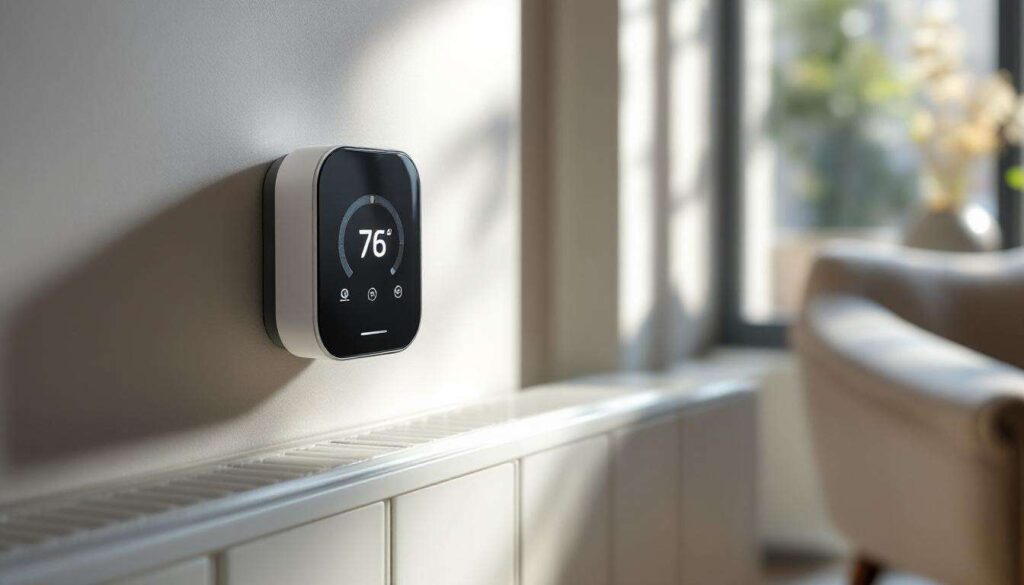
The Aqara Radiator Thermostat E1 is a smart thermostatic radiator valve, or TRV. Its purpose is to replace the manual, often imprecise, knob on a hot water radiator. By doing so, it grants users digital, automated, and remote control over the heat output of that specific radiator. Unlike a central thermostat that sets a single temperature for an entire home, the E1 allows for the creation of distinct heating zones. This means the bedroom can be kept at a comfortable temperature for sleeping while the unused guest room remains cooler, all managed from a smartphone or through voice commands. The device itself is compact and features a clean, color LCD screen that displays the current temperature and status.
Key features at a glance
The Thermostat E1 is packed with technology designed for both convenience and efficiency. It operates on the reliable and low-power Zigbee 3.0 protocol, which ensures a stable connection and remarkable battery life. Aqara claims the included AA batteries can last up to a full year. The device also includes a built-in temperature sensor for accurate local readings, but its true power is unlocked when paired with an external Aqara sensor for more precise room-wide temperature management.
- Zigbee 3.0 Protocol: Ensures a responsive and robust connection to the smart home hub.
- Long Battery Life: Up to one year of operation on two standard AA batteries.
- Geofencing Support: Automatically adjusts heating based on your location.
- Open Window Detection: Pauses heating when a sudden temperature drop is detected to conserve energy.
- Group Device Support: Allows multiple radiators in the same room to be synchronized and controlled as one.
Design and aesthetics
Aqara has maintained its signature minimalist design philosophy with the Radiator Thermostat E1. The device features a clean, white cylindrical body that is unlikely to clash with home decor. The front is dominated by a high-contrast color screen that is easy to read from a distance. A simple rotating bezel allows for quick manual temperature adjustments, providing a tactile and intuitive user experience that complements its smart capabilities. The overall build feels solid and is designed to be unobtrusive, effectively blending into the background of any room.
Having established what the device is and what it can do, the most compelling aspect for a large segment of the market is just how simple it is to get up and running, especially for those who are not allowed to make permanent changes to their living space.
Easy installation for renters
A tool-free, non-permanent solution
The single greatest advantage of the Aqara Radiator Thermostat E1 for tenants is its completely non-invasive installation. There is no need to drain the heating system, call a plumber, or perform any electrical work. The process is entirely mechanical and reversible. It involves simply unscrewing the existing manual TRV head and screwing the Aqara E1 in its place. This makes it a perfect upgrade for renters, as the original hardware can be easily reinstalled before moving out, leaving no trace of the modification. The entire process can be completed in just a few minutes per radiator.
Included adapters for wide compatibility
To address the variety of radiator valves on the market, Aqara includes a set of adapters in the box. The thermostat has a standard M30 x 1.5mm thread, which is common across Europe. For other systems, the package contains adapters for Danfoss RA, RAV, and RAVL valves, covering a significant portion of the radiators found in homes and apartments. This thoughtful inclusion minimizes the guesswork and ensures that the device will fit most standard hydronic radiator systems without requiring a separate purchase.
The step-by-step process
The physical installation is designed to be straightforward for anyone, regardless of their technical expertise. The process generally follows these simple steps:
- Set the old thermostat head to its highest setting to relieve pressure on the pin.
- Unscrew the mounting ring or clip holding the old head in place and remove it.
- Select the appropriate adapter from the included set, if needed, and attach it to the valve body.
- Insert the batteries into the Aqara Thermostat E1.
- Screw the E1 onto the valve or adapter until it is firmly in place.
- Follow the prompts in the Aqara Home app to pair the device with your hub.
With installation being so accessible, the next logical consideration for a potential user is whether the device will integrate properly with their specific type of heating and existing smart home setup.
Compatibility with various heating systems
Working with hydronic heating
It is crucial to understand that the Thermostat E1 is designed exclusively for hydronic heating systems. These are systems that use hot water circulated through pipes to heat radiators. This is the predominant form of heating in many apartment buildings and older homes. The device is not compatible with central forced-air systems, which use vents to distribute hot air, or with electric baseboard heaters. Its function is to physically control the flow of hot water into an individual radiator, giving it a specialized and effective role within the right environment.
The role of the Aqara hub
Like other Aqara devices, the Radiator Thermostat E1 does not connect directly to your Wi-Fi router. Instead, it uses the Zigbee 3.0 protocol to communicate with a required Aqara hub. This hub acts as the brain of the system, bridging your Zigbee devices to your home network and the internet. Compatible hubs include the Aqara Hub M2, Hub M1S, and Camera Hub G3. Using a hub creates a more stable and responsive local network for your smart devices and is essential for enabling remote control, automations, and third-party integrations.
Understanding the hardware requirements is one part of the equation; exploring the rich software integrations and control possibilities is what truly reveals the device’s power.
Smart integration and controls
Control via the Aqara Home app
The Aqara Home app is the central command center for the Thermostat E1. From the app, users can set precise target temperatures, create detailed daily or weekly schedules, and view temperature history. For example, you can program the heat to lower automatically after you leave for work and warm up the living room just before you return. The app also allows for the grouping of multiple thermostats, so all radiators in a large open-plan space can be adjusted simultaneously with a single tap.
Voice assistant and smart home ecosystem support
A major strength of the Aqara ecosystem is its broad compatibility with major smart home platforms. The Radiator Thermostat E1 integrates seamlessly with Apple HomeKit, Amazon Alexa, and Google Home. This allows for convenient voice control, such as saying, “Hey Siri, set the bedroom thermostat to 68 degrees.” This cross-platform support ensures the device can fit into nearly any existing smart home setup. Below is a comparison of how it integrates with different ecosystems.
| Ecosystem | Voice Control | Automation Support | Native App Control |
|---|---|---|---|
| Apple HomeKit | Yes (Siri) | Yes (Home App Automations) | Yes (Home App) |
| Amazon Alexa | Yes (Alexa) | Yes (Routines) | Yes (Alexa App) |
| Google Home | Yes (Google Assistant) | Yes (Routines) | Yes (Google Home App) |
Advanced automations
The true potential of the Thermostat E1 is realized through automations. By linking it with other Aqara sensors, you can create a truly intelligent heating system. For instance, placing an Aqara Door and Window Sensor on a window can trigger an automation that instantly turns off the corresponding radiator whenever the window is opened, preventing wasted heat. Pairing the thermostat with a separate Aqara Temperature and Humidity Sensor placed elsewhere in the room can provide a more accurate average room temperature reading, telling the thermostat to continue heating until your favorite armchair area is perfectly warm, not just the area around the radiator.
These sophisticated control mechanisms not only enhance comfort but also lead directly to one of the most significant benefits of smart heating: reducing energy consumption.
Energy-saving benefits
Zone heating efficiency
Traditional central heating systems operate on an all-or-nothing basis, heating the entire house to a single temperature set by one thermostat. This is inherently inefficient, as it wastes energy heating empty rooms. With a Thermostat E1 on each radiator, you can implement true zone heating. This allows you to heat only the spaces you are actively using. You can keep your home office warm during the day, the living room cozy in the evening, and the bedrooms comfortable at night, all while letting unused areas remain at a lower, energy-saving temperature.
Smart scheduling and automations
Beyond manual zone control, smart features contribute significantly to energy savings. Automated schedules ensure you never forget to turn down the heat when you leave the house or go to sleep. The geofencing feature can automatically lower the temperature across the entire home to an “away” setting when the last person leaves and begin warming it up as the first person heads home. Furthermore, the automatic open window detection feature, which can shut off a radiator for a set period after detecting a sharp drop in temperature, prevents the system from fighting a losing battle against the cold air from outside.
The combination of these features offers a compelling argument for upgrading, and for those convinced, the final step is knowing how to acquire the device.
Where to purchase the Aqara thermostat
Official Aqara storefronts
The most reliable way to purchase the Aqara Radiator Thermostat E1 is through Aqara’s official channels. The company operates dedicated storefronts on major e-commerce platforms like Amazon in both North America and various European countries. Buying from an official store ensures you receive a genuine product with a valid warranty and access to customer support. These storefronts are typically the first to receive stock of new products and often feature multi-pack bundles that can offer better value for outfitting multiple rooms.
Authorized third-party retailers
In addition to its direct channels, Aqara products are also available through a network of authorized smart home retailers. These can be online specialty stores or local electronics suppliers. It is always advisable to verify that a retailer is an authorized dealer to avoid counterfeit products and ensure proper warranty coverage. Availability may vary by region, so checking with local smart home suppliers can be a worthwhile step.
Pricing and availability
The Aqara Radiator Thermostat E1 is positioned as an affordable entry into smart radiator control. While pricing can fluctuate based on the retailer and region, it is competitively priced against similar products from other brands. The standard package typically includes one thermostat unit, a set of valve adapters, and two AA batteries. Prospective buyers should remember that at least one compatible Aqara hub is required for operation, which is a separate purchase if not already part of their smart home ecosystem.
The Aqara Radiator Thermostat E1 presents a powerful and accessible solution for modernizing home heating. By offering a non-permanent, easy-to-install device, it specifically empowers renters and homeowners alike to gain granular control over their environment. Its seamless integration into major smart home ecosystems, coupled with intelligent automations, delivers not just enhanced comfort but also a tangible opportunity to reduce energy waste and lower utility bills.