



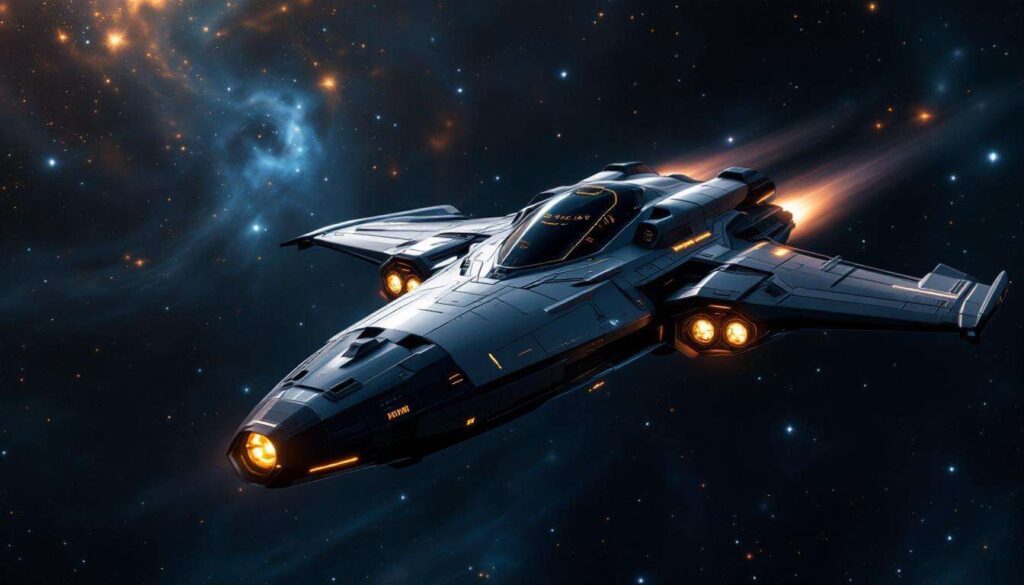
The dawn of a new space race is upon us, but this time, the competition is not just between nations but between human ingenuity and the vast, unforgiving vacuum of space. At the heart of this modern odyssey lies a fundamental challenge: propulsion. Getting anywhere beyond our planet’s orbit requires immense energy, precision, and efficiency. Now, a powerful new ally has entered the field. Artificial intelligence is quietly revolutionizing how we design, manage, and operate the engines that will carry humanity to the stars, promising not only to make our current methods better but also to unlock technologies once confined to science fiction.
The role of artificial intelligence in spacecraft propulsion
Artificial intelligence is no longer a theoretical concept in aerospace engineering; it is an active and essential partner. Its integration into spacecraft propulsion systems spans the entire lifecycle, from the initial design phase to real-time operations millions of miles from Earth. AI algorithms can process vast datasets far beyond human capacity, identifying subtle patterns and optimizing complex variables to create more robust and efficient propulsion systems.
Designing the next generation of engines
In the design phase, AI employs generative design and machine learning models to explore thousands of potential engine configurations. It can simulate fluid dynamics, heat resistance, and structural integrity under extreme conditions, leading to innovations in engine components that are lighter, stronger, and more fuel-efficient. For example, AI can optimize the shape of a nozzle or the composition of an alloy for a specific mission profile, tasks that would traditionally require years of manual calculation and physical prototyping. This drastically accelerates the development cycle, allowing engineers to focus on refining the most promising designs.
Real-time system monitoring and control
Once a spacecraft is in flight, AI’s role shifts to that of a vigilant co-pilot. Onboard systems generate a constant stream of telemetry data, from engine temperature and pressure to fuel flow rates. AI algorithms continuously analyze this data to:
- Detect anomalies that might indicate an impending failure.
- Adjust engine parameters in real-time to maintain optimal performance.
- Manage power distribution across multiple thrusters for precise maneuvering.
This capability for predictive maintenance and autonomous control is crucial for long-duration missions where direct human intervention is impossible due to communication delays.
Autonomous decision-making during flight
Beyond simple monitoring, AI enables a degree of autonomy previously unimaginable. A spacecraft equipped with advanced AI can make critical decisions without waiting for commands from mission control. If an unexpected solar flare occurs or a micrometeoroid impact is detected, the AI can independently alter the engine’s thrust or shield sensitive components. This rapid response capability is essential for ensuring mission safety and success, especially in unpredictable deep-space environments. This focus on optimization is not just about safety; it is also fundamentally about making every drop of propellant count.
Reducing energy consumption with AI
For any space mission, fuel is the ultimate limiting factor. It dictates the mission’s duration, payload capacity, and ultimate destination. The mass of the propellant is often the largest single component of a spacecraft’s launch weight. Therefore, even marginal improvements in fuel efficiency can have a monumental impact. AI is proving to be the key to unlocking these gains, fine-tuning engine performance with a level of precision that is simply unattainable through conventional methods.
Fine-tuning engine performance
AI algorithms can meticulously control the combustion process within a rocket engine. By analyzing sensor data in real-time, they can make micro-adjustments to the fuel-to-oxidizer ratio, injection pressure, and timing. This ensures that the engine is always operating at its peak theoretical efficiency for any given flight condition. This dynamic optimization process contrasts sharply with older systems that relied on pre-programmed, static performance curves, which could not adapt to changing conditions during a mission.
Predictive maintenance for peak efficiency
An engine’s efficiency degrades over time due to wear and tear on its components. AI-powered predictive maintenance systems can forecast this degradation before it significantly impacts performance. By identifying subtle changes in vibration, temperature, or pressure, the AI can alert mission control to potential issues or even autonomously reroute functions to healthier backup systems. This proactive approach not only prevents catastrophic failures but also ensures the propulsion system maintains its efficiency for the entire duration of the mission, conserving precious fuel for critical maneuvers.
A comparison of fuel efficiency
The impact of AI on fuel consumption is tangible. By integrating machine learning models for real-time adjustments, engineers can achieve significant savings, which translates directly into longer missions or heavier scientific payloads.
| Propulsion System | Conventional Control (Efficiency) | AI-Optimized Control (Efficiency) | Potential Fuel Savings |
|---|---|---|---|
| Chemical Rocket (LOX/LH2) | 95% of theoretical max | 98.5% of theoretical max | ~3-4% |
| Ion Thruster (Electric) | 88% of theoretical max | 96% of theoretical max | ~8-10% |
| Hall-Effect Thruster (Electric) | 91% of theoretical max | 97% of theoretical max | ~6-7% |
While these percentages may seem small, they can add months to a mission’s operational life or allow for the inclusion of an extra scientific instrument. Saving fuel is only one part of the equation; using that fuel to travel along the most efficient route is just as critical.
Optimizing flight paths with AI
Plotting a course through the solar system is an incredibly complex problem in orbital mechanics. The traditional approach involves calculating a fixed trajectory long before launch, with limited ability to adapt to new information. AI changes this paradigm completely by enabling dynamic, real-time trajectory optimization. It can compute the most efficient path between two points by considering a multitude of variables that are constantly changing.
Calculating complex gravitational assists
One of the most effective ways to save fuel is by using a “gravity assist” or “slingshot” maneuver, where a spacecraft uses a planet’s gravitational pull to gain speed and change direction. Finding the optimal sequence and timing of these maneuvers is a notoriously difficult computational problem. AI excels at this, running millions of simulations to find novel and highly efficient pathways. It can identify complex, multi-body assists that human planners might overlook, creating routes that drastically reduce propellant requirements for interplanetary journeys.
Dynamic route adjustments
Space is not empty. A spacecraft must navigate through radiation belts, fields of debris, and unpredictable solar weather. An AI navigation system can respond to these hazards in real-time. If a new debris field is detected or a solar storm is forecasted, the AI can immediately recalculate the flight path to avoid the danger while minimizing the impact on fuel consumption and arrival time. This adaptive capability makes missions safer and more resilient. This is particularly important for missions venturing into unexplored regions of the solar system.
Key variables in AI-driven navigation
When an AI calculates an optimal trajectory, it is juggling an immense number of factors simultaneously. These include:
- The gravitational influence of the sun, planets, moons, and even large asteroids.
- The spacecraft’s current mass, which changes as fuel is consumed.
- The efficiency curve of the propulsion system at different thrust levels.
- The location of known and newly discovered obstacles.
- The timing of optimal launch windows and planetary alignments.
By continuously processing these variables, AI ensures the spacecraft is always on the most efficient path possible, a feat that directly translates into shorter travel times.
The impact of AI on the duration of space missions
The combination of more efficient engines and optimized flight paths has a direct and profound effect on one of the most significant constraints in space exploration: time. Shorter mission durations are not just a matter of convenience; they are a critical factor for mission success, especially for crewed expeditions. By reducing travel time, AI helps mitigate some of the greatest risks associated with deep-space travel.
Shorter routes to distant worlds
Through the complex trajectory calculations mentioned earlier, AI can shave weeks, months, or even years off interplanetary journeys. A more direct route or a cleverly executed series of gravity assists means the spacecraft arrives at its destination faster. This is particularly crucial for time-sensitive missions, such as sending probes to observe a fleeting astronomical event like a comet’s passage or deploying a rover during a planet’s optimal season for exploration.
Reducing crew exposure and resource needs
For human astronauts, time spent in deep space is time spent exposed to harmful cosmic radiation and the debilitating effects of zero gravity. Reducing trip duration is the most effective way to protect crew health. Furthermore, a shorter mission requires fewer life-support consumables like food, water, and oxygen. This reduction in required supplies means the spacecraft can be lighter at launch or can carry more scientific equipment instead of life support, increasing the mission’s overall value.
Estimated time savings for interplanetary travel
The potential time savings are significant, especially for missions to the outer solar system. While exact figures depend on the specific mission architecture and planetary alignments, AI optimization promises substantial improvements over conventional trajectories.
| Mission Destination | Conventional Trajectory Duration | AI-Optimized Trajectory (Est. Duration) | Potential Time Saved |
|---|---|---|---|
| Mars | 7-9 months | 5-6 months | 2-3 months |
| Jupiter | 5-6 years | 3.5-4 years | 1.5-2 years |
| Saturn | 7-8 years | 5-6 years | 2 years |
These advancements are pushing the boundaries of what is possible with current propulsion systems, but AI’s most transformative role may be in enabling entirely new, more powerful technologies.
Towards nuclear-powered rockets with AI
For humanity to truly become an interplanetary species, we need a leap in propulsion technology beyond chemical rockets. Nuclear propulsion, in the form of nuclear thermal propulsion (NTP) and nuclear electric propulsion (NEP), offers that leap, promising faster travel times and greater payload capacities. However, harnessing nuclear power in space presents immense technical and safety challenges. AI is proving to be the indispensable tool needed to manage this complexity and make nuclear rockets a reality.
The promise of nuclear thermal propulsion
In an NTP system, a nuclear reactor heats a propellant like liquid hydrogen to extreme temperatures, expelling it through a nozzle to generate thrust. This method is at least twice as efficient as the best chemical rockets. This means a rocket could get to Mars in half the time or carry double the payload. The potential is revolutionary, but controlling a high-temperature nuclear reactor in the dynamic environment of a rocket launch and flight is an engineering challenge of the highest order.
AI’s critical role in reactor safety and management
This is where AI becomes essential. An AI control system can monitor and manage the nuclear reactor with millisecond precision. Its tasks would include:
- Regulating the nuclear fission process to control heat output and thrust.
- Managing the extreme thermal stresses on the reactor core and engine components.
- Using predictive models to anticipate and prevent potential malfunctions like coolant leaks or control rod failures.
- Automating emergency shutdown procedures far faster than a human operator could react.
The safety and reliability of the entire system would depend on the AI’s ability to maintain the reactor in a stable, optimized state under all conditions. There is no viable path to safe nuclear rocketry without AI.
Enabling deep space exploration
With the power and efficiency of AI-managed nuclear propulsion, missions that are currently impossible would come within reach. Journeys to the outer planets like Uranus and Neptune could be reduced from over a decade to just a few years. It would even open the door to ambitious missions like sending robotic probes to the Oort cloud or nearby star systems. AI is not just an upgrade; it is the enabling technology for the next generation of deep space exploration, but this future is not without its own set of challenges.
Challenges and opportunities for the future of spacecraft propulsion
The integration of artificial intelligence into spacecraft propulsion is undeniably charting a course for a new era of exploration. The opportunities are as vast as space itself, from rapid interplanetary travel to the potential for interstellar probes. However, realizing this future requires navigating significant technical, ethical, and logistical hurdles. The path forward is one of both immense promise and considerable challenge.
Overcoming the hurdles of AI implementation
Before AI can be fully entrusted with critical systems like nuclear reactors in space, several challenges must be addressed. The primary concern is reliability and validation. How can we be certain that an AI will behave as expected in a novel situation it was not explicitly trained for ? This requires the development of new “explainable AI” (XAI) models, which can provide clear reasoning for their decisions. Other challenges include:
- Data dependency: AI models require vast amounts of high-quality data for training, which can be scarce for cutting-edge propulsion systems.
- Computational hardware: Onboard computers must be powerful enough to run complex AI algorithms yet be radiation-hardened and energy-efficient.
- Cybersecurity: An AI-controlled spacecraft could be a target for malicious attacks, requiring robust security protocols.
The vast opportunities ahead
Despite these challenges, the opportunities are transformative. An AI-driven evolution in propulsion could lead to a thriving space economy, with rapid transport between Earth, the Moon, and Mars. It could enable missions to search for life on the ocean moons of Jupiter and Saturn, like Europa and Enceladus. Ultimately, the synergy between advanced propulsion and artificial intelligence may be the key that finally unlocks humanity’s potential to explore beyond our own solar system, pushing the frontiers of science and discovery further than ever before.
Ultimately, artificial intelligence is reshaping the very foundations of space travel. By enhancing the efficiency of current propulsion systems, shortening mission times, and, most critically, enabling the safe operation of next-generation technologies like nuclear rockets, AI is not merely an improvement but a fundamental catalyst. It is paving the way for a future where destinations like Mars and beyond are not just distant dreams but tangible objectives in humanity’s ongoing quest to explore the cosmos.