



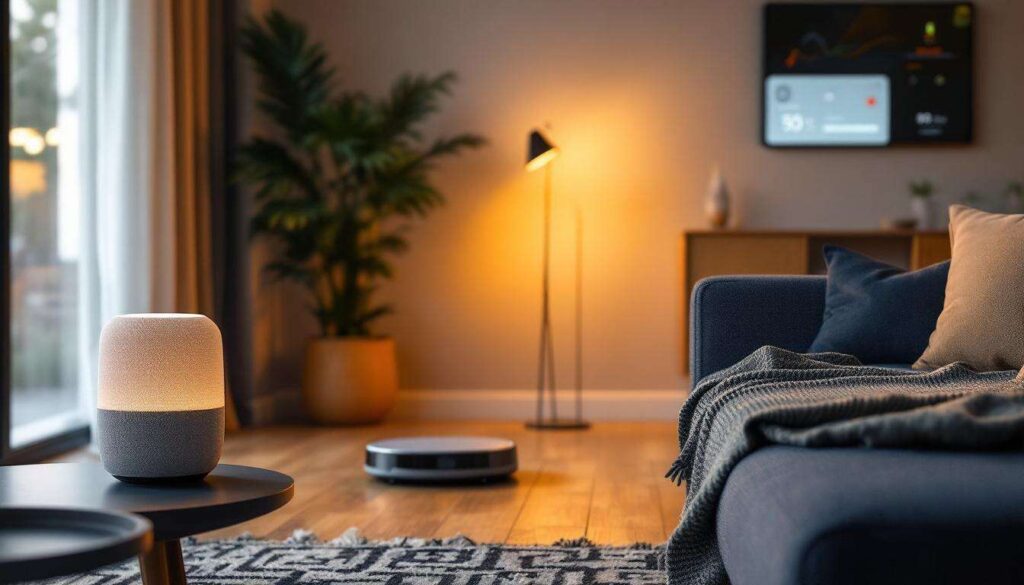
The smart home is no longer a concept from science fiction. It has quietly and methodically integrated into our daily lives, transforming mundane tasks and enhancing our living spaces in ways we might not have anticipated. What once seemed like a novelty—a voice-activated speaker or a color-changing light bulb—has evolved into a sophisticated ecosystem of interconnected devices. For many, certain gadgets have crossed the threshold from “nice-to-have” to “can’t-live-without.” They operate in the background, streamlining routines, bolstering security, and adding a layer of comfort and convenience that has become the new standard for modern living. This exploration delves into several key devices that have proven to be more than just technological curiosities; they are essential components of the contemporary home.
Voice assistants: an everyday ally
At the heart of many smart homes lies a voice assistant. These devices, powered by artificial intelligence, have become the central nervous system for a vast network of connected gadgets, fundamentally changing how we interact with technology in our personal spaces.
The central hub of the smart home
Initially perceived as simple speakers for playing music or answering trivia, devices like Amazon’s Alexa, Google Assistant, and Apple’s Siri have proven to be powerful command centers. They serve as a universal remote for the entire home, responding to simple verbal cues to manage a wide range of tasks. A single command can dim the lights, adjust the thermostat, and lock the front door simultaneously. This ability to orchestrate multiple devices makes the voice assistant an indispensable conductor of the smart home orchestra, simplifying complex routines into effortless phrases.
Beyond simple commands
The utility of a voice assistant extends far beyond basic device control. They are deeply integrated into our digital lives, capable of managing calendars, setting intricate reminders, creating shopping lists, and providing real-time updates on traffic and weather. Routines can be established to automate a sequence of actions; for example, a “good morning” command could trigger the lights to fade on, the coffee maker to start brewing, and a news briefing to play. It’s akin to having a personal assistant dedicated to making the household run more smoothly, freeing up mental energy for more important tasks.
Choosing the right ecosystem
Selecting a voice assistant often means buying into a larger ecosystem of compatible products. While most smart devices now offer cross-compatibility, each assistant has its strengths and weaknesses, particularly concerning device integration and AI intelligence.
| Feature | Amazon Alexa | Google Assistant | Apple Siri |
|---|---|---|---|
| Device Compatibility | Largest selection of third-party skills and devices. | Excellent integration with Android and Google services. | Seamless integration within the Apple ecosystem (HomeKit). |
| AI Capabilities | Strong for shopping and home control. | Superior for conversational queries and search. | Focused on privacy and on-device processing. |
| Privacy Controls | Options to review and delete voice history. | Granular controls over data collection in Google Account. | Industry-leading commitment to user privacy. |
From the central control offered by voice commands, one of the most immediate and visually impactful areas of smart home technology is the lighting that illuminates our spaces.
Smart lighting for a tailored ambiance
Smart lighting is often the gateway for people venturing into home automation. Its appeal is immediate: the ability to transform a room’s atmosphere with a tap on a screen or a simple voice command. But its benefits go far beyond mere convenience, touching on energy efficiency, security, and wellness.
More than just on and off
The true power of smart lighting lies in its versatility. It’s not just about remote control; it’s about complete control over the quality of light. You can adjust brightness to the perfect level for any activity, from bright, cool light for working from home to a warm, dim glow for relaxing in the evening. The ability to change colors can turn a living room into a home theater for movie night or a festive space for a party. Users can create and save “scenes” that recall these settings instantly, tailoring the home’s ambiance to fit any mood or occasion.
Energy efficiency and security
Connected lighting is also a powerful tool for managing energy consumption. Scheduling lights to turn off automatically when a room is typically empty or dimming them during peak hours can lead to significant savings on electricity bills. Furthermore, smart lighting enhances home security. Most systems feature a “vacation mode” that intelligently mimics occupancy by turning lights on and off at irregular intervals, creating a powerful deterrent for potential intruders. It provides peace of mind when you’re away from home.
Types of smart lighting
Getting started with smart lighting is easier than ever, with various options available to suit different needs and budgets. Each type offers a unique way to integrate intelligent illumination into your home.
- Smart bulbs: The simplest entry point. They replace your existing bulbs and connect directly to your Wi-Fi or a hub.
- Smart switches: These replace your traditional wall switches, allowing you to control entire circuits of existing lights, which is ideal for fixtures with many small bulbs.
- LED strips: Perfect for creative accent lighting, such as under kitchen cabinets, behind televisions, or along staircases.
- Smart plugs: A budget-friendly option that can make any standard lamp or light fixture “smart” by controlling its power source.
Just as lighting sets the visual tone of a room, the ambient temperature dictates its physical comfort, another area where smart technology offers profound improvements.
Connected thermostats: comfort at your fingertips
A connected thermostat is one of the most impactful smart home upgrades, working silently in the background to optimize comfort while drastically reducing energy waste. It moves beyond the simple programmable schedules of older models by using intelligence and connectivity to adapt to a household’s unique rhythm.
Intelligent temperature management
The core innovation of a smart thermostat is its ability to learn. Over a short period, it observes your manual adjustments and daily routines to build a profile of your heating and cooling preferences. It learns when you wake up, when you leave for work, and when you return. Many models also use geofencing, tracking your smartphone’s location to automatically enter an energy-saving “away” mode when the house is empty and begin adjusting to your preferred temperature as you head home. The result is a home that is always comfortable when you’re there and never wasting energy when you’re not.
The economic and ecological impact
The efficiency gains from a smart thermostat translate directly into lower utility bills and a smaller environmental footprint. By eliminating wasteful heating and cooling of an empty home, these devices can deliver substantial savings over their lifespan.
| Thermostat Type | Average Annual HVAC Energy Savings |
|---|---|
| Manual Thermostat | 0% (Baseline) |
| Programmable Thermostat | 5-15% |
| Smart Thermostat | 10-23% |
This makes a smart thermostat not just an investment in comfort, but a practical decision for both your finances and the planet.
Key features to look for
When choosing a smart thermostat, several key features can enhance its effectiveness and user experience. Understanding these can help you select the right model for your home.
- Geofencing: Uses your phone’s location to automatically switch between home and away modes.
- Learning algorithms: Adapts automatically to your habits and schedule without manual programming.
- Energy reports: Provides detailed insights into your energy usage, helping you identify further opportunities to save.
- Remote sensors: These can be placed in different rooms to ensure a balanced temperature throughout the house, eliminating hot or cold spots.
Maintaining a comfortable and efficient home environment is a primary concern, and closely related is the fundamental need to ensure that home is also a safe and secure place.
Smart security cameras for a secure home
The proliferation of affordable, high-quality smart security cameras has democratized home surveillance. These devices provide a powerful sense of security, offering a live window into your home from anywhere in the world via your smartphone.
A window into your home, from anywhere
The primary function of a smart camera is to provide peace of mind. Whether you’re checking in on a pet during the workday, confirming a package delivery, or monitoring your property while on vacation, the ability to view a live video feed is invaluable. This constant connectivity helps you feel present even when you’re miles away, transforming anxiety about the unknown into a sense of control and awareness.
Features that make a difference
Modern smart cameras are packed with advanced features that elevate them from simple recording devices to proactive security tools. These capabilities work together to provide comprehensive monitoring.
- Motion detection alerts: You receive an instant notification on your phone the moment the camera detects movement, allowing you to respond immediately.
- Two-way audio: A built-in microphone and speaker let you communicate through the camera, whether it’s to greet a family member, instruct a delivery driver, or warn off an unwanted visitor.
- Night vision: Infrared LEDs provide clear, detailed footage even in complete darkness, ensuring your home is monitored 24/7.
- Cloud and local storage: You can choose between storing video clips on a secure cloud server or locally on a microSD card, giving you control over your data.
Privacy considerations
The presence of cameras inside the home naturally raises valid privacy concerns. Reputable manufacturers have implemented several features to address this. Many cameras include a physical lens cover or the ability to automatically disable recording when you’re home, a feature often tied to geofencing. End-to-end encryption is also a critical feature, ensuring that only you can view your video footage. It is crucial to research a brand’s privacy policies before bringing a camera into your home.
While cameras keep a watchful eye on your home’s security, another category of smart device works tirelessly to maintain its cleanliness.
Robot vacuums: goodbye household chores
Of all household chores, vacuuming is one of the most repetitive and time-consuming. The robot vacuum, once a clumsy novelty, has matured into a remarkably efficient and intelligent device that can automate this task almost entirely, reclaiming hours of free time for homeowners.
The evolution of automated cleaning
Early robot vacuums navigated rooms through a semi-random process of bumping into obstacles and changing direction. Today’s models are far more sophisticated. They employ advanced navigation technologies like LiDAR (Light Detection and Ranging) or vSLAM (Visual Simultaneous Localization and Mapping) to create detailed maps of your home. This allows them to clean in methodical, efficient patterns, ensuring complete coverage and avoiding areas you designate as off-limits through a mobile app. They have transformed from a gimmick into a genuinely effective cleaning tool.
Not just for vacuuming
The technology has expanded beyond just suction. Many modern robots are hybrid models capable of both vacuuming and mopping, providing a comprehensive floor cleaning solution. The most significant recent innovation is the self-emptying base. After each cleaning run, the robot returns to its dock, which automatically suctions the contents of its small internal dustbin into a larger, sealed bag. This means you only have to interact with the device once every few weeks, making it a truly set-it-and-forget-it appliance.
Is it right for your home ?
While incredibly effective, a robot vacuum’s performance can depend on the home environment. Certain conditions are more conducive to automated cleaning than others.
| Home Feature | Robot Vacuum Suitability |
|---|---|
| Hardwood or Tile Floors | Excellent |
| Low-Pile Carpet | Excellent |
| High-Pile or Shag Carpet | Fair to Poor |
| Minimal Clutter | Excellent |
| Homes with Pets | Good (look for models with tangle-free rollers) |
Even the most complex home automation can be complemented by the simplest of devices, proving that a high impact doesn’t always require a high-tech appearance.
The revolution of connected plugs
Amidst the landscape of sophisticated smart devices, the humble smart plug stands out for its simplicity and profound utility. This small, unassuming adapter can instantly bestow smart capabilities upon a vast array of “dumb” electronics, acting as a versatile bridge to the connected home.
Making any device smart
The concept is brilliantly simple: plug the smart plug into a wall outlet, then plug any conventional appliance into it. Suddenly, that appliance is connected. Using a smartphone app or a voice assistant, you can now turn the device on or off from anywhere. This opens up a world of possibilities for items that were never designed to be smart, from vintage lamps and coffee makers to fans and holiday decorations. It’s an affordable and powerful way to expand your smart home without replacing existing appliances.
Practical and creative uses
The applications for smart plugs are limited only by your imagination. They are perfect for both convenience and safety, integrating seamlessly into daily routines.
- Schedule your coffee maker to start brewing a few minutes before your alarm goes off.
- Use a timer to turn a bedside fan off automatically after you’ve fallen asleep.
- Control all your holiday lights with a single voice command or tap of a button.
- Remotely turn off a curling iron or space heater you may have forgotten, a true lifesaver for peace of mind.
Energy monitoring capabilities
Beyond simple on/off control, many smart plugs include a built-in energy monitoring feature. This allows you to see exactly how much electricity the connected appliance is using in real-time and over historical periods. This data is invaluable for identifying “vampire” devices that draw significant power even in standby mode. By understanding your energy consumption, you can make informed decisions to reduce waste and lower your electricity bill.
These devices, from the central intelligence of a voice assistant to the simple utility of a smart plug, illustrate a clear trend. Smart home technology has moved beyond novelty to become a practical, integrated part of modern life. Voice assistants serve as the central hub, lighting tailors our environment, thermostats optimize comfort and efficiency, cameras provide security, and robotic vacuums automate chores. Each gadget, in its own way, solves a real-world problem, saving time, energy, and mental bandwidth. They work together to create a living space that is more responsive, efficient, and attuned to the needs of its inhabitants.