



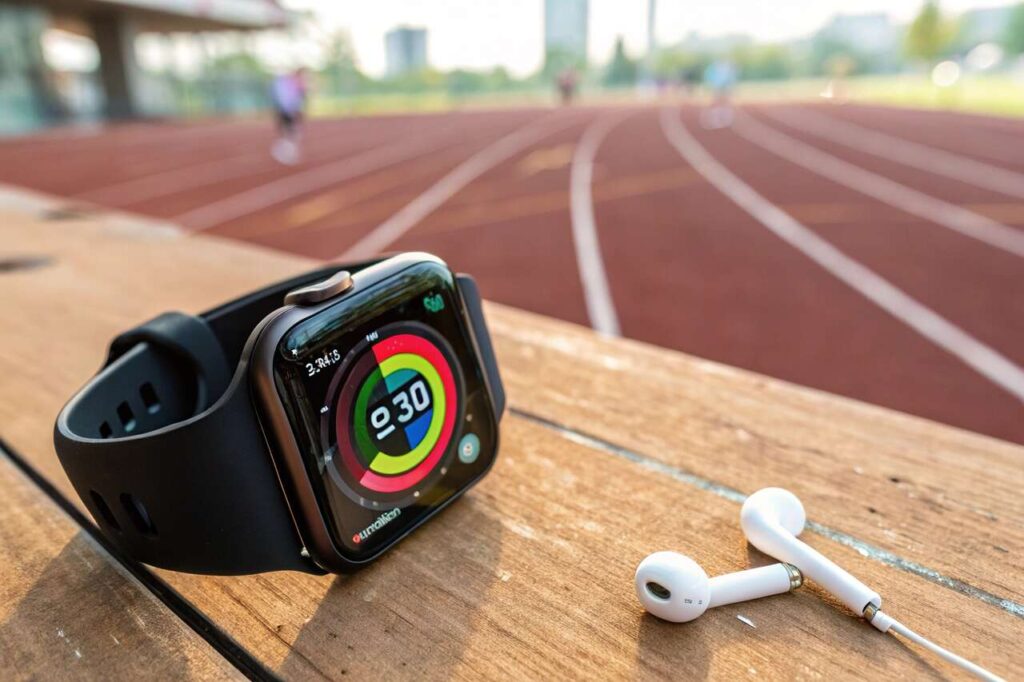
The market for sports smartwatches has long been dominated by established players, with brands like Garmin setting the standard for performance, features, and, often, price. However, a new wave of competitors is challenging this status quo by offering feature-rich devices at a fraction of the cost. Among them, Amazfit has emerged as a particularly disruptive force. Its latest offering makes a bold play for the budget-conscious athlete, packing in premium functionalities such as built-in music storage and a staggering claimed battery life of up to three weeks, directly rivaling models that cost several times more.
Amazfit: a budget Garmin rival
The new landscape of affordable wearables
In recent years, the demand for accessible technology has reshaped the consumer electronics industry. Smartwatches are no exception, with a growing number of users seeking robust fitness tracking and smart features without the premium price tag. Zepp Health, the parent company of Amazfit, has strategically positioned its brand to capitalize on this trend. By focusing on core functionalities and optimizing production costs, Amazfit delivers devices that punch well above their weight, making advanced health monitoring accessible to a broader audience. This approach has allowed the brand to build a loyal following and establish itself as a credible alternative to more expensive options.
Challenging the industry leader
Amazfit’s strategy is not to replicate every feature of a high-end Garmin watch but to offer the most desired features at an unbeatable price point. For many users, core functionalities like accurate GPS tracking, reliable heart rate monitoring, sleep analysis, and long battery life are the primary purchase drivers. Amazfit excels in these areas, providing a user experience that feels premium despite its accessible cost. This focus on delivering a high-value proposition makes it a direct and formidable competitor to Garmin’s entry-level and mid-range series, forcing the entire market to reconsider what a “budget” smartwatch can and should offer.
This strategic positioning is further strengthened by the inclusion of features typically reserved for more expensive models, one of which is the ability to carry your music with you, untethered from a smartphone.
Built-in music storage: a key feature
The convenience of phone-free workouts
One of the most significant advantages of the new Amazfit watch is its integrated music storage. This feature liberates users from the need to carry a bulky smartphone during runs, gym sessions, or any other physical activity. Athletes can simply load their favorite playlists or podcasts directly onto the watch, connect a pair of bluetooth headphones, and enjoy an untethered audio experience. This level of convenience was once a hallmark of premium smartwatches, and its inclusion in an affordable device is a game-changer for many who crave minimalist, distraction-free exercise.
Functionality and capacity
The device typically offers around 2 to 3 gigabytes of dedicated storage, which is ample space for several hundred songs in standard MP3 format. The transfer process is managed through the companion Zepp application, allowing users to easily move audio files from their phone to the watch. This seamless integration ensures that managing your workout soundtrack is straightforward and quick. The ability to control playback directly from the wrist, including volume adjustments and track skipping, further enhances the user experience, making it a truly practical and well-implemented feature.
A clear competitive edge
The inclusion of onboard music storage provides a distinct advantage over many competitors in the same price bracket. To illustrate this point, consider the following comparison of feature availability across different market segments.
| Feature | Typical Budget Watch | Amazfit Rival | Premium Garmin Watch |
|---|---|---|---|
| GPS Tracking | Yes | Yes | Yes (Advanced) |
| Heart Rate Monitoring | Yes | Yes | Yes (Advanced) |
| Built-in Music Storage | Rarely (Music Control Only) | Yes | Yes (Music Models) |
| Price Point | Low | Low to Mid | High |
While music is a major draw, perhaps the most talked-about specification of this watch is its extraordinary battery endurance, a critical factor for any wearable device.
Three-week battery life: reality or promise ?
Understanding the manufacturer’s claim
Amazfit advertises a battery life of up to three weeks, a figure that immediately catches the eye. It is crucial, however, to understand the conditions under which this is achieved. This impressive number is based on a “typical usage scenario” defined by the manufacturer. This scenario generally includes:
- Heart rate monitoring set to periodic intervals, not continuous.
- Sleep tracking enabled.
- A limited number of notifications received per day.
- Brief, infrequent use of GPS for workouts.
- Screen brightness set to a moderate level.
For users whose daily habits align with this profile, achieving close to three weeks on a single charge is a realistic expectation.
Performance under intense usage
For power users and serious athletes, the battery life will naturally be shorter, yet it remains impressive. With more demanding features activated, the watch still delivers robust performance. For instance, users can expect up to 25 hours of continuous GPS tracking, making it more than capable of handling a marathon, a long hike, or a full day of outdoor activities. Activating the always-on display or streaming music continuously via bluetooth will also reduce the overall battery life, but even under this heavy strain, the watch often outlasts its competitors, typically lasting several days instead of just one or two.
Extending longevity with battery saving modes
To further bolster its battery credentials, Amazfit includes a highly effective battery saver mode. When enabled, this mode strips the watch down to its most basic functions, such as displaying the time and tracking steps, while disabling more power-hungry features like continuous heart rate monitoring and bluetooth connectivity. In this state, the watch can last for over a month, ensuring that it remains a functional timepiece even when a charger is out of reach for an extended period. This flexibility makes it a reliable companion for travel and multi-day events.
Of course, a powerful battery is only one part of the equation; it must be paired with a well-designed device and a comprehensive feature set to be truly compelling.
Design and features: what does Amazfit offer ?
Aesthetic and build quality
The watch features a modern and versatile design, suitable for both the gym and the office. It is constructed from a lightweight yet durable polymer, ensuring it remains comfortable on the wrist throughout the day and during intense workouts. The centerpiece is a vibrant and bright AMOLED display, which offers rich colors and excellent readability even in direct sunlight. This screen technology is a significant step up from the transflective displays often found on other sports watches in this price range. Furthermore, with a 5 ATM water resistance rating, the watch is suitable for swimming and showering, and its interchangeable straps allow for easy customization.
Comprehensive health and fitness tracking
At its core, this Amazfit device is a powerful fitness tracker. It is equipped with a suite of sensors to monitor a wide range of activities and health metrics. Key tracking capabilities include:
- A multi-satellite positioning system supporting GPS, GLONASS, Galileo, and BDS for fast and accurate location tracking.
- The proprietary BioTracker optical sensor for continuous heart rate monitoring and blood oxygen saturation (SpO2) measurements.
- In-depth sleep analysis that breaks down sleep stages and provides a sleep score.
- Stress level monitoring and guided breathing exercises.
- Support for over 150 sports modes, with automatic recognition for common activities like running, walking, and cycling.
Everyday smartwatch functionalities
Beyond fitness, the watch serves as a capable smart companion. Running on the lightweight Zepp OS, it delivers a smooth and intuitive user experience. Users can receive and view notifications for calls, texts, and applications directly on their wrist. Other smart features include weather forecasts, alarms, event reminders, and a find my phone function. While its third-party app ecosystem is not as extensive as that of some premium competitors, it covers all the essential functionalities needed for daily use, making it a well-rounded device.
With these features in mind, it becomes essential to place the watch in direct comparison with its primary target: the well-established offerings from Garmin.
Comparison with Garmin: pros and cons
Where Amazfit takes the lead
The most undeniable advantage for Amazfit is its exceptional value for money. For a significantly lower price, it offers features like an AMOLED display and onboard music storage, which are often reserved for Garmin’s more expensive “Music” or premium models. The user interface on Zepp OS is also frequently cited as being more straightforward and visually appealing for casual users compared to Garmin’s data-heavy menus. For those who prioritize screen quality, battery life, and media playback on a budget, Amazfit presents a nearly unbeatable package.
Where Garmin maintains its advantage
Garmin’s long-standing reputation in the sports watch market is built on a foundation of reliability and advanced analytics. Garmin devices generally offer more in-depth training metrics, such as training load, recovery advisor, and race predictor, which are invaluable for serious athletes looking to optimize their performance. Furthermore, Garmin’s GPS accuracy is often considered the industry benchmark, and its Connect IQ platform provides a much more extensive ecosystem for third-party apps and watch faces. For elite athletes and data enthusiasts, the premium paid for a Garmin is often justified by this deeper analytical capability.
A head-to-head feature summary
To better visualize the differences, the following table compares key aspects of a typical Amazfit rival against a comparable entry-level Garmin model.
| Feature | Amazfit Budget Rival | Garmin Forerunner (Entry-Level) |
|---|---|---|
| Approximate Price | $150 – $200 | $200 – $250 |
| Display Type | AMOLED | Transflective MIP |
| Typical Battery Life | 14-21 days | 7-14 days |
| Music Storage | Yes | No (Music models cost more) |
| Advanced Training Metrics | Basic | Yes (PacePro, Recovery) |
| App Ecosystem | Limited (Zepp OS) | Extensive (Connect IQ) |
This side-by-side analysis clarifies the distinct value propositions of each brand, helping to identify which user is best suited for this compelling Amazfit device.
Why choose Amazfit for your sports activities ?
The ideal user profile
The Amazfit watch is perfectly suited for a large segment of the fitness community. This includes beginners who are just starting their fitness journey and want a capable, easy-to-use device without a hefty investment. It is also an excellent choice for intermediate runners, cyclists, and gym-goers who need reliable tracking of essential metrics like distance, pace, and heart rate but do not require complex performance analytics. Finally, anyone who values extraordinary battery life and the convenience of phone-free music over granular data will find this watch to be an ideal companion for their active lifestyle.
Unmatched value for money
Ultimately, the decision to choose Amazfit comes down to its core strength: providing an incredible amount of functionality for its price. It successfully democratizes access to premium features, proving that users no longer need to spend a fortune to get a high-quality, feature-rich sports watch. It covers all the essential bases for health and fitness tracking, wraps them in an attractive design with a beautiful display, and adds standout features that enhance the everyday user experience. This balance of performance and price is its most powerful selling point.
Important limitations to consider
Despite its many strengths, it is important to acknowledge its limitations. This watch is not designed for elite or professional athletes who rely on advanced metrics like running dynamics, lactate threshold, or heat and altitude acclimation. Outdoor adventurers who require robust topographical mapping and emergency features like incident detection would also be better served by a higher-end Garmin device. Recognizing who this watch is not for is just as important as understanding its target audience, ensuring that buyers make an informed decision based on their specific needs.
This Amazfit offering successfully carves out its own space in a competitive market by delivering on its promises of exceptional battery life and premium features at a budget-friendly price. It stands as a powerful testament to the idea that excellent performance and affordability can coexist, presenting a compelling alternative for a vast number of fitness enthusiasts who want a reliable, functional, and enjoyable sports watch without breaking the bank.