



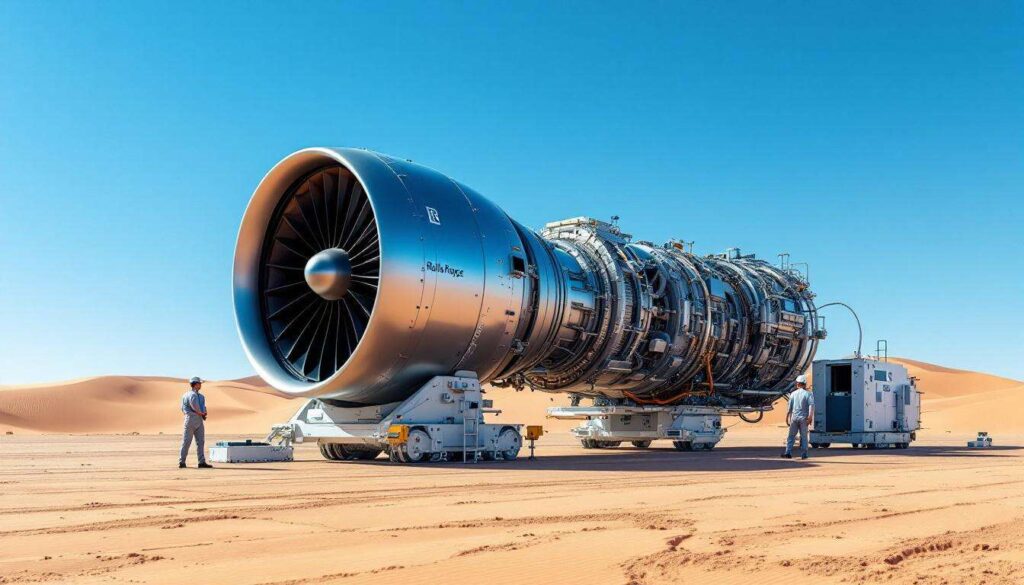
The vast, arid landscapes of the world’s deserts pose a silent but significant threat to modern aviation. While aircraft are designed to withstand extreme weather, the fine, abrasive dust and sand particles ubiquitous in these regions present a unique and persistent challenge. Ingested by powerful jet engines, this particulate matter can cause accelerated wear, reduced performance, and, in severe cases, critical failure. This issue has long been a major concern for both military and commercial operators, driving a quiet but intense technological race to shield these marvels of engineering from an insidious environmental foe.
Introduction to the challenges of aircraft engines in desert regions
The abrasive nature of sand and dust
At the heart of a jet engine, components spin at incredible speeds in extreme temperatures. When an aircraft flies through air laden with dust, microscopic particles of silicate, feldspar, and other hard minerals are drawn into the engine’s core. These particles act like a relentless sandblaster, eroding the meticulously shaped surfaces of compressor and turbine blades. This erosion degrades the aerodynamic efficiency of the blades, leading to a noticeable drop in engine performance. The immediate consequences are a reduction in thrust and an increase in fuel consumption, forcing airlines to bear higher operational costs. Over time, this constant abrasion can weaken the structural integrity of the blades, necessitating more frequent and expensive maintenance cycles to prevent potential failures.
The phenomenon of engine vitrification
A far more dangerous threat occurs in the hottest sections of the engine, such as the high-pressure turbine. Here, temperatures can exceed the melting point of the ingested dust particles. When this happens, the molten sand and dust, known technically as Calcium-Magnesium-Alumino-Silicate (CMAS), solidifies on cooler surfaces, forming a hard, glassy coating. This process, known as vitrification, is particularly damaging because it can block the tiny, critical cooling holes that prevent turbine blades from melting. The effects of this buildup are severe and cumulative:
- Loss of cooling effectiveness: The glassy layer insulates the component, preventing cooling air from reaching the metal surface.
- Component overheating: Without proper cooling, the blade material can quickly reach temperatures beyond its structural limits.
- Risk of catastrophic failure: An overheated turbine blade can fracture, sending debris through the rest of the engine and potentially leading to an uncontained engine failure.
Operational and maintenance repercussions
For airlines and military forces operating in and over desert regions, these challenges translate into significant logistical and financial burdens. The need to mitigate the risks associated with dust ingestion leads to a cascade of costly operational adjustments. Maintenance schedules must be accelerated, and engines require more frequent internal inspections using specialized borescopes. The overall lifespan of an engine, or its time ‘on-wing’, is often drastically reduced, disrupting flight schedules and requiring a larger inventory of spare engines. These factors combine to create a substantial economic impact, as illustrated by the comparative maintenance costs.
| Maintenance Aspect | Standard Environment | Harsh Desert Environment |
|---|---|---|
| Engine Inspection Frequency | Every 1,000 flight hours | Every 400-500 flight hours |
| Component Replacement Rate | Standard | Increased by 50-70% |
| Estimated Annual Cost Increase per Engine | Baseline | +$250,000 |
The constant battle against this environmental hazard has pushed engine manufacturers to seek out more robust and permanent solutions, moving beyond procedural mitigations to fundamental technological advancements.
Innovative technologies from Rolls-Royce against dust
The advanced sand ingestion system
To combat the problem, one must first understand it completely. Rolls-Royce has invested in a state-of-the-art test facility specifically designed to replicate the effects of desert environments. This advanced system can inject precisely controlled amounts and types of dust and sand into a running jet engine, simulating everything from a light haze to a severe desert sandstorm. This controlled environment allows engineers to observe and measure the exact effects of particulate ingestion in real-time. It serves as a crucial platform for validating new protective technologies, enabling rapid prototyping and refinement of solutions before they are deployed on commercial or military aircraft. It is a laboratory for a war against grit.
Development of new protective coatings
One of the primary lines of defense being developed is the application of advanced materials. Rolls-Royce is pioneering the use of new environmental barrier coatings (EBCs). These are not simple layers of paint; they are sophisticated, multi-layered ceramic systems designed to be exceptionally hard and resistant to erosion. More importantly, they have a chemical composition that resists the adherence of molten sand. By creating a non-stick, durable surface on critical hot-section components like turbine blades and vanes, these coatings prevent the glassy CMAS layer from forming. This ensures that cooling holes remain clear and that the components can operate at their designed temperatures, significantly extending their life and maintaining engine safety.
Intelligent particle separation technology
While coatings offer passive protection, Rolls-Royce is also developing active defense systems. The company is testing an advanced particle separator, a system that works to remove a significant portion of harmful dust from the intake air before it ever reaches the engine core. Drawing on principles used effectively in helicopter engines, this technology uses the engine’s own aerodynamics to create a centrifugal effect, flinging the heavier dust particles outward into a bypass scroll where they are safely ejected. Integrating such a system into the complex architecture of a high-bypass turbofan engine is a major engineering feat, but it promises a revolutionary level of protection by fundamentally reducing the amount of particulate matter the engine must endure.
The development of these coatings and systems is only half the battle; they must be rigorously proven to withstand the very conditions they are designed to defeat.
Durability tests of engines against desert particles
Simulating extreme environmental conditions
The testing regimen at Rolls-Royce’s facilities is nothing short of brutal. Using its specialized sand ingestion rig, the company can create highly realistic and repeatable test scenarios. Engineers use standardized particulates, such as ‘Arizona Test Dust’, as well as specific samples gathered from desert regions around the world to ensure the tests are relevant to real-world operational theaters. The system can blast an engine with dust concentrations far exceeding those found even in the most severe sandstorms. This accelerated testing allows engineers to simulate thousands of hours of flight in a desert environment in a matter of days, providing rapid and reliable data on the durability of new technologies.
Data collection and analysis
Throughout these demanding tests, a vast array of sensors monitors every aspect of the engine’s health. High-speed cameras capture the impact of particles on fan blades, while advanced thermal imaging tracks temperature fluctuations in the turbine section. Borescopes are used between test runs to visually inspect for erosion and vitrification. This wealth of data is crucial for understanding not just *if* a technology works, but *how* it works. Engineers can pinpoint weaknesses, refine coating compositions, and optimize the efficiency of the particle separator. The table below highlights the performance differences observed during these tests.
| Performance Metric | Standard Engine (After Test) | Protected Engine (After Test) |
|---|---|---|
| Turbine Blade Erosion | Measurable material loss | Minimal to no erosion |
| Cooling Hole Blockage | Up to 40% blocked | Less than 5% blocked |
| Fuel Efficiency Loss | ~1.5% | ~0.2% |
The Trent engine family under scrutiny
The focus of much of this testing is on Rolls-Royce’s flagship engine families, including the Trent series, which powers a significant portion of the world’s long-haul fleet, including the Airbus A350 and Boeing 787 Dreamliner. By subjecting these proven and widely used engines to such harsh conditions, Rolls-Royce ensures that the new protective technologies are not just laboratory curiosities but are robust, reliable, and ready to be integrated into the global aviation fleet. This focus on existing platforms demonstrates a commitment to improving the durability of the thousands of Rolls-Royce engines already in service, as well as those of the future.
The successful validation of these technologies has far-reaching consequences that extend beyond the engineering department and into the daily operations of the global aviation sector.
Implications for the aviation industry
Enhancing flight safety and reliability
The foremost implication of this research is a significant enhancement in flight safety. By mitigating the risks of engine degradation and failure due to dust ingestion, these technologies provide a greater margin of safety for flights operating in or through arid regions. For military operations, this means increased mission readiness and reliability for aircraft deployed in desert theaters. For commercial airlines, it translates to greater confidence in the reliability of their fleet, reducing the likelihood of in-flight engine issues, diversions, and emergency landings. This fundamental improvement in engine robustness is a critical step forward for the entire industry.
Reducing operational costs for airlines
For airlines, the financial benefits are substantial and multifaceted. A more durable engine directly translates to a more profitable operation. The key areas of cost reduction include:
- Lower maintenance costs: Longer intervals between engine overhauls and fewer unscheduled repairs mean less spending on labor and spare parts.
- Increased asset availability: With engines spending more time ‘on-wing’ and less time in the shop, airlines can maintain their flight schedules with fewer spare aircraft and engines.
- Improved fuel efficiency: By preventing the performance degradation caused by erosion, engines maintain their factory-level fuel efficiency for longer, yielding significant savings on fuel, which is an airline’s single largest expense.
Expanding operational envelopes for aircraft
With engines that are inherently more resilient to harsh environments, airlines and aircraft manufacturers can rethink operational limitations. New, more direct flight routes over vast deserts may become more economically viable and reliable. Aircraft will be better equipped to operate from airports located in arid or dusty regions without facing punitive maintenance penalties. This could open up new markets and improve connectivity for millions of people, effectively expanding the map of global air travel. This enhanced capability provides airlines with greater operational flexibility and the ability to deploy their most advanced aircraft in a wider range of environments.
These immediate industry benefits are paving the way for even more advanced concepts and applications in the years to come.
Future prospects for engine protection
Integration into next-generation engines
The technologies currently being tested are not merely retrofits; they are foundational elements for the next generation of propulsion systems. Engines like the forthcoming Rolls-Royce Ultrafan are being designed from the ground up with these protective features integrated into their core architecture. By incorporating advanced materials and particle separation systems at the initial design stage, engineers can optimize the entire system for maximum efficiency and durability. This means future aircraft will be born with a natural resistance to environmental threats, making them inherently more reliable and efficient than any aircraft flying today.
The role of artificial intelligence and predictive maintenance
The future of engine protection will also be intelligent. The next step involves equipping engines with a network of advanced sensors capable of detecting the size and concentration of airborne particles in real-time. This data can be fed into an artificial intelligence (AI) system that manages the engine’s health. The AI could make micro-adjustments to engine parameters to minimize wear or actively manage the particle separation system for peak effectiveness. Furthermore, by tracking an engine’s cumulative exposure to dust over its lifetime, predictive maintenance algorithms can forecast the need for servicing with unprecedented accuracy, allowing airlines to schedule maintenance before any significant performance degradation occurs.
Broader applications beyond commercial aviation
The knowledge and technology gained from this aviation-focused research have significant potential in other sectors. Military aircraft, particularly helicopters that operate low to the ground in dusty conditions, are obvious beneficiaries. Beyond aerospace, industrial gas turbines used for power generation and in the oil and gas industry are often located in the world’s most arid regions. Applying these advanced coatings and filtration systems to these ground-based engines could dramatically improve their reliability and reduce operational costs, ensuring a more stable energy supply in challenging environments.
The drive to build a more resilient engine is not only about performance and cost, but also about creating a more sustainable and economically sound future for aviation.
Environmental and economic implications of Rolls-Royce solutions
Improving fuel efficiency and reducing emissions
An engine that maintains its as-built condition for longer is an engine that operates at peak efficiency. The degradation caused by dust erosion forces an engine to burn more fuel to produce the same amount of thrust. By preventing this degradation, Rolls-Royce’s new technologies ensure that engines continue to operate with optimal fuel efficiency throughout their service life. This has a direct and positive environmental impact: less fuel burned means fewer carbon dioxide (CO2) and other harmful emissions released into the atmosphere. Over the multi-decade lifespan of a fleet of aircraft, this sustained efficiency can contribute significantly to the aviation industry’s emissions reduction goals.
Extending engine lifespan and promoting sustainability
The economic model of aviation has long relied on the regular and costly replacement of life-limited parts. By making core engine components dramatically more durable, these new technologies extend the overall lifespan of the engine. This shift has profound implications for sustainability. An engine that lasts longer requires fewer replacement parts, which in turn reduces the demand for the energy-intensive mining of raw materials like titanium and nickel alloys. It also means less industrial waste from scrapped components. This approach aligns with the principles of a circular economy, where the focus is on durability and longevity rather than disposability, representing a more responsible use of global resources.
Economic impact on global aviation
The cumulative economic effect of these innovations is transformative. For airlines, lower maintenance and fuel costs strengthen financial stability and can lead to more competitive ticket prices for consumers. For the industry as a whole, a more robust global fleet means fewer flight delays and cancellations related to environmental factors, improving the overall reliability and public perception of air travel. In rapidly growing aviation markets in the Middle East, Africa, and Asia, where desert conditions are common, this technology acts as an enabler, unlocking the full potential of these regions to participate in global commerce and tourism. It is a technological advancement that strengthens the economic foundation of the entire aviation ecosystem.
The challenge posed by desert dust is a formidable one, but it is being met with sophisticated and multi-layered technological solutions. Rolls-Royce’s work in advanced coatings, particle separators, and rigorous testing methodologies represents a critical step forward in aviation engineering. These innovations promise not only to enhance flight safety and reduce operational costs but also to expand the horizons of air travel. By building engines that are more durable, efficient, and reliable, the industry is securing a more sustainable and resilient future, ensuring that air travel can continue to connect the world, regardless of the environment below.