



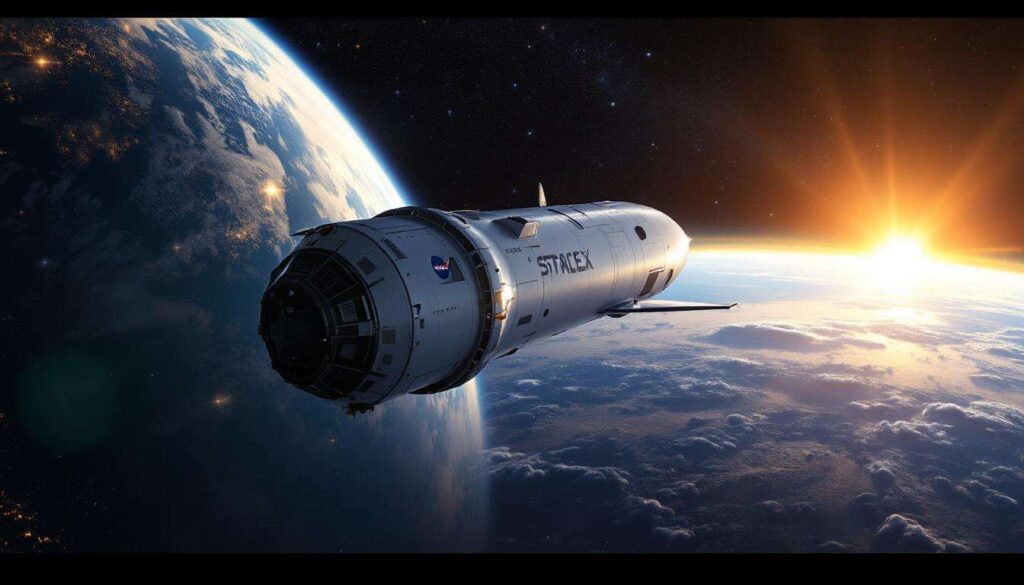
Understand the recent strategic shift in the American space program. NASA, in a decisive move alongside its partner Boeing, has re-oriented the immediate future of the CST-100 Starliner spacecraft. Instead of carrying astronauts on its next flight to the International Space Station, Starliner will fly a mission dedicated solely to cargo. This decision marks a critical juncture for the program, prioritizing data collection and system validation over the immediate goal of crewed operational flights. The focus now turns to proving the vehicle’s mettle in an uncrewed capacity, a methodical step back designed to ensure a giant leap forward in safety and reliability for future human spaceflight endeavors.
NASA and Boeing: towards a Starliner cargo mission
A strategic pivot for safety
The joint decision between NASA and Boeing to reconfigure Starliner’s next mission represents a deliberate and strategic pivot. This move is not seen as a setback but rather as a prudent measure within the framework of the Commercial Crew Program. The program’s core principle has always been safety, and this adjustment aligns perfectly with that ethos. After analyzing data from Starliner’s previous test flights, including the Crew Flight Test (CFT), both organizations concluded that another uncrewed mission would provide invaluable data. It allows for a comprehensive, end-to-end performance check of the spacecraft’s systems in a real-world space environment without exposing a crew to potential risks. This is about building a foundation of absolute confidence before placing astronauts back on board.
The official rationale
In official statements, NASA administrators have been clear: this is about due diligence. The agency emphasized that Starliner performed well during its crewed test flight but that several “in-flight anomalies,” such as minor helium leaks in the propulsion system, warranted further investigation. An uncrewed cargo mission offers the perfect opportunity to fly the spacecraft with hardware and software modifications designed to address these issues. The goal is to demonstrate that all corrective actions are effective and that the system performs exactly as predicted. This methodical approach ensures that by the time the next crew boards Starliner, the vehicle will have an even more robust and well-understood performance profile, reinforcing the agency’s commitment to astronaut safety above all else.
Timeline and preparation
While a definitive launch date has not been set, preparations for this cargo mission are underway. The Starliner capsule that will be used for the mission requires refurbishment and outfitting for a cargo-only configuration. This involves installing systems for securing experiments and supplies in place of astronaut couches and related crew support equipment. Engineers will also integrate the aforementioned system upgrades. The timeline will be dictated by the successful completion of these modifications and a thorough series of ground checks and reviews. Boeing and NASA will proceed only when the data confirms the vehicle is ready, ensuring that the mission’s objectives for system validation can be fully met.
This careful preparation underscores the reasons behind choosing a cargo-only flight, a decision rooted in a desire to mitigate risks while still gathering crucial flight data.
Why a cargo mission for Starliner ?
Data gathering and system validation
The primary driver for an uncrewed mission is the unparalleled opportunity for extensive data collection. A cargo flight allows engineers to push the vehicle’s systems and analyze performance without the constraints imposed by crew safety protocols. It’s a chance to fully characterize the spacecraft’s behavior during every phase of the mission. Key data points to be collected include:
- Performance of the upgraded propulsion system, specifically monitoring for any recurrence of helium leaks under flight stresses.
- Validation of software patches and flight control adjustments implemented after the last mission.
- Detailed thermal and environmental data from within the cabin to verify life support system functionality over an extended period.
- End-to-end testing of autonomous rendezvous and docking procedures with the International Space Station.
This data is not just for verification; it is essential for refining flight models and ensuring the system is robust for all potential crewed scenarios.
Addressing technical challenges in a low-risk environment
Starliner’s development has faced several well-documented technical hurdles. An uncrewed mission provides the ideal low-risk environment to test the solutions implemented to overcome these challenges. Flying without a crew means that if an unforeseen issue arises, mission controllers can focus entirely on the vehicle, running diagnostics and implementing contingency plans without the overriding priority of astronaut safety. This approach is standard practice in aerospace development, where complex systems are tested incrementally. A comparison of risk factors highlights the prudence of this strategy.
| Risk Factor | Crewed Mission | Uncrewed Cargo Mission |
|---|---|---|
| Human Safety | Highest Priority | Not a direct factor |
| System Anomaly Response | Constrained by crew safety rules | Flexible, focused on data gathering |
| Mission Objectives | Crew transport and safety | System validation and performance |
| Public and Programmatic Pressure | Extremely high | High, but focused on technical success |
Fulfilling contractual milestones
While primarily a technical decision, opting for a cargo mission may also help satisfy certain contractual obligations with NASA. The Commercial Crew Program contract is milestone-based, and demonstrating full mission capability, even in an uncrewed configuration, is a significant step. A successful cargo delivery and return would prove the viability of the Starliner system for ISS logistics, showcasing its utility to the program. It serves as a powerful demonstration of progress, proving to NASA that Boeing is methodically resolving issues and moving Starliner towards its ultimate goal of becoming a certified human-rated spacecraft, thereby solidifying its role in the agency’s space access strategy.
Successfully navigating this mission is therefore critical, not just for technical validation but for the program’s overall credibility and future, highlighting the immense stakes involved.
The stakes of Starliner’s next mission
Restoring confidence in the program
The stakes for Boeing are incredibly high. This mission is fundamentally about restoring and building confidence. Confidence from NASA, which needs a reliable second provider for crew transport. Confidence from the public and Congress, who have followed the program’s delays and budget overruns. And, perhaps most importantly, confidence from the astronauts who will eventually fly in the capsule. A flawless cargo mission, from launch to docking to landing, would be a powerful statement. It would demonstrate that Boeing has mastered the complexities of the Starliner system and has effectively addressed the technical issues that have plagued its development. Anything less than a complete success would invite further scrutiny and could jeopardize the vehicle’s future.
The competitive landscape
It is impossible to discuss Starliner without acknowledging the competitive environment. SpaceX’s Crew Dragon has been operational for years, having flown numerous successful crewed missions for NASA. This success has set a very high bar. Starliner is not just trying to achieve certification; it is trying to do so in the shadow of a proven and reliable competitor. NASA’s entire strategy for the Commercial Crew Program is built on the principle of dissimilar redundancy—having two independent and different systems to ensure access to the ISS is never compromised. For this strategy to work, Starliner must become as dependable as Crew Dragon. This cargo mission is a crucial step in proving it can meet that standard and fulfill its role as a vital second pillar of American human spaceflight.
Financial and reputational implications
The financial investment in Starliner has been substantial, both from NASA and from Boeing itself. The program has faced significant cost overruns, which have placed financial pressure on the company. A successful mission is needed to justify this investment and pave the way for the operational flights that will generate revenue. Reputationally, the stakes are just as high. Boeing’s legacy as a premier aerospace company is on the line. A successful Starliner program would be a major victory, reaffirming its capabilities in the cutting-edge field of human spaceflight. This mission is therefore a critical test of both the hardware and the company’s ability to deliver on one of its most visible and challenging projects.
The outcome of this mission will ripple throughout NASA, directly influencing its long-term plans for operations in low-Earth orbit.
Impact on NASA’s space program
Ensuring redundant access to the ISS
The primary impact of a successful Starliner mission on NASA’s space program is the fulfillment of its long-standing goal of redundant access to the International Space Station. Since the retirement of the Space Shuttle, NASA has worked to avoid reliance on a single provider for crew transport. While SpaceX has been an outstanding partner, having only one operational vehicle creates a single point of failure. An issue with the Falcon 9 rocket or Dragon capsule could ground the entire system, leaving NASA without a domestic way to send its astronauts to space. A certified Starliner provides that critical second option, ensuring that the multi-billion dollar investment in the ISS can be sustained and utilized without interruption, regardless of the status of one provider.
Adjustments to ISS logistics and scheduling
The introduction of Starliner, even initially for cargo, will influence the intricate logistics of the ISS. The station relies on a steady stream of supplies from Northrop Grumman’s Cygnus and SpaceX’s Cargo Dragon. A Starliner cargo flight would be integrated into this busy schedule. Its unique capabilities, such as its landing on land rather than in the ocean, could offer new options for returning sensitive scientific experiments to Earth quickly. In the short term, the shift of this next mission to cargo will require adjustments to the crew rotation schedule, as NASA will continue to rely solely on Crew Dragon for astronauts until Starliner is fully certified.
Long-term crew rotation strategy
Looking ahead, Starliner’s certification is central to NASA’s long-term crew rotation strategy. The plan has always been to alternate missions between Boeing and SpaceX. This approach fosters competition, provides flexibility, and ensures the continuous presence of US astronauts on the station. The delay in Starliner’s certification has meant that SpaceX has shouldered the entire burden of these rotations. While this has worked, it is not the intended or most robust model. A successful cargo mission is the next logical step on the path to certification, which will finally enable NASA to implement its original, more resilient two-provider strategy for staffing the orbiting laboratory.
This path forward is entirely dependent on the sophisticated systems and innovations that are built into the Starliner spacecraft itself.
Technology and innovations onboard Starliner
Unique design and landing system
The CST-100 Starliner incorporates several innovative design features that distinguish it from other spacecraft. One of its most notable characteristics is its landing system. Unlike capsules that splash down in the ocean, Starliner is designed to land on terra firma in the western United States. It uses a combination of parachutes and large airbags to cushion its touchdown, providing a gentler return for the crew and, importantly, allowing for quicker access to time-sensitive scientific cargo. Other key design elements include:
- A weldless spun-formed structure, which reduces the number of potential failure points and makes the vehicle lighter and stronger.
- A reusable design, with each capsule intended for up to 10 missions with minimal refurbishment.
- An innovative docking system that is simpler and lighter than previous designs.
Advanced software and avionics
The brain of the Starliner is its advanced software and avionics suite. The spacecraft is designed for autonomous operation, handling everything from launch to docking and landing with minimal pilot intervention. However, it also provides a modern, tablet-based interface for the crew, allowing them to monitor systems and take manual control if necessary. The software has undergone rigorous verification and validation, especially after early test flights revealed coding issues. This upcoming cargo mission will serve as a definitive, end-to-end test of the entire software package in a real flight environment, ensuring all patches and upgrades perform flawlessly as a single, integrated system.
Life support and crew systems testing
Even without a crew on board, the cargo mission will be a critical test for Starliner’s life support systems. The Environmental Control and Life Support System (ECLSS) will be fully operational during the flight. It will maintain cabin pressure, control temperature and humidity, and circulate the atmosphere. Sensors throughout the capsule will gather detailed performance data, confirming that the system can maintain a safe and comfortable environment for future astronauts. This test is crucial because the ECLSS must perform perfectly not just for a few days, but for the entire duration of a mission, which can last for months while docked at the ISS.
The successful validation of these technologies will directly shape the vehicle’s role in the future of space exploration.
What future prospects for Starliner ?
The path to crew certification
The immediate future for Starliner is a clear, sequential path toward full crew certification. Following a successful cargo mission, NASA and Boeing will conduct an exhaustive data review. This review will be the final gate before approving the first operational crewed mission, known as Starliner-1. This flight will carry a full complement of four astronauts to the ISS for a long-duration stay. Achieving this milestone will mark the end of Starliner’s development phase and the beginning of its operational career. It will signify that NASA officially has two independent, American-made systems for transporting astronauts, fulfilling the core vision of the Commercial Crew Program.
Potential for commercial spaceflight
Beyond its NASA contract, Boeing has ambitions for Starliner in the burgeoning commercial spaceflight market. The capsule’s ability to carry up to seven passengers, or a mix of crew and cargo, makes it a versatile platform. Potential future missions could include:
- Transporting private astronauts to the ISS for tourism or research.
- Servicing future commercial space stations, such as those being developed under NASA’s Commercial LEO Destinations program.
- Undertaking dedicated free-flying missions for private companies or sovereign nations.
Starliner could become a key player in the new low-Earth orbit economy, provided it can establish a track record of safety and reliability.
A long-term role in low-Earth orbit
Ultimately, Starliner is positioned to be a workhorse vehicle for human activity in low-Earth orbit for years to come. As the space environment evolves from a government-led domain to a mixed economy with commercial outposts and laboratories, the need for reliable transportation will only grow. Starliner, alongside Crew Dragon and future vehicles, will form the transportation infrastructure of this new era. Its success is not just about fulfilling a NASA contract; it is about securing a long-term role in humanity’s expanding presence in space. This upcoming cargo mission, therefore, is more than just a test—it is a critical step toward that future.
Acknowledge the strategic re-prioritization of the Starliner program. This shift to a cargo-only mission underscores a commitment to methodical risk reduction and exhaustive data analysis. The goal remains unchanged: to certify a safe, reliable second crew transportation system for the United States. View this mission as the necessary, deliberate step required to ensure Starliner’s long-term success and solidify America’s robust access to low-Earth orbit.