



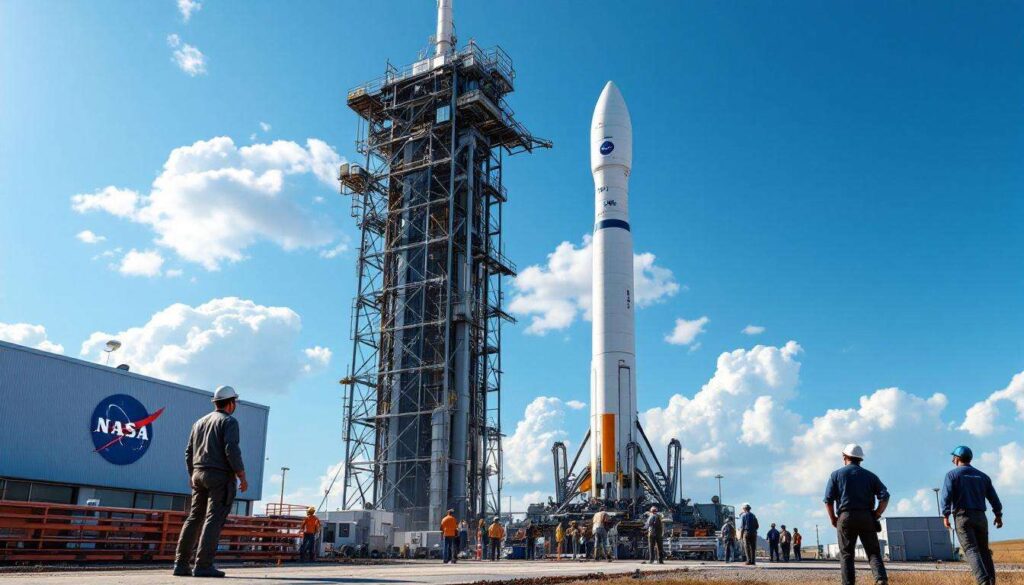
In a bold declaration underscoring the urgency of America’s return to the Moon, Blue Origin’s CEO Dave Limp has pledged that the aerospace manufacturer will “move heaven and Earth” to accelerate NASA’s timeline. This statement signals a profound commitment from the private spaceflight company, positioning it not merely as a contractor but as a pivotal partner in the nation’s ambitious lunar aspirations. As the new space race intensifies, the collaboration between government agencies and commercial innovators is becoming the central narrative, with Blue Origin stepping forward to play a decisive role in landing the next generation of astronauts on the lunar surface.
Blue Origin’s commitment to lunar conquest
A promise from the top
The pledge to “move heaven and Earth” is more than just corporate rhetoric; it represents a strategic directive from Blue Origin’s highest leadership. This commitment translates into a company-wide mobilization of resources, talent, and capital specifically aimed at meeting and potentially exceeding NASA’s demanding schedule for the Artemis program. The company is signaling its willingness to prioritize the lunar lander project, known as the Blue Moon lander, above other initiatives to ensure its success. This focus is critical, as NASA relies on its commercial partners to deliver the complex hardware required for a human return to the Moon.
Tangible investments and actions
Blue Origin is backing its words with substantial action. The company is channeling significant investment into the development and testing of its lunar technologies. This includes a series of concrete steps designed to expedite progress and mitigate risks. These actions demonstrate a serious, long-term engagement with the challenges of lunar exploration. Key areas of investment include:
- Infrastructure expansion: Building and upgrading facilities for engine testing, vehicle manufacturing, and mission control operations.
- Workforce growth: Actively recruiting top-tier engineers, technicians, and project managers to staff the Blue Moon lander team.
- Supply chain development: Establishing a robust network of suppliers and partners, referred to as the “National Team,” to provide specialized components and expertise.
- Rigorous testing campaigns: Executing an aggressive schedule of engine hot-fire tests and integrated system checks to validate the lander’s design and performance.
A long-term vision for lunar presence
The company’s commitment extends beyond a single landing. Blue Origin envisions a future where humanity has a sustained presence on the Moon, and its Blue Moon lander is designed as a cornerstone of that vision. The lander is being developed not just for a single mission but as a reusable and versatile platform capable of supporting a variety of activities. This long-term perspective aligns with NASA’s goal of creating a permanent lunar outpost, which would serve as a base for scientific research and a staging point for future missions to Mars. The vehicle’s design emphasizes cargo capacity and reusability, essential elements for building and sustaining a lunar economy.
This deep-seated commitment to not just reaching the Moon but establishing a foothold there sets the stage for the specific objectives Blue Origin aims to achieve with its lunar missions.
Blue Origin’s goals for the moon mission
The primary objective: landing astronauts safely
The most immediate and critical goal for Blue Origin is the safe transportation of NASA astronauts from lunar orbit to the surface of the Moon and back. This objective is paramount, and every aspect of the Blue Moon lander’s design is centered on crew safety and mission reliability. The system incorporates multiple layers of redundancy and advanced autonomous capabilities to handle potential contingencies. Success will be measured not just by touching down on the lunar regolith but by ensuring the crew returns safely to the orbiting Lunar Gateway or Orion spacecraft.
Enabling a sustainable lunar economy
Looking beyond the initial landings, Blue Origin’s goals are commercial and foundational. The company aims to be a key logistics provider for a burgeoning lunar economy. By developing a reusable lander capable of delivering significant payloads, Blue Origin intends to support a wide range of future activities. This forward-thinking approach is designed to create new markets and opportunities in cislunar space. Potential applications include:
- Delivering scientific instruments and research equipment for NASA and international partners.
- Transporting rovers and construction materials for building a lunar base.
- Supporting in-situ resource utilization (ISRU) efforts, such as mining for water ice at the lunar poles.
- Providing logistics for commercial ventures on the lunar surface.
Key mission milestones
To achieve these ambitious goals, Blue Origin has outlined a phased approach with clear, measurable milestones. This structured plan allows for systematic progress and provides transparent benchmarks for both the company and its primary customer, NASA. The development and execution of the lunar mission are broken down into distinct stages, each with its own set of objectives and success criteria.
| Phase | Primary Objective | Key Activities |
|---|---|---|
| Design and Development | Finalize and validate the lander’s architecture. | Critical design reviews, subsystem manufacturing, BE-7 engine testing. |
| Uncrewed Test Flight | Demonstrate an end-to-end autonomous landing. | Launch, transit to lunar orbit, and perform a successful uncrewed landing on the Moon. |
| Crewed Demonstration (Artemis V) | Safely land NASA astronauts on the Moon. | Dock with the Lunar Gateway, transport two astronauts to the surface, support their extravehicular activities, and return them to orbit. |
| Sustaining Operations | Provide regular and reliable cargo and crew transport. | Conduct subsequent missions in support of the Artemis base camp and commercial clients. |
Achieving these goals is a monumental task that cannot be accomplished in isolation, highlighting the essential nature of the close working relationship between Blue Origin and NASA.
Strategic partnership between Blue Origin and NASA
The Human Landing System (HLS) contract
The foundation of the collaboration is the firm-fixed-price contract awarded to Blue Origin by NASA under the Sustaining Lunar Development program. Valued at $3.4 billion, this contract tasks the company with developing, testing, and flying its Blue Moon lander for the Artemis V mission. This award was a significant vote of confidence from the agency, establishing Blue Origin as the second provider for lunar landing services alongside SpaceX. The contract structure incentivizes efficiency and on-time delivery, making the partnership a cornerstone of NASA’s strategy to foster a competitive commercial space environment.
A symbiotic relationship
The partnership is designed to be mutually beneficial, creating a synergy that propels the national lunar program forward while also advancing commercial spaceflight capabilities. Each organization gains immense value from the collaboration, ensuring both are deeply invested in its success. The dual-provider approach is a key lesson learned from other NASA commercial programs, intended to ensure redundancy and spur innovation through competition.
| Benefits for NASA | Benefits for Blue Origin |
|---|---|
| Ensures redundancy and resilience for the Artemis program. | Secures a prestigious anchor customer for its lunar lander. |
| Fosters competition, driving down costs and accelerating innovation. | Gains access to NASA’s unparalleled technical expertise and facilities. |
| Leverages private investment to augment government funding. | Validates its technology and business model on a global stage. |
| Expands the U.S. industrial base for deep space exploration. | Establishes a strong foothold in the emerging cislunar economy. |
Collaboration beyond contracts
The relationship extends far beyond the legal and financial terms of the contract. It involves deep technical integration and constant communication between NASA and Blue Origin teams. NASA engineers are embedded with the company, providing oversight and expertise drawn from decades of spaceflight experience. This collaborative model allows for rapid problem-solving and ensures that the Blue Moon lander meets all of the agency’s stringent safety and performance requirements. It is a true partnership, not a simple vendor-client dynamic, built on shared goals and a mutual desire to see humans walk on the Moon again.
This deep-seated collaboration is made possible by the cutting-edge and reliable technologies that Blue Origin is developing specifically for the challenges of spaceflight.
Blue Origin’s innovative technologies for spaceflight
The power of the BE-7 engine
At the heart of the Blue Moon lander is the BE-7 engine, a high-performance powerplant developed in-house by Blue Origin. This engine is a technological marvel, specifically designed for the unique demands of a lunar landing. Its most critical feature is its ability to “deep throttle,” meaning it can precisely vary its thrust from 10,000 pounds down to just 2,000 pounds. This capability is essential for the final phase of descent, allowing the lander to slow down gently and navigate to a safe, pre-selected landing spot with pinpoint accuracy. The BE-7 is powered by a highly efficient combination of liquid oxygen and liquid hydrogen, the same propellants used in the upper stages of NASA’s Space Launch System rocket.
Reusability as a core principle
Consistent with the company’s overarching philosophy, reusability is a central tenet of the Blue Moon architecture. While the initial lander for Artemis V will be expendable, the design is intended to evolve into a fully reusable system. The ascent element, which carries the crew back to orbit, and the cislunar transporter, which ferries the lander between Earth and lunar orbit, are both being designed with reusability in mind. This approach is expected to dramatically reduce the long-term cost of lunar operations, making a sustainable human presence on the Moon economically feasible. This mirrors the strategy successfully employed with Blue Origin’s suborbital New Shepard rocket.
Advanced avionics and autonomous landing
To safely touch down on the Moon’s unprepared and often hazardous surface, the Blue Moon lander will be equipped with a sophisticated suite of sensors and autonomous flight software. This system is crucial for ensuring the safety of the crew. Key technologies include:
- Terrain Relative Navigation (TRN): This system compares real-time imagery from the lander’s cameras with pre-loaded high-resolution maps of the lunar surface to determine its precise location.
- Lidar sensors: Light Detection and Ranging sensors will create a 3D map of the landing site during the final descent, identifying hazards such as large boulders or steep crater rims.
- Autonomous hazard avoidance: Onboard computers will use this data to autonomously divert the lander to a safer touchdown point if the original target is deemed unsafe, all without input from the crew or mission control.
These advanced technologies are not being developed in a vacuum; they are being integrated directly into the broader architecture of NASA’s Artemis program.
Blue Origin’s role in the Artemis program
A critical second provider
NASA’s decision to select Blue Origin as a second Human Landing System provider was a deliberate and strategic move. This approach, known as dissimilar redundancy, is a core principle of modern spaceflight engineering. By having two different landers, developed by two different companies (Blue Origin and SpaceX), NASA mitigates the risk that a technical issue with one system could derail the entire Artemis campaign. This competition ensures that the program has a robust and resilient path to the lunar surface, providing a vital backup and fostering a more dynamic and innovative industrial base.
Supporting Artemis V and beyond
Blue Origin’s Blue Moon lander is officially slated to carry astronauts to the lunar surface on the Artemis V mission. This mission will build upon the foundations laid by earlier Artemis flights, delivering crew to the lunar south pole to conduct scientific research and test technologies for a long-term stay. Beyond Artemis V, Blue Origin is positioned to become a regular provider of lunar transportation services. The company’s lander is designed to be a workhorse, capable of ferrying not only crew but also large cargo modules, rovers, and habitats needed to construct and sustain the planned Artemis Base Camp.
Complementing the Artemis ecosystem
The Blue Moon lander is just one piece of the complex, multi-element architecture of the Artemis program. Its role is to integrate seamlessly with several other key systems, each with a specific function. A successful mission depends on the flawless interaction between all of these components.
| Component | Function | Blue Origin Lander Interaction |
|---|---|---|
| Space Launch System (SLS) | Heavy-lift rocket that launches crew and cargo from Earth. | Launches the Orion spacecraft carrying the crew. |
| Orion Spacecraft | Crew vehicle for deep space transit between Earth and lunar orbit. | Transports astronauts to the Lunar Gateway, where they transfer to the lander. |
| Lunar Gateway | A small space station in orbit around the Moon. | Serves as the docking hub and transfer point for the Blue Moon lander. |
| Blue Moon Lander | Transports crew from the Gateway to the lunar surface and back. | The final link in the chain to get astronauts onto the Moon itself. |
The introduction of a major, well-funded commercial player like Blue Origin into such a critical national program is set to have lasting effects on the entire space industry.
Impact of the moon mission on the space industry
Fostering a new era of competition
The dual-award strategy for the lunar lander has injected a powerful dose of competition into the aerospace sector. This rivalry between Blue Origin and SpaceX is already accelerating the pace of innovation and pushing both companies to develop more capable and cost-effective systems. This competitive pressure benefits NASA and the American taxpayer by driving down costs and encouraging rapid technological advancement. It marks a definitive shift away from the single-prime-contractor model of the Apollo era toward a more dynamic, commercial marketplace for deep space services.
The growth of the cislunar economy
Successfully establishing a regular transportation service to the Moon is the critical first step in unlocking a vibrant cislunar economy. A reliable and affordable way to get to and from the lunar surface will enable a host of new commercial activities that are currently confined to science fiction. This mission serves as an anchor tenancy, creating the demand that justifies massive private investment in space infrastructure. Potential future markets include:
- Lunar resource extraction, such as water ice for propellant and life support.
- Space tourism and private expeditions to the Moon.
- In-space manufacturing using lunar materials.
- Satellite servicing and refueling from a lunar base.
Inspiring the next generation
Perhaps one of the most profound impacts of the return to the Moon will be its effect on education and public inspiration. The Apollo program inspired millions of young people to pursue careers in science, technology, engineering, and mathematics (STEM). The Artemis program, with its images of new astronauts walking on the Moon, has the potential to do the same for the current generation. The involvement of dynamic private companies like Blue Origin adds a new layer of excitement, showcasing a future where space exploration is driven by both national ambition and entrepreneurial vision.
Blue Origin’s determined pledge, backed by significant investment and advanced technology, positions the company as a formidable force in humanity’s return to the Moon. This strategic partnership with NASA not only enhances the resilience of the Artemis program but also acts as a powerful catalyst for the entire space industry. The collaboration is set to redefine the landscape of space exploration, fostering an era of competition and innovation that promises to extend human presence far beyond Earth’s orbit and build the foundations of a true space-faring economy.