



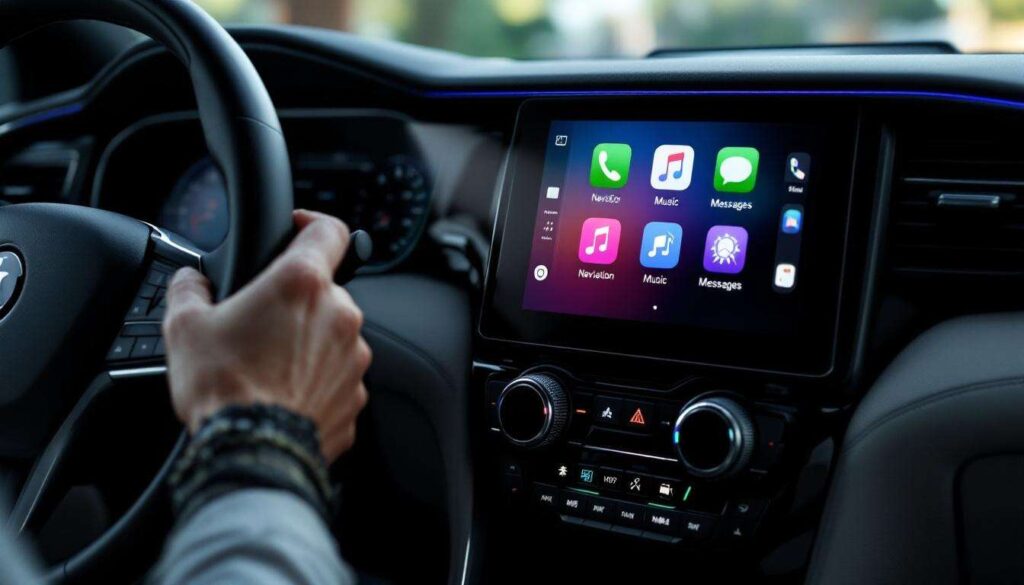
Apple’s in-car interface, CarPlay, is on the verge of a significant transformation, moving beyond simple app mirroring to a system deeply integrated with the vehicle’s core functions. While the initial announcement of this next-generation experience created a stir, new details reveal a phased rollout with a set of features poised to redefine the driver’s relationship with their car’s dashboard. Some of these enhancements are slated for an upcoming software update, while a select group of new vehicle owners are already experiencing a preview of this automotive future.
New features planned for Apple CarPlay
Deeper vehicle integration
The most profound change coming to CarPlay is its ability to tap directly into a car’s systems. This moves beyond the current infotainment-only access. The new framework will allow CarPlay to display and control core vehicle functions that were previously the exclusive domain of the automaker’s native software. This includes adjusting the climate control, activating heated seats, or checking tire pressure directly from the familiar CarPlay interface, eliminating the need to switch between systems.
Multi-screen and instrument cluster support
Future versions of CarPlay are designed to take over every screen in the car, not just the central infotainment display. This includes the digital instrument cluster behind the steering wheel and any passenger screens. Drivers will be able to customize these displays with a variety of Apple-designed gauges, layouts, and widgets. The goal is to create a cohesive and personalized digital cockpit, where navigation prompts can appear directly in the driver’s line of sight while media controls are accessible on the main screen.
New app categories
To support the expanded capabilities, Apple is introducing new categories of applications for CarPlay. These will allow for more complex and integrated experiences. Key additions include:
- Vehicle control apps: These will provide access to settings for climate, driving modes, and other vehicle-specific options.
- Camera apps: Users will be able to view feeds from the car’s external cameras, such as the rearview or surround-view systems, directly within CarPlay.
- Trip information apps: These apps can display detailed data about a journey, including fuel efficiency, energy consumption for electric vehicles, and other driving metrics.
This expansion signals a clear intent from Apple to make CarPlay the primary, all-encompassing interface for the driver. While these ambitious plans paint a picture of a revolutionary in-car system, it is important to understand the capabilities that users already have at their fingertips today.
Features already available
Core application support
The current iteration of Apple CarPlay provides a robust and mature ecosystem of applications focused on key driving tasks. Its strength lies in its simplicity and its ability to bring the familiarity of the iPhone to the car’s dashboard. Users have access to a wide range of essential apps, including navigation, communication, and audio entertainment. This foundation has made CarPlay an indispensable feature for millions of drivers worldwide.
Navigation and mapping
One of the most used features is navigation. CarPlay supports Apple Maps, as well as popular third-party applications like Google Maps and Waze. This gives users a choice and allows them to access real-time traffic data, turn-by-turn directions, and familiar interfaces. The integration with the iOS ecosystem means destinations searched on a phone or computer can be seamlessly sent to the car for immediate routing.
Communication and audio
Staying connected safely is a cornerstone of the CarPlay experience. The system provides hands-free access to:
- Phone: Making and receiving calls using Siri or the touchscreen.
- Messages: Siri can read incoming text messages aloud and transcribe replies, keeping the driver’s hands on the wheel.
- Audio Apps: A vast library of apps for music, podcasts, and audiobooks is available, including Apple Music, Spotify, Audible, and Overcast.
The table below highlights some of the key differences between the currently available system and the announced next-generation platform.
| Feature | Current CarPlay | Next-Generation CarPlay |
|---|---|---|
| Screen Support | Primarily central infotainment screen | All vehicle screens, including instrument cluster |
| Vehicle Integration | Limited to audio and infotainment | Controls for climate, seats, cameras, and vehicle settings |
| Customization | Wallpaper and app arrangement | Customizable gauge clusters, widgets, and layouts |
| App Categories | Navigation, audio, communication | Adds vehicle control, camera views, and trip info |
Understanding these existing strengths provides the context for evaluating just how significant the next update will be for the platform’s evolution.
What’s changing with the update ?
A shift from overlay to operating system
The fundamental change is philosophical and technical. Current CarPlay acts as a projection or an overlay on top of the automaker’s native infotainment system. The next generation of CarPlay is designed to function more like a true automotive operating system. It will be the primary interface for the car, handling not just media and navigation but also critical vehicle information and controls. This requires a much deeper level of collaboration between Apple and car manufacturers.
Enhanced personalization
With control over the instrument cluster and other displays, the potential for personalization skyrockets. Drivers will be able to choose from a variety of themes, gauge designs, and data layouts to suit their preferences. This could range from a minimalist display focusing only on speed and range to a data-rich layout with maps, media, and vehicle diagnostics all visible at once. This level of customization is a significant departure from the fixed, one-size-fits-all digital dashboards offered by most automakers today.
Siri’s expanded role
Siri’s capabilities will also be greatly expanded. Instead of just controlling apps like Music or Maps, Siri will be able to manage vehicle functions. A driver could potentially say, “Hey Siri, set the temperature to 70 degrees” or “Hey Siri, show me the rearview camera”. This deeper integration of voice control aims to further reduce driver distraction by allowing more complex tasks to be completed without touching a screen. These changes are poised to have a dramatic effect on how drivers interact with their vehicles on a daily basis.
Impact on user experience
A more unified interface
For drivers, the most immediate impact will be the creation of a seamless, unified user experience. Currently, many drivers find themselves switching back and forth between the CarPlay interface for navigation and the car’s native system to adjust the climate or change a vehicle setting. The new CarPlay will consolidate these functions into a single, consistent design language. This reduces cognitive load and makes interacting with the car’s features more intuitive and less distracting.
Increased convenience and safety
By bringing more controls into a centralized and voice-activated system, Apple aims to enhance both convenience and safety. The ability to manage vehicle functions through Siri or a familiar touchscreen layout means less time looking away from the road. Furthermore, displaying critical information like navigation turns or driver-assistance alerts directly on the instrument cluster, right in the driver’s line of sight, is a significant safety enhancement. The system is designed to provide the right information at the right time, minimizing distraction.
The question of reliability
This deeper integration also raises new questions about system reliability. When CarPlay is responsible for displaying critical information like speed, warning lights, and gear selection, it must be flawlessly stable. Any software glitch or crash, which might be a minor annoyance in an infotainment app, becomes a critical failure when it affects the instrument cluster. Apple and its automotive partners will need to ensure the system meets rigorous automotive-grade standards for stability and performance. Of course, the availability of this new experience depends entirely on the hardware inside the vehicle.
Compatibility with existing vehicles
Requires new hardware
It is crucial for current car owners to understand that the next-generation CarPlay experience will not be available as a simple software update for existing vehicles. The deep integration with vehicle systems, from the climate controls to the instrument cluster, requires specific hardware and a software architecture designed in collaboration with the automaker from the ground up. This means the feature will only be available on new car models that are built to support it.
Announced automotive partners
Apple has announced a list of automakers who have committed to supporting the new CarPlay platform in their future vehicles. While timelines remain fluid, these brands are working to integrate the technology. The initial partners include:
- Aston Martin
- Porsche
- Honda
- Ford
- Nissan
- Volvo
- Jaguar Land Rover
- Acura
- Audi
- Mercedes-Benz
The first vehicles featuring this new system are expected to be high-end models from brands like Porsche and Aston Martin, with broader adoption following in subsequent years. This phased rollout strategy shapes the long-term vision for Apple’s automotive ambitions.
Prospects for the evolution of Apple CarPlay
The competitive landscape
Apple’s move into deeper vehicle integration places it in direct competition with Google’s Android Automotive OS, which is a full-fledged operating system already used by automakers like Volvo, Polestar, and General Motors. Unlike Android Auto, which is a projection system similar to current CarPlay, Android Automotive is the car’s native OS. Apple’s next-generation CarPlay is its answer to this trend, aiming to provide a similarly integrated but distinctly Apple experience. The competition between these two tech giants is set to define the future of the in-car digital experience.
The car as an Apple device
The long-term prospect is the transformation of the car into another device within the Apple ecosystem, alongside the iPhone, Apple Watch, and Mac. This creates opportunities for even deeper integration in the future. Imagine a car that automatically adjusts the driver’s seat and mirrors based on their iPhone proximity, or a navigation system that seamlessly hands off walking directions to an Apple Watch upon parking. By controlling the car’s core interface, Apple positions itself to deliver these kinds of deeply integrated, ecosystem-wide features.
Future monetization and services
A fully integrated CarPlay platform also opens the door to new services and potential monetization streams. This could include in-car subscriptions for premium features, integrated payment for parking or charging, or location-based services and offers. While Apple has not detailed any specific plans, owning the primary in-car interface provides a powerful platform for delivering future digital services directly to the driver and passengers.
Apple is steering CarPlay toward a future where it is no longer just an app launcher but the central nervous system of the vehicle’s digital experience. The planned updates promise a more unified, personalized, and convenient interface by integrating deeply with core vehicle functions and expanding across all in-car screens. However, this advanced functionality will require new vehicles built on specific hardware, meaning widespread adoption will be a gradual process. This evolution marks a significant strategic shift, positioning the car as a key component of the Apple ecosystem and setting the stage for a new era of in-vehicle technology.