

Astronomers and sky-gazers across the globe are turning their attention to a celestial event of monumental proportions. A total solar eclipse is on the horizon, one whose duration of darkness will be so profound that it is already being hailed as the defining astronomical spectacle of the century. This is not merely another passage of the moon in front of the sun; it is a rare alignment of cosmic mechanics, promising a vision of the solar corona that will last longer than any experienced by most people alive today. The anticipation is building for an event that will plunge vast swaths of the planet into an eerie, midday twilight, offering a unique moment of connection with the cosmos.
The eclipse of the century: a unique phenomenon
What is a total solar eclipse ?
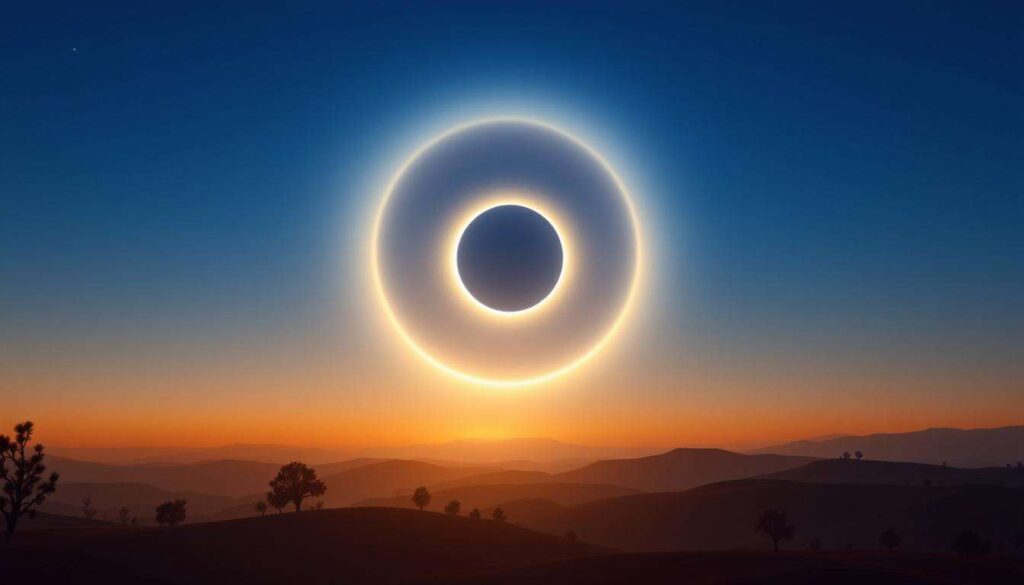
A total solar eclipse occurs when the moon passes directly between the sun and earth, completely blocking the face of the sun. This alignment casts a shadow upon our planet, and for those situated within the darkest part of that shadow, known as the umbra, the sky darkens as if it were dawn or dusk. For a few brief minutes, the sun’s incredibly faint and beautiful outer atmosphere, the corona, is revealed. This ethereal white halo, usually obscured by the bright glare of the sun’s surface, becomes the star of the show. Observers outside the path of the umbra, in a region called the penumbra, will experience only a partial eclipse.
Defining the “eclipse of the century”
Not all total solar eclipses are created equal. Their duration of totality varies significantly based on the precise orbital mechanics of the earth and moon. The length of an eclipse is maximized under two specific conditions:
- The moon is at or near its closest point to earth, an orbital position known as perigee. This makes the moon appear slightly larger in the sky.
- The earth is at or near its farthest point from the sun, an orbital position known as aphelion. This makes the sun appear slightly smaller in the sky.
When these two events coincide, the moon’s apparent size is large enough to cover the sun’s disk for an extended period. The upcoming event aligns these factors almost perfectly, resulting in a duration of totality so long that it earns the prestigious title of “the eclipse of the century”.
The convergence of these orbital characteristics is rare, making the upcoming event a truly special occasion for both scientific study and public admiration. The next step for any prospective observer is to understand exactly when and where this extraordinary shadow will fall.
When and where to admire this total eclipse
The precise date and time
Mark your calendars for August 2, 2027. On this day, the moon’s umbral shadow will trace a path across two continents, offering millions of people a front-row seat to the spectacle. The period of total darkness will begin at sunrise over the Atlantic Ocean, making landfall shortly thereafter. The point of greatest eclipse, where totality will last the longest, is projected to occur at approximately 10:06 UTC. For observers on the ground, this translates to late morning or early afternoon, depending on their specific location, providing ideal viewing angles with the sun high in the sky.
The path of totality
The path of totality for the 2027 eclipse is remarkable not only for its duration but also for the historic and geographically diverse locations it crosses. The shadow will first touch land in southern Spain and the Strait of Gibraltar before sweeping across North Africa and the Middle East. Key countries within the path include:
- Spain (southern tip)
- Morocco
- Algeria
- Tunisia
- Libya
- Egypt
- Saudi Arabia
- Yemen
- Somalia
The city of Luxor, Egypt, is situated almost directly on the centerline of the eclipse path, promising one of the longest and most spectacular views.
Visibility map and key locations
For those planning to travel, choosing the right location is crucial. The duration of totality varies significantly even within the path. The table below highlights some prime viewing spots and their expected duration of total darkness.
| Location | Country | Duration of Totality |
|---|---|---|
| Tangier | Morocco | 4 min 51 sec |
| Sfax | Tunisia | 5 min 40 sec |
| Luxor | Egypt | 6 min 23 sec |
| Jeddah | Saudi Arabia | 5 min 56 sec |
| Sana’a | Yemen | 2 min 11 sec |
The sheer length of totality, especially in Egypt, is what elevates this eclipse from a common astronomical event to an exceptional one. Understanding the reasons behind this remarkable duration reveals the true rarity of what is about to unfold.
Why this eclipse is so exceptional
Unprecedented duration of totality
The standout feature of the August 2, 2027 eclipse is its duration. With a maximum totality of 6 minutes and 23 seconds near Luxor, Egypt, it is the longest total solar eclipse of the 21st century. To put this in perspective, the widely viewed 2024 Great North American Eclipse peaked at around 4 minutes and 28 seconds. This extra two minutes of darkness is not a minor detail; it is a significant extension that provides an unparalleled opportunity for observation and scientific research. The theoretical maximum duration for any total solar eclipse on earth is approximately 7 minutes and 32 seconds, a limit that has not been met in centuries.
| Eclipse Event | Maximum Duration |
|---|---|
| Great American Eclipse (2017) | 2 min 40 sec |
| Great North American Eclipse (2024) | 4 min 28 sec |
| Eclipse of the Century (2027) | 6 min 23 sec |
Favorable observation conditions
Beyond its length, the 2027 eclipse is notable for its path over regions with a high probability of clear skies. The desert landscapes of Egypt, Libya, and Saudi Arabia in August are famous for their arid climate and minimal cloud cover. This drastically increases the chances of a successful viewing experience, free from meteorological interference. For astronomers and astrophotographers, who often invest significant resources to travel to eclipse locations, this meteorological reliability is a critical factor. The high sun angle at the time of the eclipse also means the sun will be well above the horizon, minimizing atmospheric distortion.
A rare astronomical alignment
This event represents a near-perfect celestial alignment. The moon will be at perigee just over a day after the eclipse, while the earth’s orbit will have carried it far from the sun. This “large moon, small sun” scenario is the secret to its long-lasting totality. Such an ideal combination, passing over accessible land with excellent weather prospects, is an astronomical rarity. This isn’t just another eclipse; it’s a grand confluence of orbital mechanics that many will have only one chance to witness in their lifetime. With such a significant event on the horizon, proper preparation is key to ensuring both a safe and unforgettable experience.
Preparations to observe the eclipse safely
Essential eye protection
The single most important rule of eclipse viewing is to never look directly at the sun without proper eye protection. Staring at even a sliver of the sun’s disk can cause permanent eye damage or blindness. The only safe way to view the partial phases of the eclipse is through special-purpose solar filters. Essential equipment includes:
- Certified eclipse glasses: Ensure they meet the ISO 12312-2 international safety standard. Regular sunglasses are not safe.
- Solar viewers: These are handheld cards with the same certified filter material.
- Pinhole projectors: A simple and indirect viewing method where you project an image of the sun onto a surface.
It is only safe to remove your eye protection during the brief period of 100% totality, when the sun’s face is completely covered. The moment the sun begins to reappear, you must put your protection back on immediately.
Choosing your observation gear
For those wanting a more detailed view, specialized equipment is necessary. Binoculars and telescopes offer magnificent, magnified views of the sun’s corona, but they must be fitted with certified solar filters that cover the front lenses. Never look through an unfiltered optical device. Photographers will need solar filters for their camera lenses as well to protect the camera’s sensor and their own eyes. Planning your shots in advance is wise, as the precious minutes of totality will pass quickly.
Planning your trip
Given the international nature of the eclipse path, logistical planning is crucial. Major viewing locations, particularly in Egypt and Spain, are expected to draw massive crowds. It is advisable to book flights and accommodations well in advance. Consider joining an organized tour group, as many will handle the logistics of transportation to prime viewing sites and provide expert guidance. Be aware of local conditions, such as the intense August heat in North Africa, and pack accordingly with water, sun protection, and appropriate clothing. This level of planning ensures that the focus can remain on the event itself, which has impacts that extend far beyond the few minutes of darkness.
Scientific and cultural impacts of the event
Opportunities for scientific research
A total solar eclipse provides a rare opportunity for scientists to study the sun’s corona. This superheated plasma atmosphere, extending millions of miles into space, is where many solar phenomena, like solar wind and coronal mass ejections, originate. During totality, with the sun’s bright disk blocked, sophisticated instruments can be used to analyze the corona’s temperature, density, and magnetic field structure. The 2027 eclipse’s extraordinary duration will allow for extended data collection, potentially leading to breakthroughs in our understanding of solar physics and space weather, which can impact satellite communications and power grids on earth.
A global cultural phenomenon
Eclipses have captivated humanity for millennia, often interpreted as omens or divine messages in ancient cultures. Today, they have transformed into global events that unite people through a shared sense of wonder. The 2027 eclipse is expected to be a massive media event, with live streams connecting millions of viewers from around the world. It serves as a powerful educational tool, sparking interest in science, technology, engineering, and mathematics (STEM) fields. The shared experience of watching day turn to night fosters a unique sense of global community, reminding us of our place in the universe.
Economic and tourism boom
For the regions located within the path of totality, the eclipse represents a significant economic opportunity. An influx of “eclipse chasers” and tourists from around the globe will bring a substantial boost to local economies. Hotels, restaurants, transportation services, and tour operators can expect a surge in business. This astro-tourism not only provides immediate financial benefits but also highlights the host regions on a global stage, potentially leading to increased tourism long after the eclipse has passed. Cities like Luxor are already preparing for the influx, viewing it as a once-in-a-generation chance to showcase their cultural heritage alongside a spectacular natural wonder.
This combination of scientific importance, cultural significance, and economic impact underscores why the event is so much more than just a passing shadow. For those who stand within that shadow, it promises to be a truly unforgettable celestial show.
A celestial show not to be missed
The sensory experience of totality
Witnessing a total solar eclipse is a deeply visceral experience that goes beyond the visual. As totality approaches, the quality of light changes, becoming eerie and silvery. The temperature can drop noticeably, and a gentle breeze may suddenly pick up. Animals and birds may become quiet, confused by the false dusk. Then, in the final moments, the world is plunged into an awe-inspiring darkness. A 360-degree sunset appears on the horizon, and bright stars and planets become visible in the midday sky. The main spectacle, the sun’s corona, shimmers in the darkness like a celestial crown. It is a moment of profound beauty that many describe as a deeply moving, almost spiritual experience.
Making it a memorable event
The 2027 eclipse offers a chance to be part of a historic astronomical event. Its record-setting duration and favorable viewing locations make it arguably the premier eclipse of the 21st century. Planning ahead, whether it involves international travel or finding a local viewing spot, is the key to maximizing the experience. Sharing this moment with family and friends can transform it from a personal observation into a collective memory that will be cherished for a lifetime. It is a powerful reminder of the grandeur of the cosmos and our small but privileged place within it.
The total solar eclipse of August 2, 2027, stands as a monumental event for this generation. Its exceptional duration of over six minutes offers an unparalleled viewing experience, tracing a path across historically rich and geographically accessible locations. From the scientific insights it will provide into the sun’s mysterious corona to the profound, collective sense of wonder it will inspire, this is more than just an astronomical alignment. It is a call to look up, to prepare safely, and to witness a rare and spectacular display of the celestial mechanics that govern our universe.