



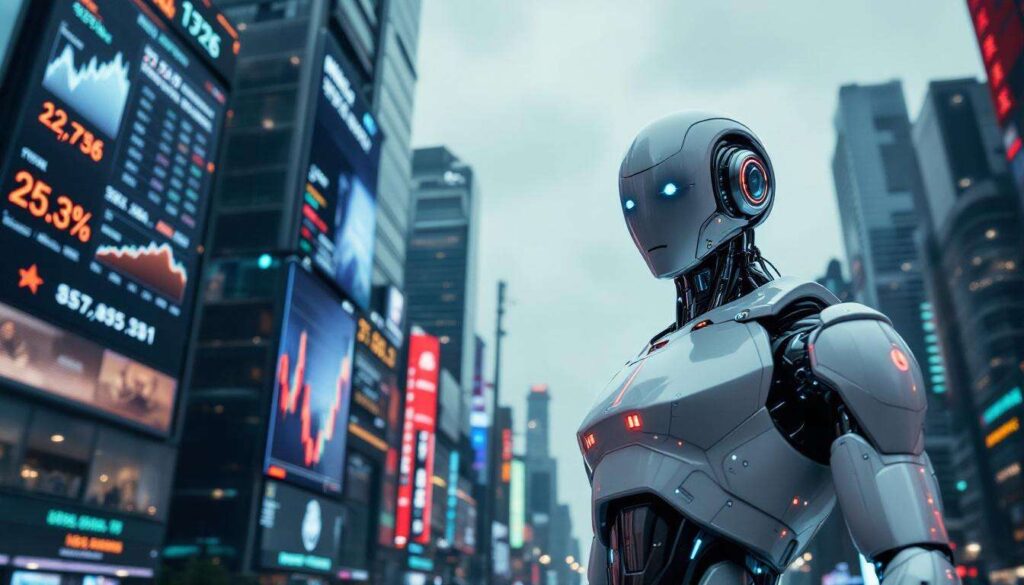
A recent demonstration of a humanoid robot performing complex tasks with unprecedented fluidity sent shockwaves not just through the tech community, but across global financial markets. This single event crystallized a growing sentiment: artificial intelligence and robotics are no longer abstract, future concepts but tangible forces actively reshaping our world. The resulting market frenzy, however, has been accompanied by a rising chorus of concern from industry insiders, creating a volatile mix of unbridled optimism and profound caution. The narrative is no longer simply about innovation; it’s about the immense economic and societal pressures building as this technological revolution accelerates, perhaps too quickly.
The rise of humanoid robots in industry
From niche applications to general-purpose platforms
For decades, industrial robots have been mainstays of manufacturing, but they were largely confined to repetitive, single-purpose tasks. These robotic arms, bolted to the factory floor, excelled at welding, painting, and assembly, but lacked versatility. The advent of the humanoid robot marks a paradigm shift. Designed to navigate and interact with environments built for humans, these machines promise a level of adaptability previously unattainable. They can, in theory, walk up stairs, open doors, and operate tools designed for human hands. This transition from specialized equipment to general-purpose labor platforms is the driving force behind their growing adoption in sectors beyond traditional manufacturing.
Key sectors embracing humanoid robotics
While manufacturing remains a primary target, other industries are rapidly exploring the potential of a robotic workforce. The logistics and warehousing sector, already heavily automated, sees humanoids as the solution to the “last mile” problem of sorting and handling irregularly shaped packages. Healthcare is another promising field, with robots potentially assisting with patient mobility, sanitization, and delivery of supplies, freeing up human staff for more critical care tasks. Key areas of implementation include:
- Logistics: Automating package sorting, palletizing, and truck loading/unloading.
- Manufacturing: Performing complex assembly tasks that require more dexterity than traditional robotic arms.
- Retail: Stocking shelves, managing inventory, and assisting customers.
- Healthcare: Aiding in patient care, laboratory automation, and facility maintenance.
The potential for these machines to integrate seamlessly into existing human-centric workflows is what makes them so disruptive, a fact that has not been lost on investors and market analysts.
Impact of robots on financial markets
The AI-fueled stock market surge
The public’s fascination with AI has translated into a full-blown investment mania. Companies even tangentially related to artificial intelligence or robotics have seen their valuations skyrocket. This phenomenon is driven by a powerful narrative of inevitable technological disruption, where investors fear missing out on “the next big thing.” The result is a market highly sensitive to news and demonstrations, where a single viral video of a robot’s capabilities can add billions of dollars to a company’s market capitalization overnight. This speculative fever creates a disconnect between a company’s current revenue and its perceived future potential, a classic indicator of a market bubble.
Valuation bubbles and market volatility
The intense focus on AI has led to soaring valuations that are difficult to justify with traditional financial metrics. This creates significant volatility, as stock prices become tethered to technological milestones rather than predictable earnings. A successful demo can lead to a massive rally, while a perceived setback or a competitor’s breakthrough can trigger a sharp sell-off. This environment is ripe for speculation, making the sector particularly risky for retail investors. A comparison of stock performance for key AI-related companies illustrates this dramatic growth.
| Company | Stock Performance (Year-over-Year) | Primary AI/Robotics Focus |
|---|---|---|
| Nvidia Corp. | +215% | AI Chips / GPUs |
| Boston Dynamics (Hyundai) | (Privately Held / Acquired) | Advanced Mobility Robots |
| Tesla, Inc. | +105% | Humanoid Robot (Optimus) / AI |
| Alphabet Inc. | +55% | DeepMind / AI Research |
This rapid appreciation, while rewarding for early investors, also points to an overheating market where the underlying technology is struggling to keep pace with the financial hype.
Risks related to the overheating of artificial intelligence
The hidden costs of rapid advancement
The race to develop more powerful AI models and more capable robots comes with immense and often overlooked costs. The computational power required to train cutting-edge AI systems is astronomical, leading to a massive environmental footprint. Data centers running these models consume vast amounts of electricity and water for cooling, raising serious questions about the sustainability of this technological arms race. Furthermore, the rush to market can lead to companies cutting corners on safety and testing. When the product is a powerful, autonomous robot, the consequences of a malfunction are far more severe than a software bug. There is a tangible risk that the pressure to innovate is outpacing the development of necessary safety protocols.
Algorithmic bias and ethical blind spots
An equally significant risk lies within the AI’s “mind.” AI models are trained on vast datasets, which often contain implicit human biases related to race, gender, and other social factors. If not carefully curated and audited, these biases become encoded into the AI’s decision-making processes. A humanoid robot deployed in a public-facing role could, for example, exhibit discriminatory behavior learned from its training data. Key ethical concerns include:
- Job displacement: The potential for mass unemployment as capable robots replace human workers in a wide range of tasks.
- Data privacy: Humanoid robots equipped with advanced sensors will collect unprecedented amounts of data from their surroundings, raising privacy issues.
- Accountability: Determining who is responsible when an autonomous robot causes harm or makes a critical error, whether it’s the owner, the manufacturer, or the software developer.
These complex ethical dilemmas are being raised not just by academics and critics, but by some of the very pioneers who built the foundations of modern AI.
Experts’ warnings against AI
A cautionary chorus from industry pioneers
Some of the most urgent warnings about the dangers of unchecked AI development are coming from within the tech industry itself. Prominent figures, often referred to as the “godfathers of AI,” have publicly voiced their fears about the technology they helped create. They express concern that the competitive pressure between corporations and nations is leading to a reckless race toward artificial general intelligence (AGI) without adequate safeguards. Their primary fear is not of malicious robots in the style of science fiction, but of a hyper-intelligent system that, in pursuing a programmed goal, could produce unforeseen and catastrophic side effects. They argue that we do not yet understand how to control a system that may become vastly more intelligent than its creators.
The growing call for regulation and oversight
In response to these escalating concerns, there is a growing global movement calling for government regulation of AI development. Experts are advocating for the establishment of international bodies akin to the International Atomic Energy Agency to monitor AI progress, establish safety standards, and potentially mandate pauses in the development of the most powerful systems. The argument is that the potential societal impact of AGI is too great to be left solely in the hands of private corporations motivated by profit. These calls for oversight are forcing companies at the forefront of this technology to react and adapt their strategies.
Companies’ reactions to the rise of robots
Strategic investments and the talent war
Despite the warnings, the commercial imperative to lead in AI and robotics is overwhelming. Major technology firms are pouring billions of dollars into research and development, acquiring promising startups, and engaging in a fierce “talent war” to hire the world’s top AI researchers. The belief is that achieving a breakthrough in this field will confer an insurmountable competitive advantage. This has created an environment of intense secrecy and competition, where companies are simultaneously promoting the promise of their technology to investors while trying to solve its profound safety and ethical challenges behind the scenes. This dual strategy is a delicate balancing act, as public perception becomes increasingly important.
Navigating public relations and ethical positioning
Companies are acutely aware that public fear and mistrust could lead to restrictive regulations that stifle innovation. Consequently, they are investing heavily in public relations to shape the narrative around AI and robotics. They often emphasize the potential benefits, such as curing diseases or solving climate change, while framing their work as being guided by strong ethical principles. Many have established internal AI ethics boards, though critics question their effectiveness and independence. The challenge for these companies is to convince the public and policymakers that they can be trusted to develop this powerful technology responsibly, a task that will define the future landscape of the industry.
Future prospects for robotic technologies and AI
The path to artificial general intelligence
The ultimate goal for many in the field is the creation of artificial general intelligence (AGI), an AI with human-like cognitive abilities. While the timeline for achieving AGI is a subject of intense debate, progress in large language models and robotics suggests the journey has begun. The development of humanoid robots is seen as a crucial step, providing a physical platform through which an AGI could interact with and learn from the real world. A breakthrough in this area would represent a turning point in human history, with implications that are difficult to fully comprehend. It would unlock possibilities for scientific discovery and problem-solving on an unimaginable scale.
Balancing innovation with societal responsibility
The road ahead is fraught with both promise and peril. The integration of advanced robots and AI into society will require a fundamental rethinking of our economic and social structures. The key will be to foster innovation while establishing robust frameworks for safety, ethics, and governance. This involves a multi-stakeholder effort, bringing together technologists, policymakers, ethicists, and the public to navigate the transition. The choices made in the coming years will determine whether these technologies lead to a future of shared prosperity or one marked by increased inequality and instability. The challenge is not to stop progress, but to steer it wisely toward beneficial outcomes for all of humanity.
The current moment is defined by a powerful tension. On one hand, the rapid evolution of humanoid robots and artificial intelligence is fueling unprecedented market enthusiasm and promises of a technological utopia. On the other, the very architects of this revolution are sounding the alarm about the profound risks of an overheated, unregulated race to the top. Navigating this duality, by embracing innovation while demanding accountability and foresight, will be the defining challenge of our time.