


The air inside our homes, often perceived as a safe haven, can harbor a surprising number of pollutants. A groundbreaking 2025 study has now cast a sharp light on one of the primary sources of this indoor pollution: the kitchen. Researchers have quantified the impact of cooking on household air quality, revealing that the simple act of frying or searing can release billions of microscopic grease particles. More importantly, the study provides a clear, data-driven solution, demonstrating that a short, specific use of a common kitchen appliance can dramatically mitigate this invisible threat, transforming the air we breathe on a daily basis.
2025 test: analysis of grease particles in household air
Methodology of the study
The research was conducted under strictly controlled laboratory conditions designed to replicate a typical home kitchen environment. A standardized meal, involving pan-searing meat and frying vegetables, was prepared on both gas and electric cooktops. Throughout the cooking process, high-precision laser particle counters were used to measure the concentration and size of airborne particles, specifically focusing on lipid aerosols, more commonly known as grease particles. The tests were repeated multiple times with the extractor hood off to establish a baseline, and then again with the hood running for varying durations to measure its effectiveness. The entire process was meticulously documented to ensure the results were both repeatable and reliable, forming a solid foundation for the study’s conclusions.
Key objectives of the research
The primary goal of the researchers was not just to confirm that cooking pollutes indoor air, but to provide homeowners with actionable, evidence-based guidance. The specific objectives were clearly defined and included:
- To quantify the volume and size of grease particles generated by common cooking methods.
- To determine the effectiveness of a standard extractor hood in removing these particles from the air.
- To identify the optimal run time for an extractor hood to achieve maximum particle reduction without wasting energy.
- To analyze the difference in particulate matter generation between gas and electric cooking surfaces.
Initial findings and observations
Before activating any ventilation, the baseline measurements were startling. The study found that within ten minutes of high-heat cooking, the concentration of fine particulate matter (PM2.5) in the air could exceed levels found in highly polluted cities. These grease particles are small enough to be inhaled deeply into the lungs. The initial data presented a clear picture of a significant domestic health hazard that has, until now, been largely underestimated by the public. The table below illustrates the average particle concentration before ventilation was activated.
| Particle Type | Baseline Concentration (particles per cubic meter) |
|---|---|
| Grease Aerosols (PM2.5) | 1,500,000 |
| Ultrafine Particles (PM1.0) | 3,200,000 |
This baseline data underscores the critical need for effective ventilation, which naturally raises the question of why using an extractor hood is not just a matter of convenience, but a fundamental aspect of maintaining a healthy home.
Why use an extractor hood in the kitchen ?
Beyond odors: the invisible dangers
While most people associate extractor hoods with eliminating cooking smells, their most vital function is managing invisible threats. When oils and fats are heated, they aerosolize into fine and ultrafine particles that can be inhaled. These particles can carry potentially harmful compounds, and long-term exposure to high levels of indoor air pollution from cooking has been linked to various health issues. The primary benefit of a hood is health protection, as it directly captures these contaminants at the source before they can spread throughout the home and be inhaled by its occupants. It’s a proactive measure against chronic respiratory irritation and other potential long-term risks.
Protecting your home and furniture
Airborne grease doesn’t just disappear. If not captured by a hood, it eventually settles on every surface in your kitchen and adjoining rooms. It forms a sticky, yellowish film on cabinets, walls, ceilings, and even furniture. This greasy layer is notoriously difficult to clean and acts like a magnet for dust, dirt, and other allergens, creating a grimy and unhygienic environment. Using an extractor hood effectively prevents this buildup, saving you significant time and effort in cleaning and preserving the condition and longevity of your kitchen finishes and home furnishings.
The impact on indoor air quality
The modern home is increasingly airtight for energy efficiency, which means pollutants can become trapped and concentrated indoors. The kitchen is often the single largest source of indoor air contaminants, releasing a cocktail of substances during cooking. These include:
- Particulate matter (PM): from grease, smoke, and food particles.
- Volatile organic compounds (VOCs): released from cooking oils and some foods.
- Combustion gases: such as nitrogen dioxide (NO2) and carbon monoxide (CO), particularly from gas stoves.
An extractor hood is the first line of defense, actively removing this polluted air and either venting it outside or filtering it, thereby playing a crucial role in maintaining overall indoor air quality.
Understanding these benefits, the 2025 study sought to define not just if a hood should be used, but precisely how it should be used for maximum effect, leading to its specific findings on duration.
Optimal duration: why 6 minutes is enough
The science of air circulation
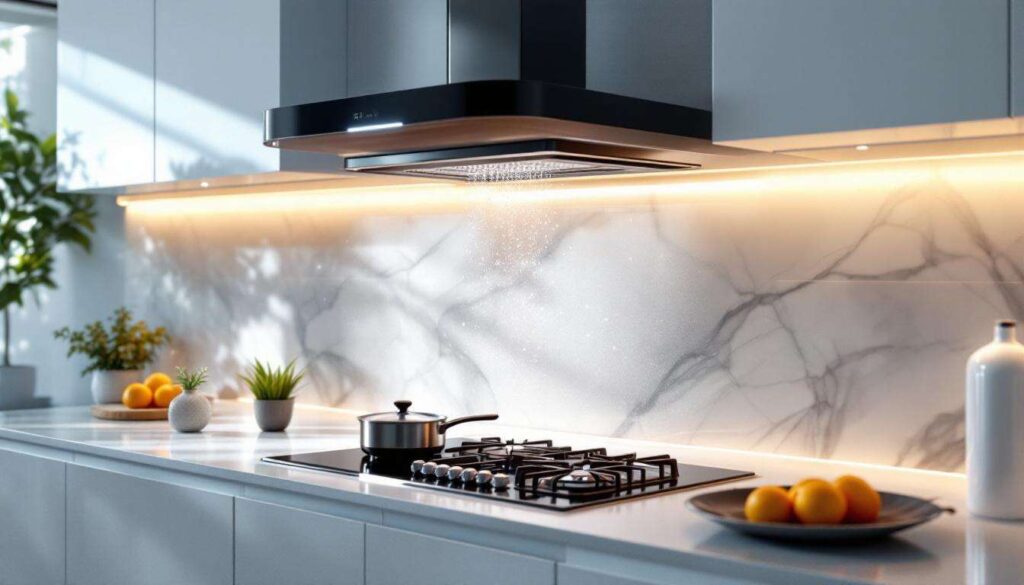
An extractor hood functions by creating a localized zone of low pressure directly above the cooktop. This pressure difference causes the hot, contaminant-laden air rising from the pots and pans to be drawn upwards into the hood instead of dispersing into the room. The fan motor then pulls this air through a series of filters and expels it outdoors or recirculates it. The efficiency of this process depends on the fan’s power, measured in cubic feet per minute (CFM), and the design of the hood’s capture area. The key is to create an airflow strong enough to capture the entire plume of steam and smoke.
Pinpointing the 6-minute mark
The researchers in the 2025 study discovered a clear pattern of diminishing returns. They monitored particle levels in real-time from the moment the hood was switched on. In the first few minutes, the reduction in airborne grease particles was incredibly rapid. The data showed that the vast majority of particles generated during a typical cooking event were captured and removed within this initial period. After the 6-minute mark, the rate of particle removal slowed dramatically. Continuing to run the hood for 10, 15, or 20 minutes resulted in only a marginal additional improvement. The 6-minute duration represents the sweet spot where peak efficiency is achieved, clearing the air of the most significant pollutant load.
Energy efficiency considerations
This finding has important implications for household energy consumption. Extractor hoods, especially high-powered models, can consume a significant amount of electricity. Running a hood for longer than necessary contributes to higher energy bills without providing a proportional benefit in air quality. The study’s recommendation for a 6-minute cycle (perhaps starting a minute before cooking and running for five minutes after) offers a guideline that balances maximum air purification with responsible energy use. It empowers consumers to maintain a healthy home environment in the most cost-effective and environmentally conscious way.
The establishment of this optimal duration is directly tied to the impressive quantitative results that form the centerpiece of the study’s findings.
Study results: a 90% reduction in particles
A closer look at the data
The headline figure from the 2025 report is unequivocal: running a standard extractor hood for just six minutes resulted in an average reduction of 90% of airborne grease particles. This dramatic drop was observed consistently across multiple tests. The efficiency of the removal process was most pronounced for larger particles, but a significant reduction was also recorded for the more dangerous PM2.5 and ultrafine particles. This is a testament to the effectiveness of modern ventilation technology when used correctly. The data provides concrete proof that a simple action can have a massive impact on the quality of the air inside a home.
Comparing different types of cooking
The study also highlighted that the type of cooking significantly impacts the amount of particulate matter produced. High-temperature cooking methods like searing a steak or stir-frying generated a much higher concentration of grease aerosols than lower-temperature methods like simmering a soup. However, the 90% reduction rate remained remarkably consistent across these different scenarios, demonstrating the robustness of the extractor hood’s performance. The table below shows a comparison of particle generation and the hood’s effectiveness.
| Cooking Method | Peak PM2.5 Generated (particles/m³) | PM2.5 After 6 min Hood Use (particles/m³) | Percentage Reduction |
|---|---|---|---|
| High-Heat Searing | 2,100,000 | 210,000 | 90% |
| Deep Frying | 1,850,000 | 190,000 | 89.7% |
| Simmering | 450,000 | 43,000 | 90.4% |
What does a 90% reduction mean for health ?
Translating this statistic into a real-world health benefit is crucial. A 90% reduction means that for every ten harmful particles you would have inhaled, you now only inhale one. This drastically lowers your family’s daily exposure to indoor air pollutants. For individuals with asthma, allergies, or other respiratory conditions, this can mean a significant reduction in symptoms and triggers. For all residents, it contributes to better long-term respiratory health and reduces exposure to the potentially harmful compounds that grease particles can carry. It effectively removes a major source of pollution from the living space.
Such impressive results are made possible by the specific technologies engineered into modern extractor hoods.
The technology behind the effectiveness of hoods
Extraction vs. recirculation hoods
The market offers two primary types of extractor hoods, and their effectiveness relies on different principles. An extraction (or ducted) hood is generally considered more effective as it physically removes the contaminated air from the home by venting it outside through ductwork. A recirculation (or ductless) hood pulls air through filters to clean it and then releases it back into the kitchen. While easier to install, recirculation models are primarily effective at removing odors and some particles but cannot remove humidity or heat. The 90% reduction figure in the study was achieved using extraction hoods.
| Feature | Extraction Hood | Recirculation Hood |
|---|---|---|
| Air Removal | Vents polluted air outdoors | Filters and returns air to the room |
| Effectiveness | Highly effective at removing grease, smoke, humidity, heat | Good for odors, less effective for fine particles and humidity |
| Installation | Requires external ductwork, more complex | Simple installation, no ductwork needed |
The role of filters: grease and charcoal
Filters are the heart of any hood. All models use a grease filter, typically made of multiple layers of aluminum or stainless steel mesh, designed to capture and trap airborne fat and oil particles. These are the first line of defense and are essential for keeping the ductwork and fan motor clean. In recirculation hoods, a second type of filter is used: an activated charcoal filter. This filter is designed to adsorb odors and gaseous pollutants. Proper maintenance of these filters is critical; clogged filters severely restrict airflow and reduce the hood’s effectiveness.
Understanding airflow and CFM ratings
The power of a hood is measured in CFM, or cubic feet per minute. This rating indicates the volume of air the fan can move when running at its highest speed. A higher CFM rating means more suction power and a greater ability to capture cooking fumes. The required CFM for a kitchen depends on its size and the type of cooktop. For example, a high-output professional-style gas range requires a hood with a much higher CFM rating than a standard electric cooktop. Choosing a hood with an appropriate CFM rating is essential for achieving the kind of results seen in the 2025 study.
This technical knowledge is fundamental for any homeowner looking to apply these findings and select the right appliance for their needs.
How to choose an efficient hood for your home
Matching the hood to your cooktop
The first rule in selecting a hood is ensuring proper coverage. The hood should be at least as wide as the cooktop below it, and for best performance, it should be about three inches wider on each side. The type of cooktop also matters. Gas ranges produce more heat and combustion byproducts, generally requiring a more powerful hood (higher CFM) than electric or induction cooktops. For island cooktops, a larger, more powerful island hood is necessary because it must contend with more complex air currents in the open space. Proper sizing is non-negotiable for effective fume capture.
Key features to look for
When shopping for a new extractor hood, several features can enhance performance and convenience. A consumer should create a checklist to ensure they are getting a model that suits their needs. Consider the following:
- Variable fan speeds: This allows you to match the ventilation power to the type of cooking, using a quieter, lower speed for simmering and a higher speed for searing.
- CFM rating: Calculate the needs of your kitchen. A common rule is to have 1 CFM for every 100 BTUs of your gas cooktop’s output.
- Noise level (sones): Look for a low sone rating for quieter operation. A rating of 1-3 sones is considered quiet.
- Dishwasher-safe filters: This makes regular maintenance much easier. Baffle filters are often more durable and effective than mesh filters.
- Adequate lighting: Good LED lighting improves visibility over the cooktop without generating extra heat.
Installation and maintenance tips
Even the best hood will underperform if installed incorrectly. For ducted hoods, ensure the duct run to the outside is as short and straight as possible, with the correct diameter, to maximize airflow. The hood should be installed at the manufacturer’s recommended height above the cooktop, typically between 24 and 30 inches. Once installed, maintenance is key. Regularly cleaning the grease filters is the most important task. A simple tip: clean your metal grease filters in the dishwasher or with hot, soapy water at least once a month to prevent grease buildup and ensure the hood operates at peak efficiency.
The findings of the 2025 study provide a clear directive for healthier living. The data confirms that airborne grease particles from cooking pose a significant risk to indoor air quality, but it also shows a powerful and accessible solution. By using a properly chosen and maintained extractor hood for just six minutes, households can eliminate the vast majority of these pollutants. This simple habit transforms a common kitchen appliance from a convenience into an essential tool for health, protecting the home environment and the well-being of those who live in it.